
Working Models: The Okra Project
How this national mutual aid model delivers care to trans and queer communities
Images Provided by The Okra Project
Across the United States, Black and Brown trans and queer people are navigating a layered crisis that rarely appears as such in public discourse.
Food insecurity, housing instability, untreated mental health needs and employment discrimination are typically discussed as separate issues, addressed through separate programs and policy channels. But in real life, they often arrive together, stack on top of one another and accelerate.
National surveys consistently show that more than one in four trans adults experience food insecurity, and nearly one in three face housing instability within a given year.
Rates of anxiety and depression are significantly higher than the national average. Access to affirming mental health care remains limited, geographically uneven and financially out of reach for many. Public systems, already frayed, respond slowly, if at all. By the time help becomes available, the crisis has often metastasized.
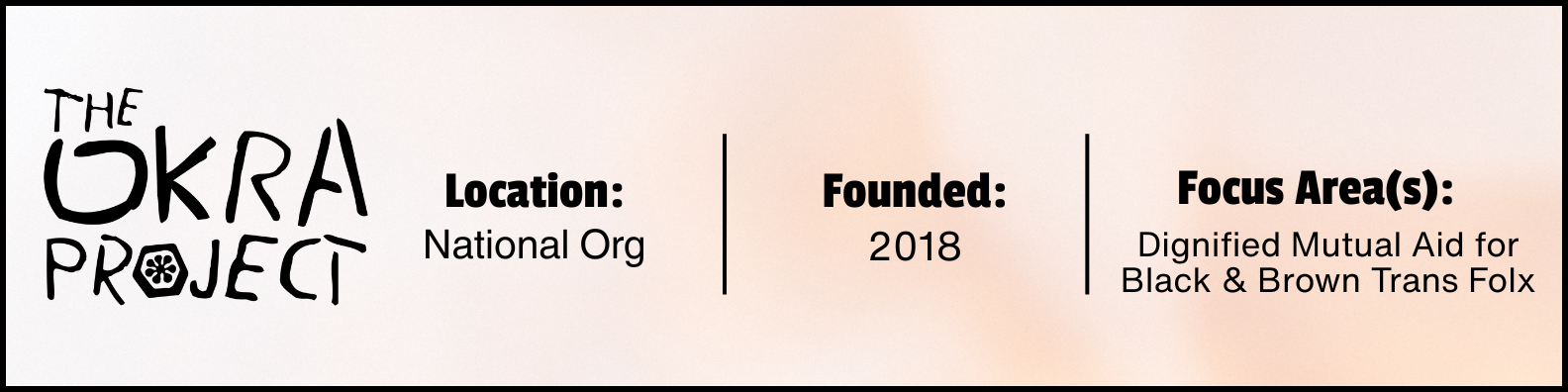
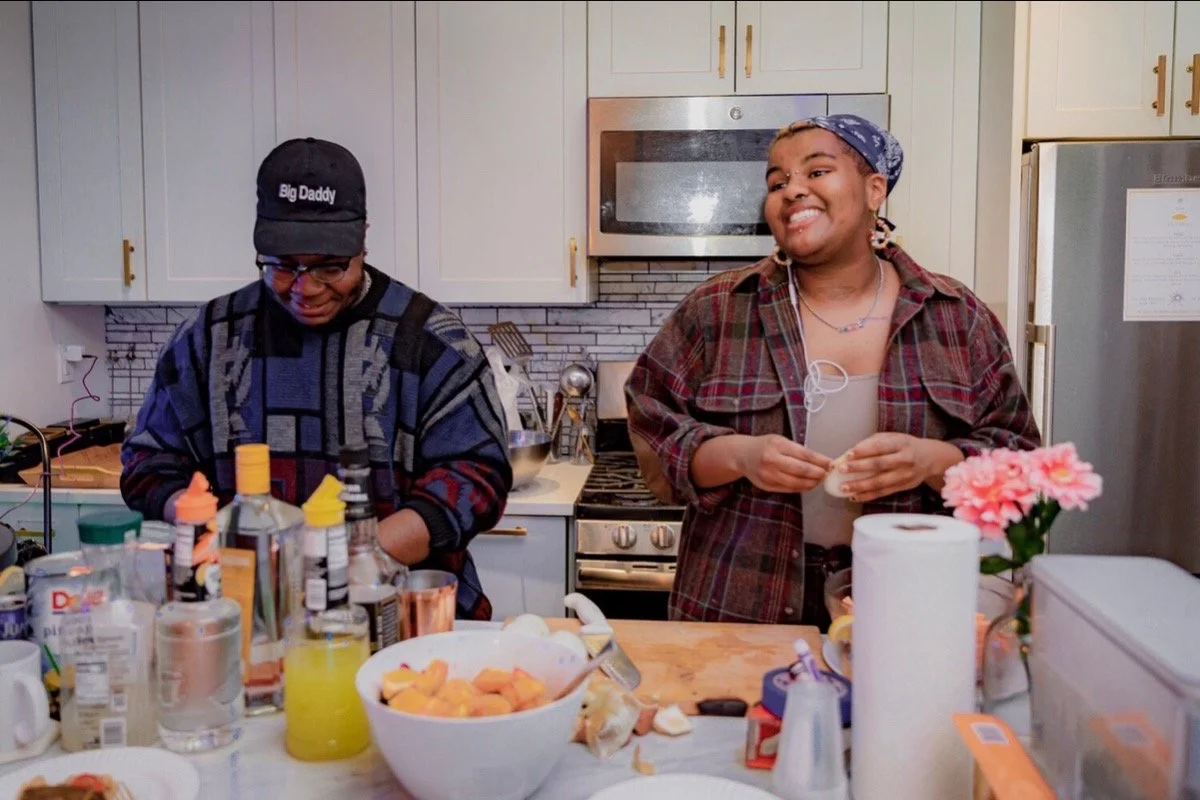
This is the terrain in which The Okra Project operates. Founded in Brooklyn in 2018, the organization began with Black trans chefs preparing meals for members of their own community. The work emerged from immediacy rather than abstraction: people were hungry, existing systems were not responding and food could be mobilized without delay.
That early effort has since expanded into a national mutual aid collective providing grocery and meal funds, emergency cash assistance, access to mental health care and community-based support for Black and Brown trans and queer people across the country.
The Mission & Model of the Okra Project
The Okra Project provides direct support to Black and Brown trans and queer people through food access, emergency cash assistance, mental health resources and partnerships with other grassroots organizations that help move resources quickly to people who need them.
The Okra Project takes its name from the okra plant, carried by Africans through the Middle Passage and cultivated across generations as a source of nourishment and sustenance. The reference reflects an understanding of survival as collective and continuous rather than episodic.
Gabrielle Inès Souza, the Okra Project’s Executive Director, told Hyvemind that the organization focuses on meeting “immediate needs while strengthening long-term stability and wellbeing,” with grocery stipends, prepared meals, mutual aid payments and access to affirming mental health services forming the core of the organization’s work.
“The Okra Project exists to make sure Black and Brown trans and queer people can survive and thrive,” Inès Souza revealed. “At our core, our mission is about dignity, safety and showing up for each other when systems don’t.”
Since its founding, the organization has distributed nearly $3 million in direct mutual aid to almost 10,000 Black and Brown trans and gender-expansive people nationwide. In 2024 alone, it distributed tens of thousands of dollars in direct cash assistance while also securing in-kind mental health services through partnerships—often reaching people facing waitlists, exclusions, or costs that made care otherwise inaccessible.
Taken together, the organization’s work reflects a larger question playing out in cities across the country: what happens when food access, workforce development and infrastructure are treated not as separate social services, but as interdependent systems?
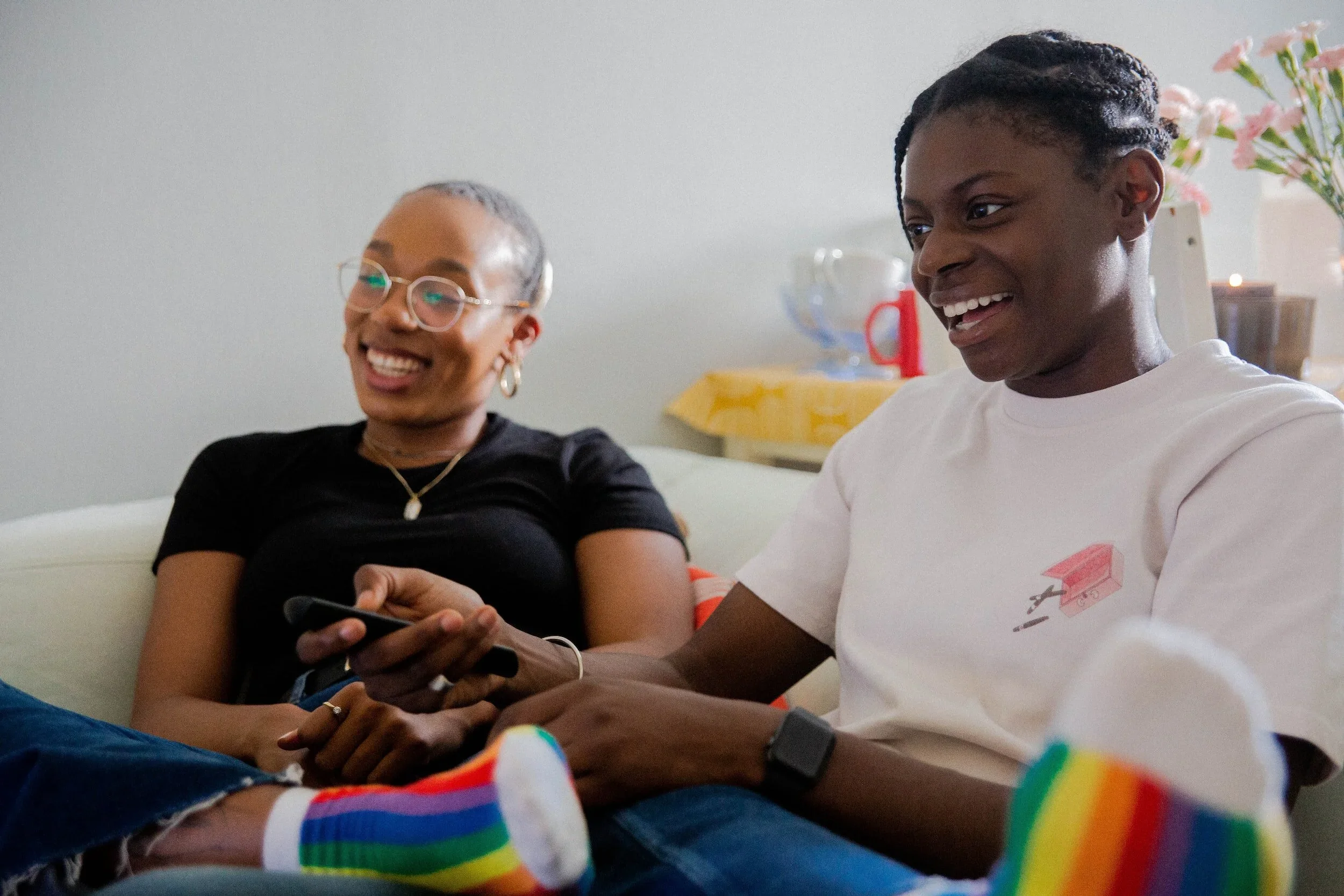
Inès Souza said that people who turn to The Okra Project often do so after exhausting other options. Many have already encountered eligibility thresholds, documentation requirements or waiting periods that presume a degree of stability they no longer have.
“By the time someone applies to one of our programs,” Souza said, “they’re not testing the waters. They’re seeking support because they need help now, and they’re looking for an organization that treats them with dignity rather than suspicion.”
And the circumstances often vary. For some, the crisis is immediate: an eviction notice, an unexpected medical bill or a missed paycheck. For others, it is the cumulative strain of housing insecurity, food instability and untreated mental health needs finally reaching a breaking point. In either case, the margin for delay is thin.
Inès Souza said one of the clearest lessons from the organization’s work is that traditional nonprofit systems often fail under those conditions. In many legacy models, assistance is conditional, requiring proof of income, proof of crisis or proof of eligibility—requirements that introduce delays into situations where timing is often decisive.
“Rigid grant structures, bureaucratic reporting and delayed timelines actually slow down our ability to meet urgent needs,” she revealed. “These are processes that can stretch for weeks or months after an emergency has already taken hold.
The Okra Project’s model was designed around that gap. The organization emphasizes direct transfer over service mediation, delivering resources without multiple layers of administrative processing. Aid is provided as cash, food, transportation or care access, allowing recipients to respond to their circumstances in real time.
That speed, Souza said, produces a distinct kind of impact. Timely assistance can prevent secondary harm before it compounds.
“One of the things that really stays with me is the feedback we get about the small but life-changing ways our support reaches people,” Inès Souza said. “Someone catches up on overdue bills. Someone keeps the lights on. Someone avoids eviction. Others finally afford a bus or plane ticket to see family or take care of themselves in ways that felt impossible before.”
The Okra Project’s approach reflects a broader assessment of how instability compounds. When assistance arrives too late, costs increase: financially, psychologically and structurally. By intervening earlier, Okra’s model aims to limit secondary harm, preserving a degree of stability that traditional systems often reach only after damage has already occurred.
Individually, the interventions may appear modest, but in practice, they create breathing room in systems that rarely allow for it. For many recipients, Okra’s support provides a degree of stability that public assistance programs and private safety nets do not reliably deliver.
“Those stories stick with me because they remind me that our work isn’t just programs on paper,” Inès Souza said. “It’s real relief, dignity and a little space to breathe for people who are constantly navigating hardship.”
At a time when social services are increasingly automated, delayed or politicized, The Okra Project operates on a different set of assumptions about how care functions in real life. Its model is built around the reality that crises rarely arrive with paperwork prepared or timelines that allow for review.
By moving resources quickly and with minimal mediation, the organization reduces the likelihood that a temporary emergency becomes a long-term destabilization. Trust is not treated as an ideal, but as an operational necessity—one that allows recipients to determine how support is used, based on circumstances that are often invisible to institutions.
And for the people receiving support, that immediacy can mean the difference between interruption and collapse, between catching up and falling further behind.
3 Ways You Can Help Support The Okra Project
Visit their Website to Learn more:
Follow The Okra Project on Social Media and Amplify their Mission:
Donate to The Okra Project:
This feature was published as part of HYVEMIND’s Working Models series: stories from the people and organizations reshaping care, community and system repair.
We’re always looking to highlight organizations, collectives, and community experiments that are changing how care, work and wellbeing are built. If your team is running a program or initiative that others could learn from, we’d love to hear from you.
To be featured in an upcoming story, send a us note: hello@thehyvemind.com
