
Working Models: Change Food For Good
Supporting economic mobility, agricultural education and food access in NYC
Photos courtesy of Change Food for Good
Just off a busy stretch of the Bronx, a refrigerated vending machine glows through its glass door like a quiet anomaly.
Inside sit fresh eggs, fruits, vegetables and other staple items that usually require a grocery list, a budget, a bus ride or a weekday window that aligns with a food pantry’s limited hours. Here, they require nothing. The groceries are free and they are available at any hour.
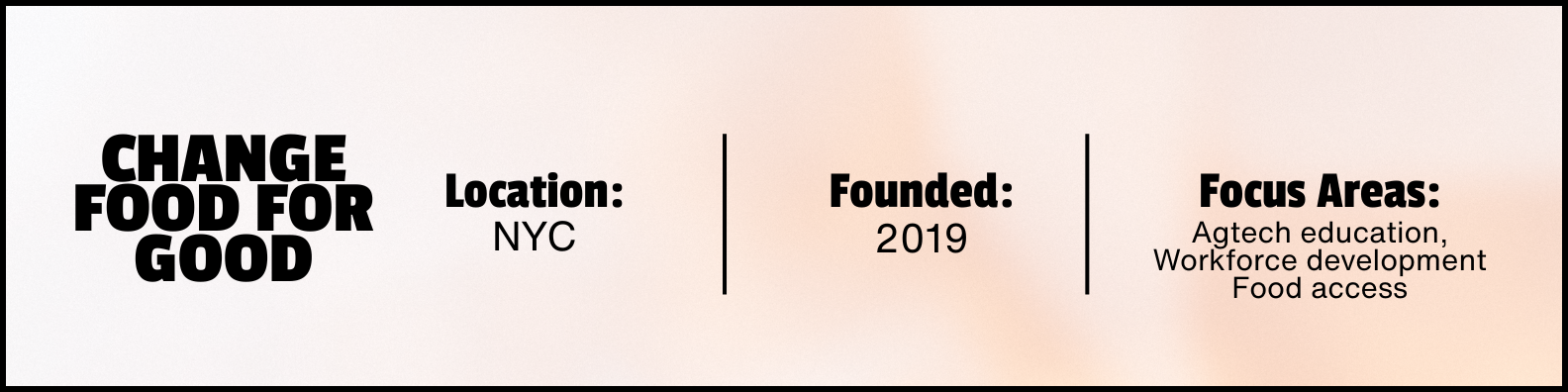
The machine is the public-facing edge of Change Food for Good, a New York City–based agtech organization working at the intersection of food relief, workforce training and urban agriculture.
What makes the vending machine notable is not limited to the novelty of its form, but the larger model it belongs to, as it is just one component of the organization’s broader effort to address how food is grown, how skills are built and how access is structured in neighborhoods where instability is often the defining condition.
The Work + Mission of Change Food For Good
In New York, food insecurity rarely exists on its own. It overlaps with housing instability, irregular work schedules, gaps in benefits and a workforce landscape that offers few clear paths into stable, living-wage jobs for young adults.
Traditional food-relief infrastructure—pantries, pop-up distributions, weekly drop-offs—fills critical gaps, but often through systems that depend on fixed hours, documentation, transportation and public visibility.
For many residents, access is shaped less by need than by timing, logistics and the unspoken cost of being seen asking for help.
Change Food for Good operates inside that reality. Its work responds to the everyday friction people face when trying to secure both food and economic footing at the same time. The vending machine is the most visible expression of that response, but it is not the whole story.
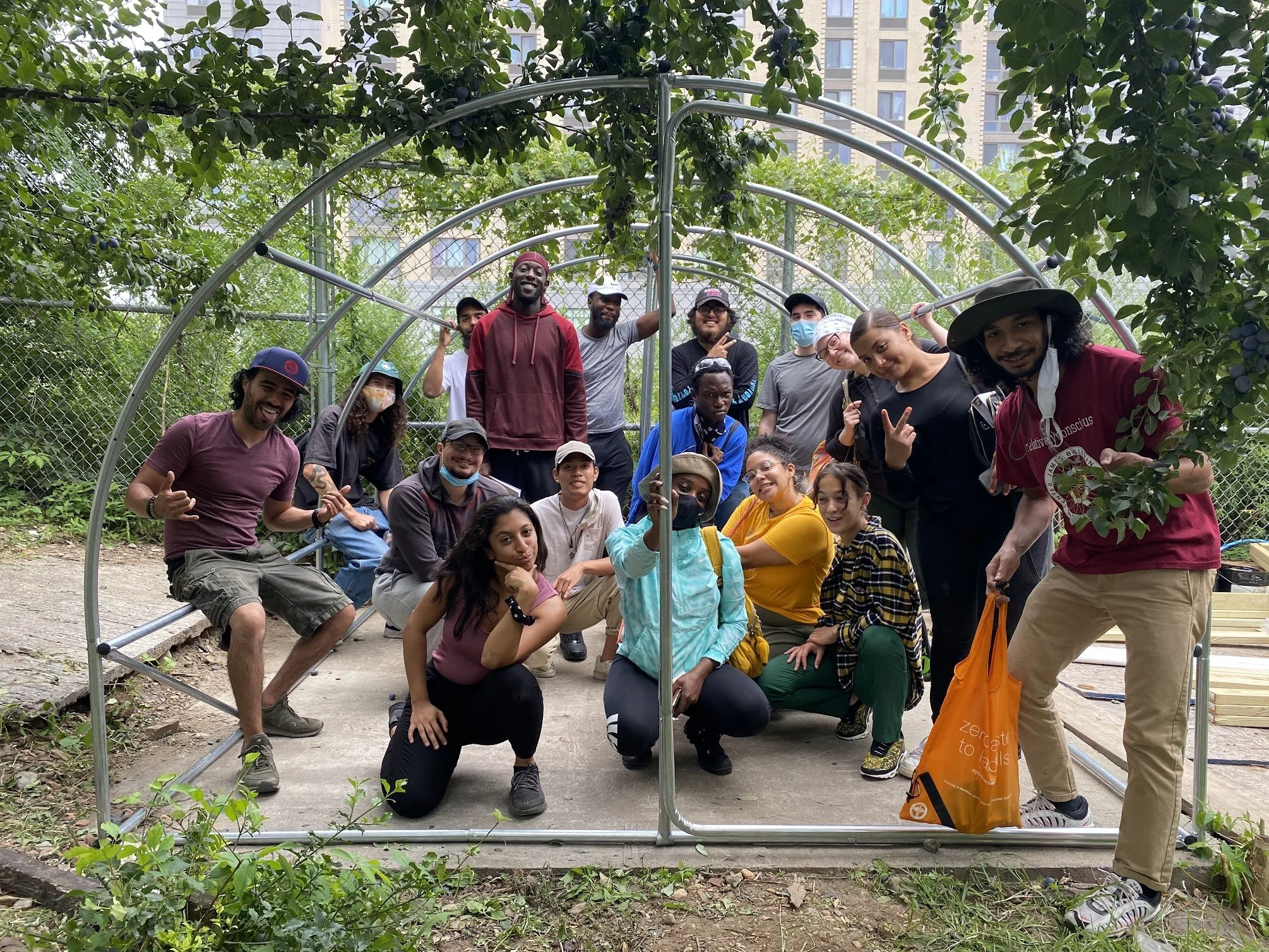
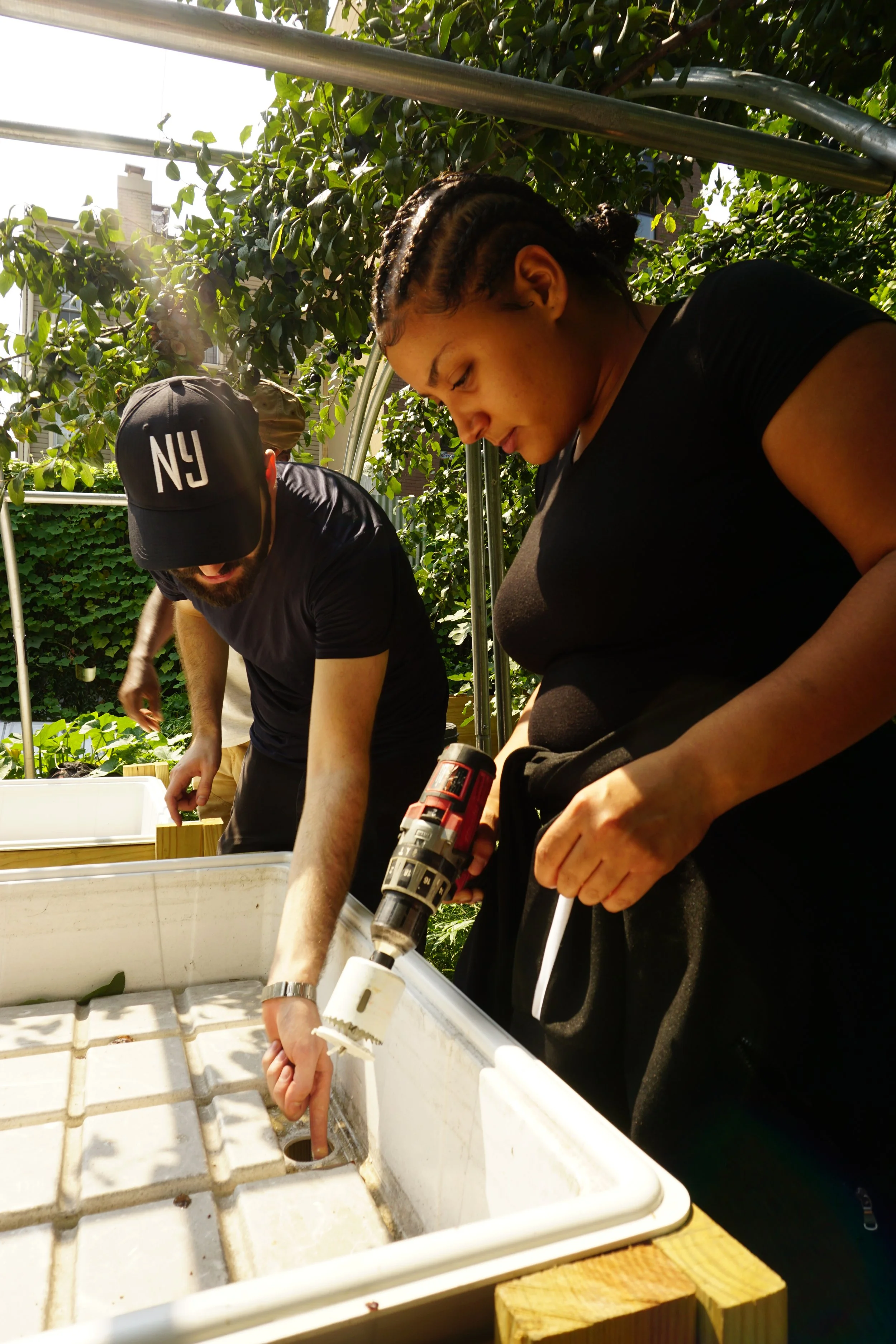
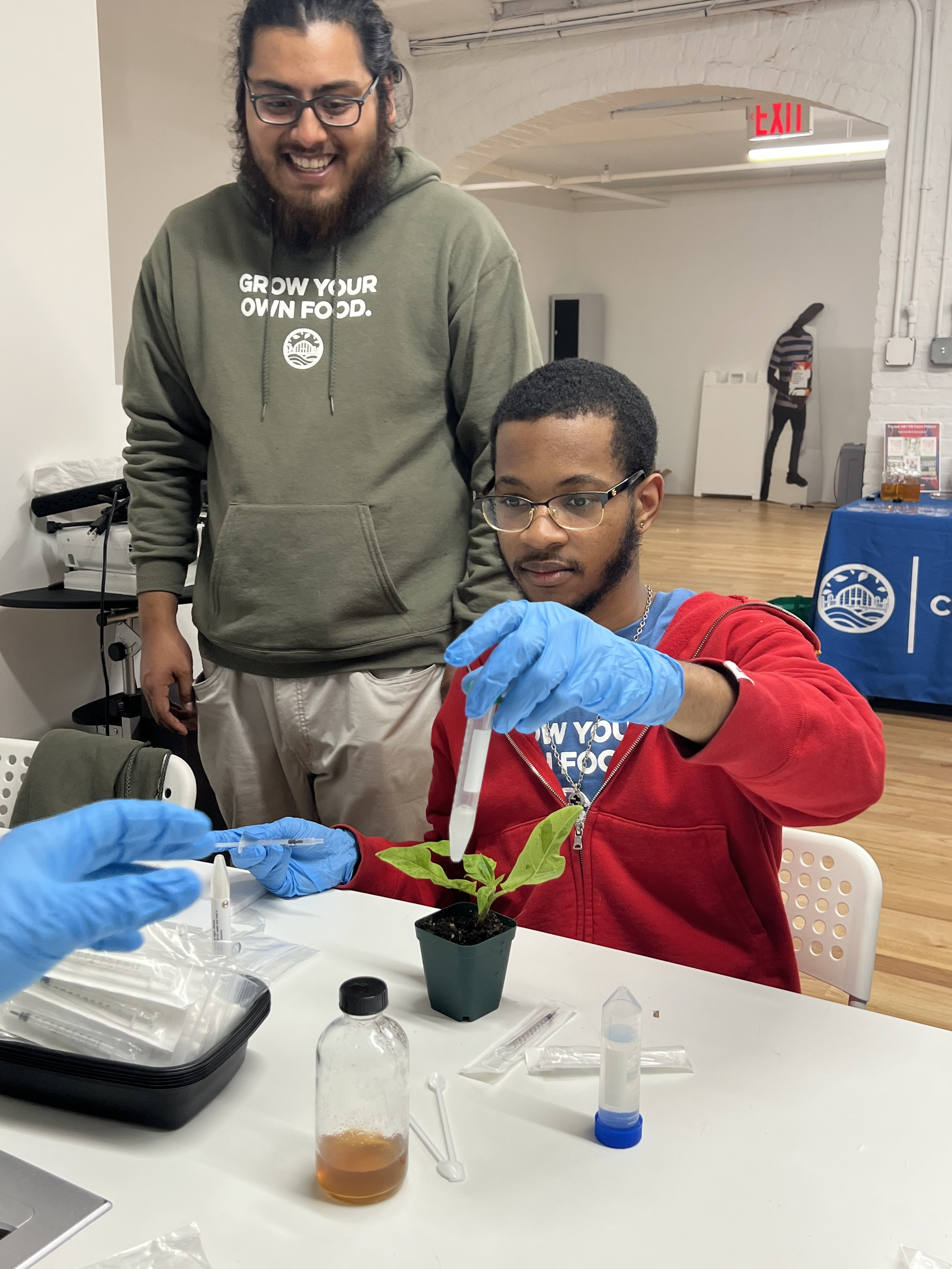
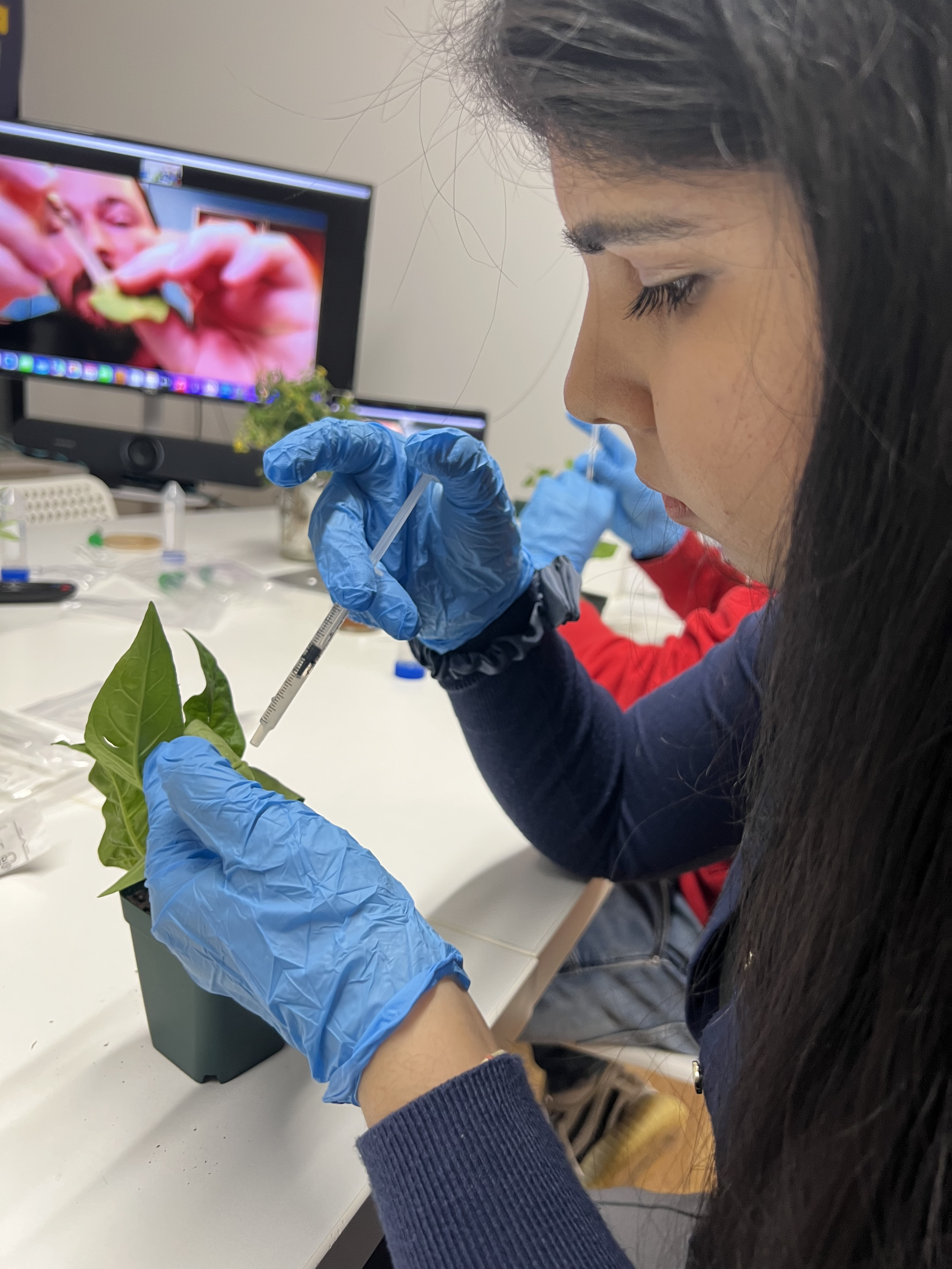
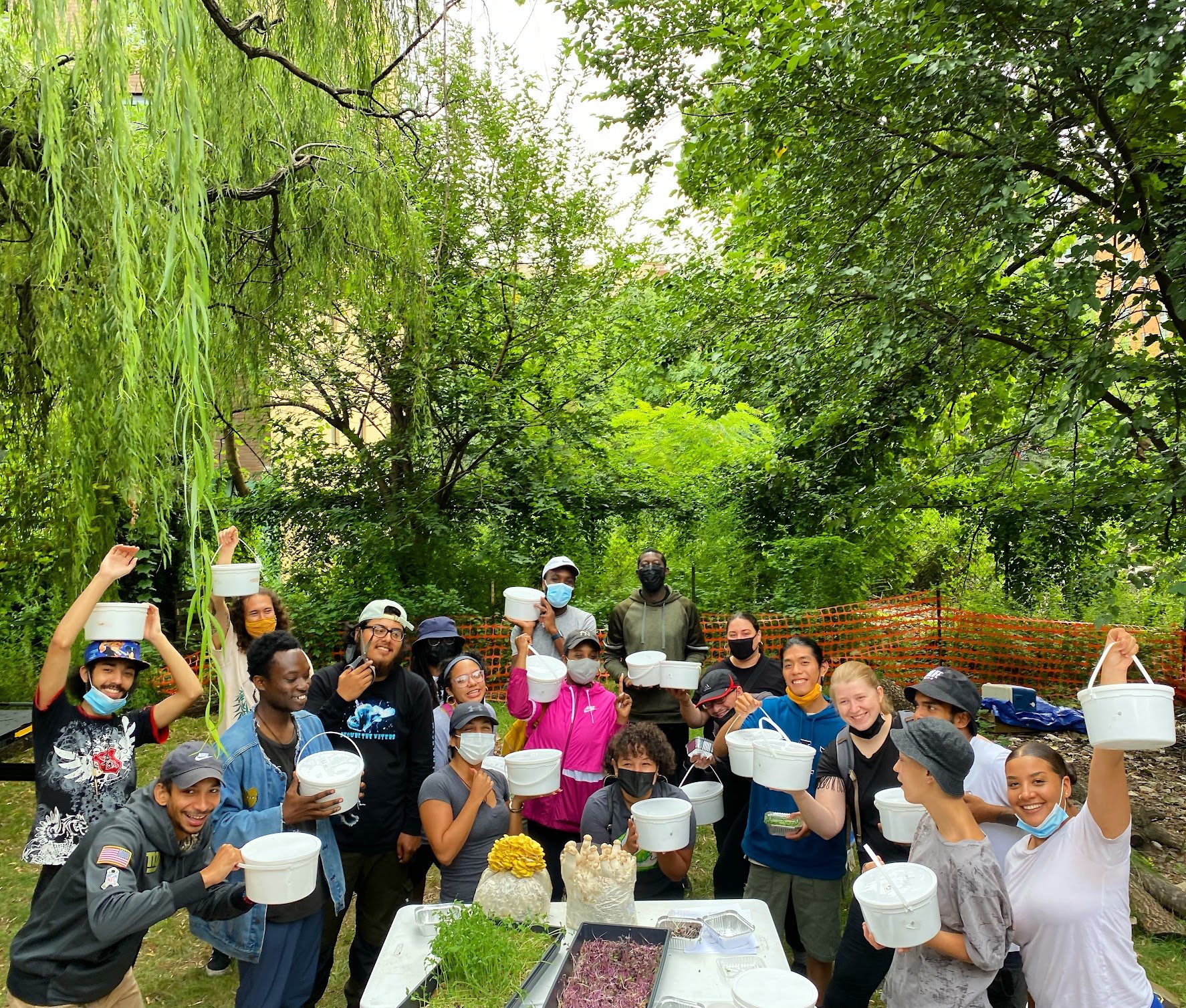
Behind it are training programs for young adults entering the green economy, hydroponic and aeroponic growing systems built into dense urban space and paid internships designed to link technical skill to real employment.
“Our mission is to make sustainable agricultural technologies more accessible to communities affected by food insecurity,” Change Food for Good Founder and CEO Samia Lemfadli told Hyvemind.
“To us, that looks like leveraging innovative technologies, sustainable design principles and community-centric models to improve food relief infrastructure.”
(This is the polite version of saying that, in one of the wealthiest cities in the world, food access is still governed by paperwork, scheduling, transportation, stigma and luck.)
Taken together, the organization’s work reflects a larger question playing out in cities across the country: what happens when food access, workforce development and infrastructure are treated not as separate social services, but as interdependent systems?
Who Change Food for Good Serves:
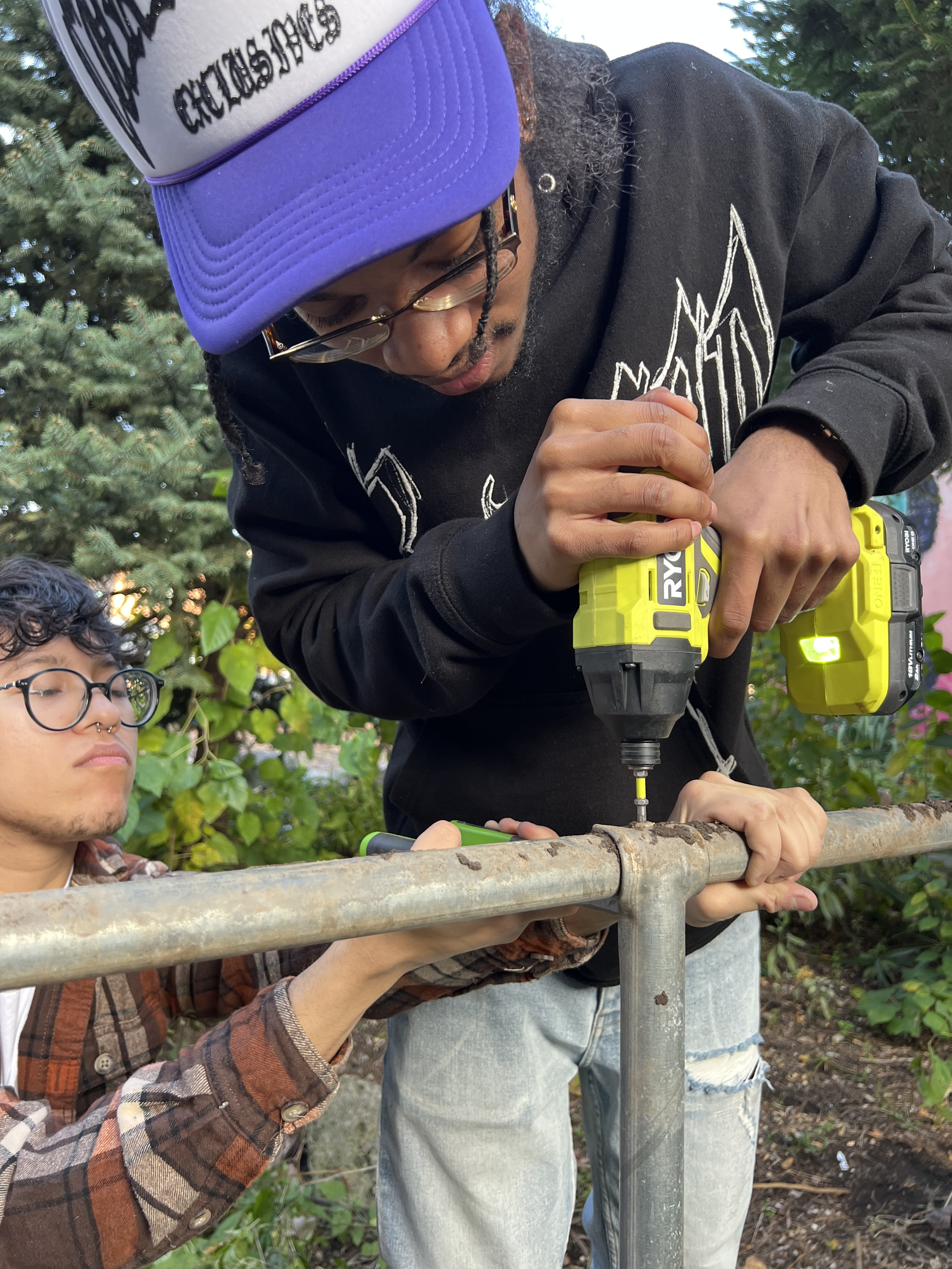
CFFG serves young adults ages 18–24 across New York City who are seeking skill-building, stability and entry points into the green economy. Many arrive with limited access to traditional training programs or with an interest in blending hands-on work with applied technology.
The organization’s Good Food for All food-access program reaches residents navigating food insecurity under conditions shaped by scheduling constraints, transportation barriers, documentation requirements and inconsistent supply. These pressures influence whether someone can reliably access groceries, and CFFG’s model is built around that reality.
Across both tracks, many participants also face broader economic precarity: unstable housing, fluctuating benefits, and erratic work. The design of CFFG’s programs reflects that reality by offering tools and pathways that can adapt to instability.
What Change Food for Good Does:
CFFG operates four interconnected programs that support both food access and economic mobility:
Intro to AgTech: A training program designed to introduce young adults to sustainable agriculture, construction and basic technology skills through applied, hands-on projects.
AgTech 101: A school-based curriculum delivered through partner high schools, expanding understanding of urban farming and environmental design.
Subsidized Internships: Paid positions for program alumni and youth jobseekers that build professional experience while easing the financial pressures that often accompany early employment.
Good Food for All: A food-access model that includes a cold-storage vending machine distributing free groceries at all hours.
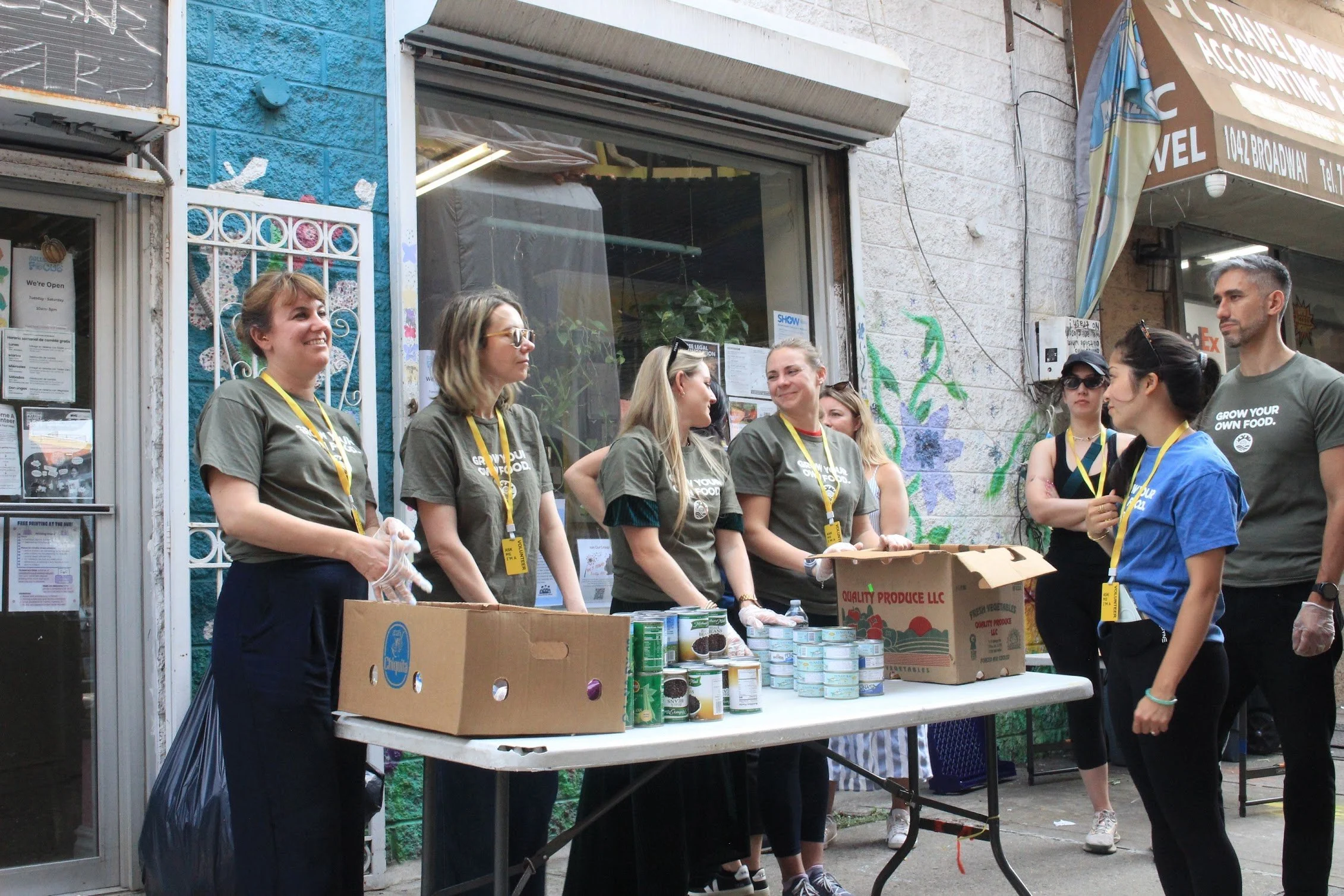
Additionally, CFFG works with schools, community-based organizations and community gardens to build and maintain urban farms, food hubs and green spaces.
Through these interlocking efforts, CFFG is working to embed sustainable agriculture and food production directly into neighborhoods to unlock multiple levers of economic and food system resilience: training and employment, production and distribution, community-based agriculture and equitable access to nutrition.
How they Do It: Rethinking the Shape of Food Relief
CFFG’s model grew out of repeated feedback from program participants and community members. Over time, the same barriers appeared across stories and survey data: limited pantry hours, unpredictable inventory, intrusive eligibility screening and the quiet calculations people make when help comes with scrutiny.
Instead of treating those patterns as unavoidable, the organization began asking what a food-relief system would need to look like if it eliminated the most persistent points of failure—one that could operate 24/7, avoid means testing and mirror the familiarity of a traditional food outlet so people wouldn’t feel exposed when using it.
That question was also personal.
“Growing up, there was so much stigma around accepting public assistance and I see a lot of that rhetoric resurging lately,” Lemfadli revealed. “Other times, it wasn't a stigma but a fear that you may not have an off-ramp.”
The vending-machine model became the practical answer. Cold storage maintains food safety, aound-the-clock access aligns with irregular work schedules, free-vend settings remove administrative barriers and inventory tracking supports consistent restocking.
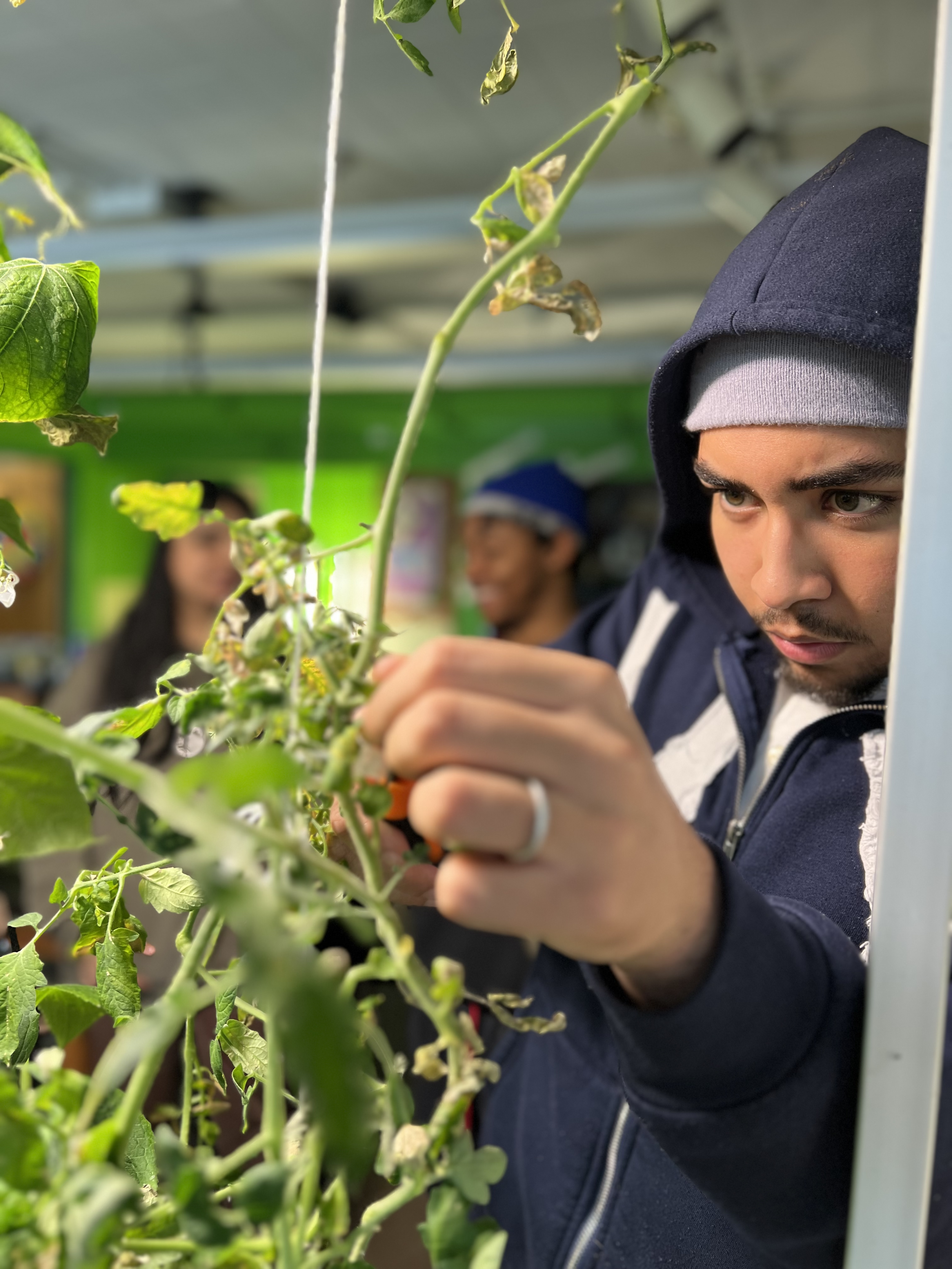
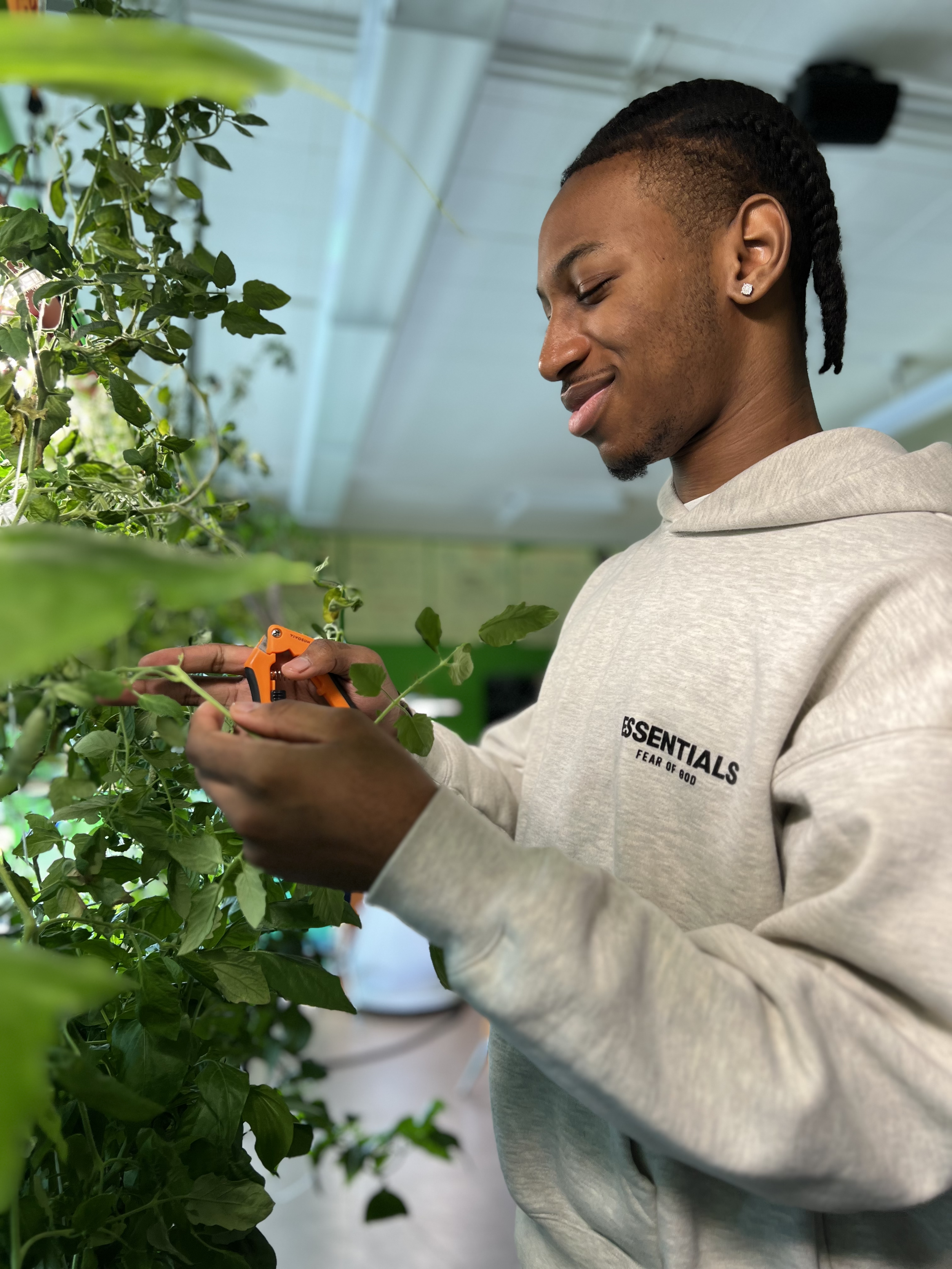
On the agriculture side, CFFG uses hydroponic and aeroponic systems to build farms where traditional soil-based agriculture doesn’t fit: rooftops, school basements, community gardens, underused urban plots.
Those methods use up to 90% less water than conventional farms, a critical advantage in a city with limited space and growing environmental pressure.
Training programs, whether its building farm infrastructure to maintaining hydroponic towers, give participants hands-on involvement in every stage and internships place alumni into paid roles that integrate urban farming and green-tech employment into their livelihoods.
In this way, CFFG builds not just one solution, but a layered infrastructure: people trained, farms built, produce grown and food delivered—all within a network that folds social need, technical skill and ecological sensitivity into one.
The Neighborhood as a Food System
In the years ahead, Change Food for Good plans to reach thousands more participants, build dozens of additional urban growing systems and distribute hundreds of thousands of meals.
For an organization of its size, the scale of those ambitions is significant, even as the work itself remains rooted in small, repeatable units: a cohort, a farm, a vending machine, a block.
The project is guided less by the promise of a single solution than by a series of practical assumptions tested over time.
Namely, that dependable food access can function without layers of screening. That some share of a city’s food supply can be grown locally. That young adults can find paid work in the emerging infrastructure of climate adaptation. That dignity can be built into systems rather than added later.
Looking beyond any one tool or program, the organization’s leaders speak more often about approach than technology.
Lemfadli returns to it repeatedly in conversation. “The willingness to think outside the box,” she says.
Not as a slogan, but as a method—one that asks future builders to question inherited systems, test alternatives at a human scale and keep revising what access can mean.
4 Ways You can Help Support Change Food for Good:
Visit their Website to Learn more:
Follow CFFG on Social Media and Amplify their mission:
Donate:
Donorbox.org/changefoodforgood→
Volunteer:
Visit here to fill out Change Food For Good’s volunteer engagement form and get involved.
This feature was published as part of HYVEMIND’s Working Models series: stories from the people and organizations reshaping care, community and system repair.
We’re always looking to highlight organizations, collectives, and community experiments that are changing how care, work and wellbeing are built. If your team is running a program or initiative that others could learn from, we’d love to hear from you.
To be featured in an upcoming story, send a us note: hello@thehyvemind.com
