
Working Models: National Domestic Workers Alliance
Building Power in the Shadows of America’s Care Economy
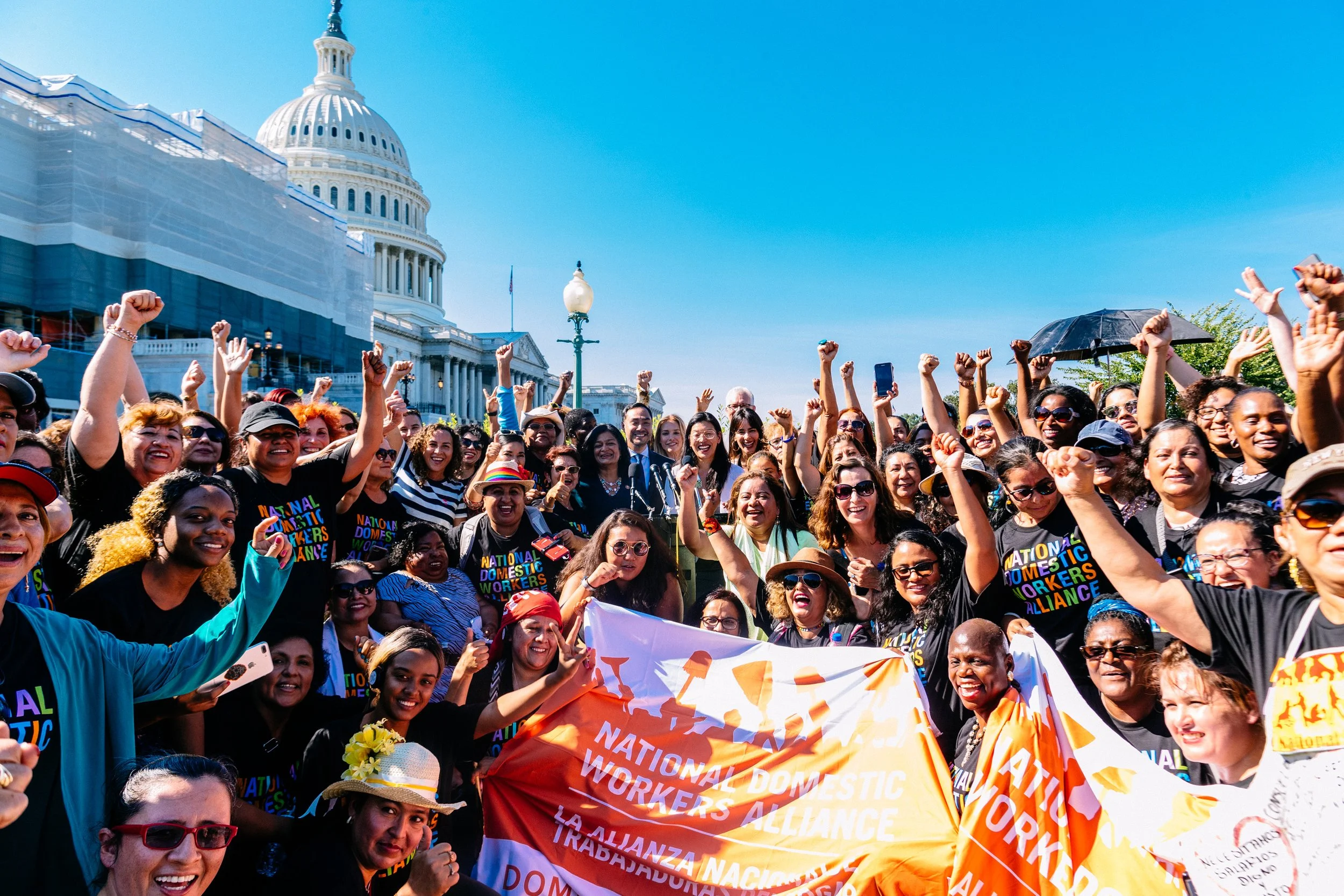
Photos courtesy of The National Domestic Workers Alliance
In the private homes where America’s caregiving unfolds, a quiet revolution is building.
For decades, the work of nannies, housecleaners and home care aides—labor that sustains families and enables other industries—has been excluded from the nation’s most basic workplace protections
The result is an industry where exploitation thrives in plain sight: erratic hours, low pay, wage theft and little recourse against retaliation. Yet the conditions that once kept this workforce invisible are beginning to crack.
At the center of this change is the National Domestic Workers Alliance (NDWA), a group that now organizes and advocates for roughly 2.2 million domestic workers across the United States.
Their aim is as ambitious as it is overdue: to rewrite the rules of the American care economy and to elevate the workers who have held it together more or less alone.
The Work + Mission of the NDWA
The National Domestic Workers Alliance operates with a clear mission: to bring visibility, dignity and legal protections to a workforce that has been historically undervalued.
Through local chapters in seven states, national campaigns and digital networks, the alliance helps domestic workers secure basic rights such as fair wages, written contracts, overtime pay and safety protections.
The organization also pushes for broader systemic change.
In NDWA’s view, the care economy, which spans childcare, elder care and home cleaning, is essential infrastructure. Families rely on it every day, yet both caregivers and those who need care are often navigating a system strained by cost, scarcity and instability.
NDWA believes that improving the quality of care starts with improving the working conditions of caregivers themselves. Their policy agenda reflects this, prioritizing labor protections, public investment and a long-term vision of care that is both accessible and sustainable.
It is, in essence, an effort to bring the often-invisible backbone of the domestic sphere into the light of public policy and recognition.
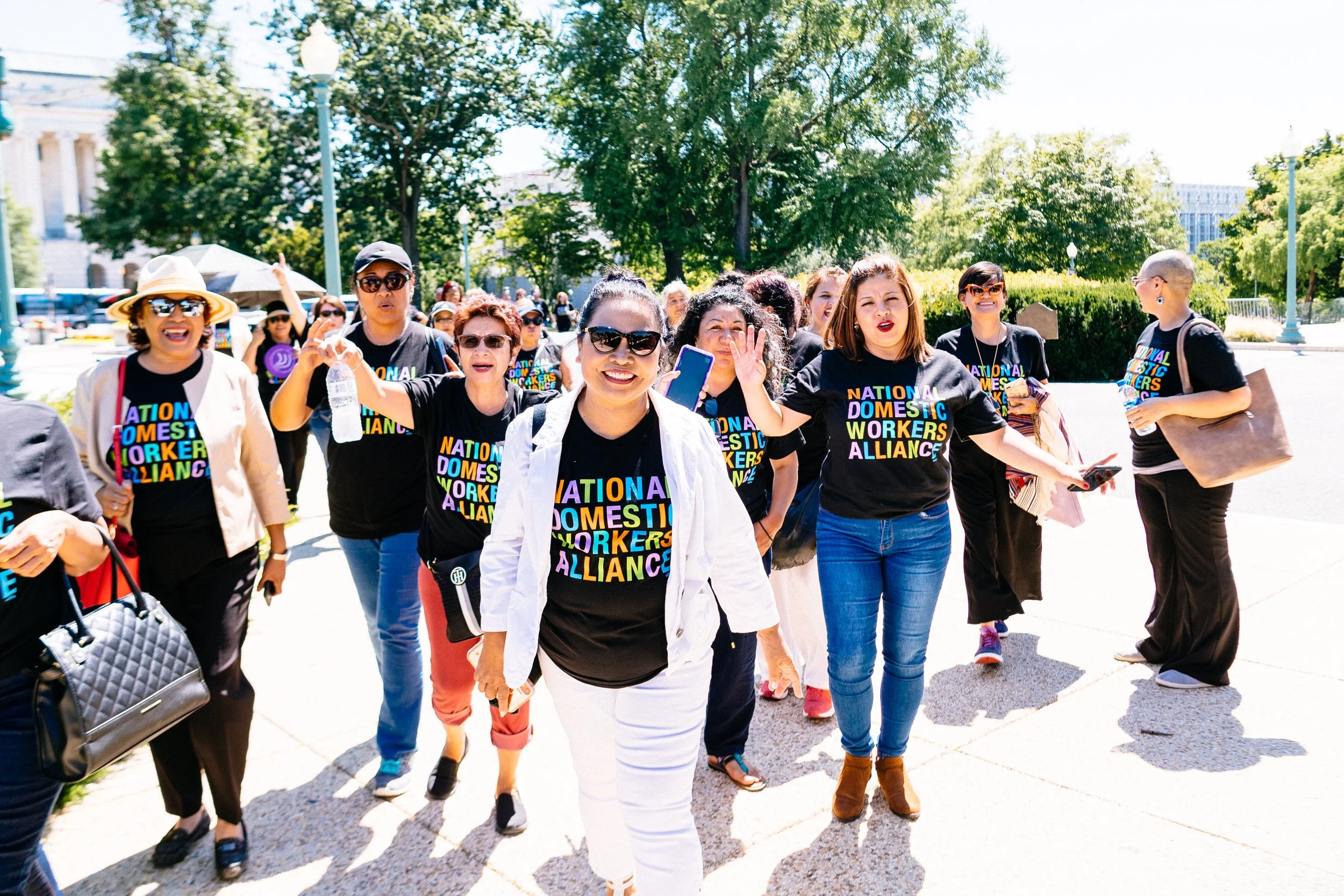
Who The National Domestic Workers Alliance Serves:
The National Domestic Workers Alliance serves a workforce that is predominantly female and disproportionately composed of women of color and immigrants.
Its members are the nannies navigating unpredictable hours, the home cleaners facing wage theft without recourse and the caregivers for the elderly and disabled working without health insurance or safety standards.
Many balance precarious immigration status with the necessity of their work, operating in a shadow economy where exploitation is common and enforcement is rare.
According to NDWA:
91.5% of domestic workers are women.
Domestic workers are disproportionately immigrants and people of color.
Compared with other workers, domestic workers are approximately three times more likely to live in poverty.
Only 16% of workers had a written agreement with their employer.
More than one third of workers reported receiving no paid meal or rest breaks; and of those who did, only 34% said those breaks were paid.
23% of domestic workers said they do not feel safe at work.
NDWA’s mission is to respond to these realities by building community and collective power, ensuring that workers have places to turn for support and opportunities to participate in shaping policy.
NDWA also draws in family members and allies who have experienced the failings of the care system firsthand, building a coalition that bridges the interests of those who need care and those who provide it.
What the National Domestic Workers Alliance Does
NDWA’s work happens on multiple levels at once, but it often begins with meeting immediate needs.
Local chapters help workers address crises such as unpaid wages, threats tied to immigration status or unsafe working conditions.
Organizers provide guidance, connect workers to legal support and help navigate difficult conversations with employers. For many, it is the first time they have had a place to bring these concerns.
Beyond crisis intervention, NDWA invests heavily in leadership development. Workers participate in trainings on how to advocate for their rights, share their experiences publicly and meet with lawmakers. These programs help transform individual stories into collective action.
Research is another cornerstone of NDWA’s work. Through regular surveys and studies, the organization documents working conditions across the country. This data helps shape policy recommendations and raises public awareness about the challenges domestic workers face.
And when legislative opportunities arise, NDWA mobilizes. Members travel to statehouses, join rallies and take part in lobbying days. Their testimonies, often rooted in personal experience, have been instrumental in passing domestic workers rights legislation in 11 states and two major cities.
How They Do It: Worker-Led Organizing
NDWA’s organizing model starts with a straightforward idea: the people who do the work should shape the movement built to protect it. That principle, NDWA says, guides every part of the organization.
A spokesperson for NDWA told Hyvemind that domestic workers “have pushed NDWA to make sure our work is grounded in real-life conditions,” a reminder that the issues they face rarely appear one at a time.
Much of the organizing also happens in ways that reflect the rhythms of domestic work itself: group chats where workers share updates from job sites; small meetings held in homes, libraries or community centers; and workshops that fit into unpredictable schedules.
NDWA’s work is supported through a mix of philanthropy, grassroots contributions, membership dues and partnerships across the labor and social-justice landscape. Its civic engagement arm, Care in Action, helps mobilize domestic workers as voters and advocates.
Inside the organization, NDWA tries to model the kind of care-driven culture it envisions. Staff and members participate in political education, reflection sessions and periodic rest breaks—an intentional effort to sustain the movement for the long term.
This framework, which NDWA describes as moving at “the speed of trust,” prioritizes relationships, stability and community over urgency for its own sake.
Creating A National Domestic Workers Bill of Rights
At the heart of NDWA’s federal agenda is the National Domestic Workers Bill of Rights, a sweeping legislative proposal that would extend basic labor protections to the 2.2 million domestic workers who have been historically excluded from them.
In practical terms, the bill would guarantee the kinds of rights most workers take for granted. It would:
Ensure federal minimum wage and overtime pay,
Protect against harassment and discrimination,
Require written contracts,
Mandate meal and rest breaks,
Establish clean and safe working conditions,
And create enforcement mechanisms to give workers real recourse when employers violate the law
Right now, 11 states and two cities have passed their own Domestic Workers Bills of Rights. NDWA’s goal is to bring those protections to the national level, creating a universal standard so a worker’s rights are no longer dependent on which side of a state border she happens to work.
Advocates say the bill is long overdue. Domestic workers generate billions of dollars in economic value each year, yet they remain among the lowest-paid and least protected workers in the labour market.
NDWA argues that a national bill is essential not only for workers’ rights but for the stability of the entire care system. A workforce constantly stretched by poverty, burnout and job insecurity cannot sustain the care needs of an aging population.
The Future Domestic Workers Are Fighting For
Looking ahead, NDWA imagines a country where care work is recognized as essential—not by sentiment, but by policy.
They envision a future in which domestic workers have wage stability, safety protections, benefits and meaningful opportunities to lead. A future where families can access reliable, affordable care, and where the care economy is supported by sustained public investment.
For the workers who have spent decades in the margins of the economy, this shift is both long overdue and still unfolding.
And as NDWA continues to build power, it is helping the country confront a fundamental question: What would it mean to value the people who make it possible for everyone else to work, live and care for the people they love?
4 Ways You can Help Support NDWA:
Follow NDWA on Social Media and Amplify their mission
Take Action:
Get involved with the National Domestic Workers Alliance. See the local, state and national campaigns NDWA is working on now.
Donate:
Help support the NDWA as it fights for the millions of nannies, housecleaners and care workers who care for us.
USE Fair LABOR AGREEMENTS FOR DOMESTIC WORK:
Download the sample agreements for nannies, home care workers, and housecleaners, released by the U.S. Department of Labor. These sample agreements can be used to establish a fair working relationship between domestic workers and their employers.
This feature was published as part of HYVEMIND’s Working Modelsseries: stories from the people and organizations reshaping care, community and system repair.
We’re always looking to highlight organizations, collectives, and community experiments that are changing how care, work and wellbeing are built. If your team is running a program or initiative that others could learn from, we’d love to hear from you.
To be featured in an upcoming story, send a us note: hello@thehyvemind.com
