Somatic Abuse In Narcissistic Families: When One Person’s Nervous System Carries Everyone Else
A Look at How Narcissistic Family Dynamics Push One Person to Carry the Emotional and Physiological Burden for Everyone Else.

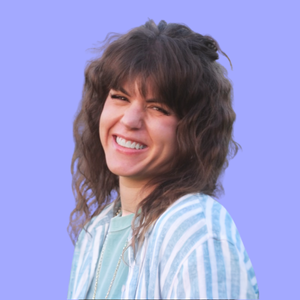
Therapist Cass Myers uses a phrase that rarely appears in conversations about abuse: somatic abuse.
The term refers to a pattern in which one person’s emotional state repeatedly disrupts another person’s nervous system.
Unlike emotional abuse, which targets perception and feelings, or physical abuse, which harms the body directly, somatic abuse operates at the level of regulation. It interferes with a person’s ability to maintain internal calm.
Myers describes it as a gradual reshaping of one person’s ability to rest.
Human nervous systems do not regulate in isolation. They depend on a process known as co-regulation, in which the nervous systems of people in close proximity influence one another. When a dysregulated person encounters someone whose body is calm and stable, the nervous system often follows that cue: breathing slows, muscles release and tension eases.
Under healthy conditions, this regulation exchange moves fluidly between individuals. But Myers describes what happens when the dynamic is one-sided.
In environments shaped by covert narcissism or unresolved trauma, the calm nervous system of one person can become a resource that others repeatedly draw from. Over time, the individual who absorbs this disruption is forced to continually regulate themselves after their internal state has been pulled out of balance.
Myers describes this as somatic hijacking: a pattern in which another person continually pulls on someone else’s nervous system to stabilize their own. This does not always result in visible conflict, instead, it erodes the ability to regulate and access calm.
Within this framework, “narcissistic supply” takes on a physical dimension wherein the supply is not only attention or admiration, but instead hijacks another person’s nervous system.
In families where one child becomes responsible for maintaining emotional equilibrium, that child learns to monitor the room, sensing when tension rises and adjusting their own state to soothe the environment.
Myers suggests that narcissistic patterns develop in environments where healthy co-regulation never occurred. Without repeated experiences of calming alongside another person, the nervous system carries forward the imprint of dysregulation.
The concept of somatic abuse remains relatively underexplored, but it offers a way to understand how relational dynamics can shape the body’s ability to feel safe and at rest.
In the video below, Myers describes their own experience with somatic abuse within narcissistic family dynamics and explains how these patterns can unfold inside everyday relationships.
Check out Cass Myers’ channel to investigate with them how nervous systems interact and how family dynamics shape those interactions.
See their video on somatic abuse and covert narcissistic mothers here or below.

Cassandra Myers (they/she/he) is a queer, non-binary, mixed-race therapist and poet based in Ontario. Their work centers disability justice, crisis support and arts-based healing.
Check out their website, here.