Meet Focused Space, the Body Doubling Platform Building Better Conditions for Neurodivergent Workers
For neurodivergent remote workers, Focused Space turns structure, shared presence and small acts of care into the conditions that make work possible.
For neurodivergent remote workers, home can offer relief and then covertly remove the rails.
There is comfort in controlling the room around you. There are fewer fluorescent lights, fewer forced conversations and fewer sensory demands from an office built around a narrow idea of what focus should look like. Remote work can allow a person to move through the day with more privacy, more autonomy and more space to accommodate the realities of their own brain.
But then the day starts to blur. The calendar has gaps, the room has no witnesses, the work has no edges and the ordinary cues that help a person begin, pause, switch tasks or stop working disappear into the furniture.
As a neurodivergent writer and co-founder who works remotely, I have felt that drift in my own body. It shows up in unfinished projects, repeated to-do lists, difficulty beginning even simple tasks and the familiar collapse that happens when my brain understands the assignment and my body cannot quite move toward it.
The problem can look like procrastination from the outside, but internally it feels more like trying to operate a machine with half the power cut.
That is what led me to Focused Space, a digital coworking platform built with neurodivergent people in mind.
Co-founded by Dr. Alexis Hope, a designer and researcher who spent a decade at MIT before building the company with two other tech veterans, Focused Space grew out of a clear frustration with the way work tools often ignore the human beings expected to use them.
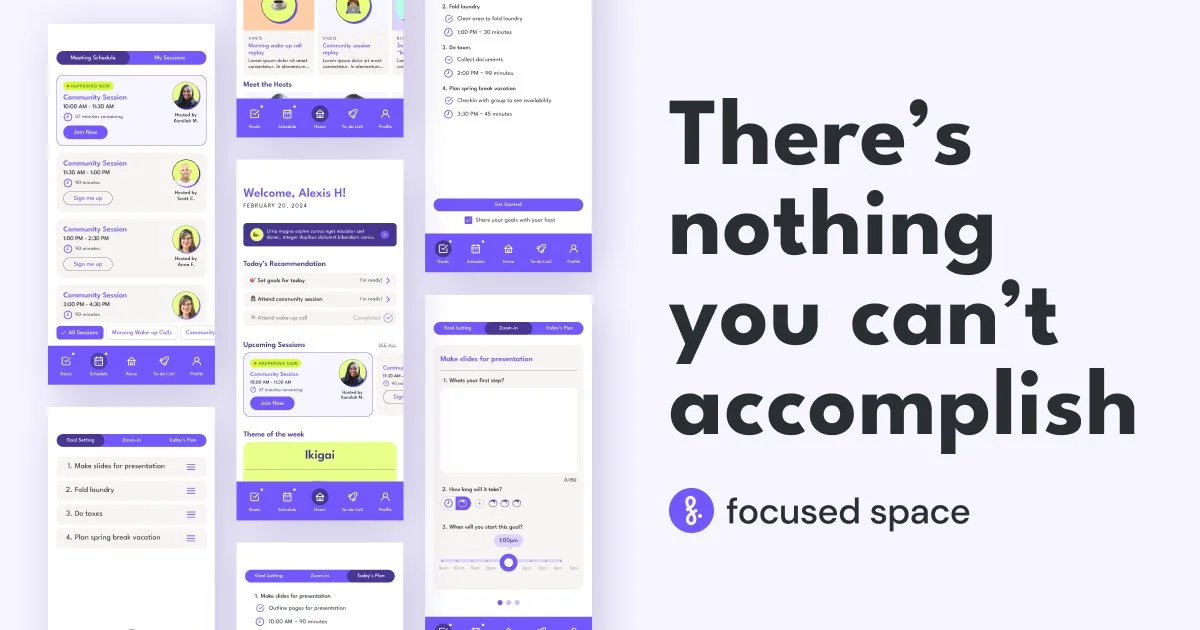
The platform offers guided focus sessions, morning goal-setting, body doubling, gentle accountability and reminders to do the basic maintenance tasks that tend to vanish during an unstructured remote workday: drink water, eat food, stretch, take a break, breathe, regulate.
The premise is simple enough to sound almost obvious. “People focus better when the conditions around them make focus possible.”
That premise also runs counter to much of modern productivity culture, which has a talent for turning structural problems into personal defects. The worker is always the one who needs to be more disciplined, more optimized, more resilient and more efficient. The workday itself, with its isolation, overload and impossible demands, often escapes scrutiny.
But for many neurodivergent people, productivity rarely begins with ambition. Instead, it begins with access to structure, external cues, shared presence and enough internal steadiness to start.
And those needs have become more visible as remote work continues to shift into a permanent modern labor condition for millions of people.
The shift has brought real benefits, especially for workers who never fit neatly inside traditional office culture. But it has also intensified a less often realized set of problems: when the day has no clear boundaries, no social rhythm and no one moving through work alongside you, ordinary responsibilities can become strangely difficult to initiate.
And that is where Focused Space begins. During an interview with Hyvemind, Dr. Hope described the platform as “a goal setting and body doubling community” built around the practical reality that many people need more than good intentions to get through the day.
Body doubling, as Dr. Hope explained it, is when another person’s presence makes it easier to begin a task, stay focused and keep going. That person does not need to supervise the work or offer direct help. The value is in the shared presence itself, which can create a social container for attention.
That idea reflects a growing understanding of ADHD and executive functioning. For people who struggle with task initiation, sustained attention, emotional regulation or motivation, external structure can make a meaningful difference. Research and clinical conversations increasingly point to accountability, shared presence and body doubling as practical supports for getting started and staying with the work.
Those supports become harder to access when work happens in isolation. Remote work can offer flexibility and relief from the demands of a traditional office, especially for neurodivergent workers, but it can also intensify challenges around time blindness, self-regulation, distraction and cognitive overload.
Many neurodivergent people also need more support with project management than traditional productivity culture tends to acknowledge. Larger projects often need to be broken into smaller, more concrete steps, and basic care tasks can also require external reminders.
Eating, hydrating, stretching, pausing, shifting gears and taking breaks may seem intuitive to some people, but for others, those actions become much easier when they are built into the structure of the day.
And while in-person coworking spaces can provide social proximity and a physical separation between home and work, they can also carry a hefty price tag. Memberships can be costly, and private rooms for calls or meetings often add another layer of expense.
For workers navigating disability, unstable income, burnout, caregiving or limited transportation, the support exists behind a door that may be near impossible to open.
Focused Space brings the structure of coworking into a digital environment without requiring members to pay for a physical office, commute across town or perform productivity in a public setting.
Members can begin the day with goal-setting sessions that encourage them to break large, overwhelming projects into smaller tasks. The platform also limits how many goals a person can set in a day.
Hope described that limit as part of the company’s effort to help people set realistic goals, prioritize and avoid getting buried under “all the noisy stuff running through their heads.” The goal, she said, is to help members figure out what actually matters today.
It is a small but meaningful intervention for anyone familiar with the morning ritual of creating a to-do list so punishing it becomes another source of dread.
There is also a brain dump section, where members can unload the tasks, worries, reminders and half-formed thoughts crowding their minds. Some of those thoughts can become concrete goals while others can simply be named and set down.
For anyone who, like me, has a brain that often feels like a dozen browser tabs open at once, with at least a few of them playing music, the act of moving those thoughts somewhere visible can offer immediate relief.
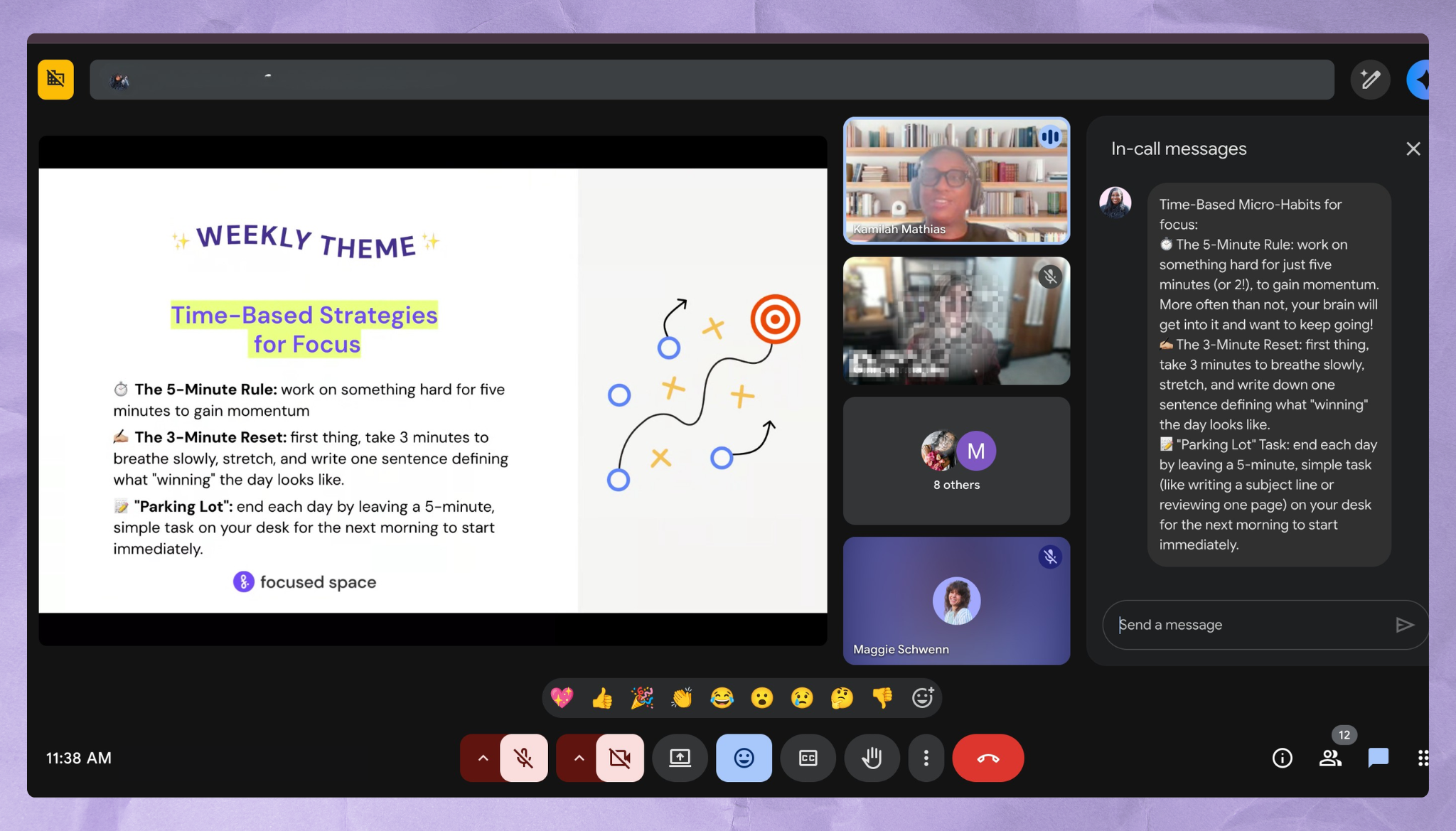
Focused Space also offers all-day body-doubling sessions through Google Meet, which Hope described as “group exercise classes for getting shit done.”
Trained facilitators guide members through timed work sprints, often around 25 minutes, followed by short breaks. Between sprints, they may remind people to drink water, eat a snack, stretch, breathe or reset. Some sessions include chair stretching, mindfulness meditation or moments of social connection.
Members are encouraged to share goals, name wins and cheer one another on, whether someone has completed a major work project or finally answered the email they have been avoiding for weeks.
“We’re sort of anti-hustle culture,” Dr. Hope revealed. “We are trying to help people realize how to work with themselves and not against themselves.”
That ethic also reflects Hope’s broader critique of the tech industry she came from. She and her co-founders all spent years in technology, and Dr. Hope said they have watched “the horrible things” big tech has inflicted on society. With Focused Space, she said, they want “to do things a different way.”
That different way includes the platform itself, along with Scrollbreaker, the company’s newsletter about intentional time, creative work and the small rebellions available to people trying to reclaim their attention.
Lately, Hope has been using that space to think through larger questions about AI, work and human presence. In a culture increasingly organized around speed, output and efficiency, we are required now more than ever to ask what conditions actually help people remain present, steady and connected to themselves.
For neurodivergent workers especially, the answer to those questions live in the body, in the workday and in the gap between knowing what needs to be done and having enough support to begin—something I did not fully understand the value of until I started using Focused Space myself.
January was a hard month for me. At first, I approached the platform as a work tool. I used it for Hyvemind projects and entered the things I thought I should be accomplishing into the goal-setting section.
But after a few days, I noticed the same pattern repeating itself. I would move the same large goals from one day to the next, and then to the next day after that. The list was not helping me move forward. It was becoming a visual record of everything I could not make myself do.
Seeing that pattern laid out in front of me is what made something click. I have a lot of experience with mindfulness and self-awareness practices, but at that point, my nervous system was so dysregulated that I could not access those tools internally.
My body was stressed. My brain was fried. The repeated unfinished goals on the screen helped me understand that I was not dealing with laziness, a lack of discipline or some personal failure of willpower. I was burned out, and my system did not need any more pressure. It needed support.
So I stopped making work-related goals. Instead, my goals became much more basic: Do physical therapy exercises, drink water, eat and regulate my nervous system.
I broke those goals into smaller steps, even when the steps seemed almost absurdly simple. To do my physical therapy exercises, I needed to get out my exercise bands and yoga mat. To hydrate, I needed to get a glass from the cabinet and fill it with water. I knew these things consciously, of course, but knowing something and being able to initiate it are not the same thing when your body is in a state of burnout.
Focused Space allowed me to treat those basic care tasks with the same seriousness that many workplaces reserve for professional productivity. That mattered more than I expected. The platform did not force me to prove that a task was important enough to deserve structure. Instead, it gave me a container for whatever my actual capacity required that day.
There was one session in particular when I was close to having a meltdown. As people were sharing their goals for the day, I told the group, “I’m literally not doing anything today except regulating my nervous system.”
No one made me feel strange for saying that. Instead, the facilitator and other members responded with immediate understanding. They said they get it and treated my goal as seriously as someone else’s Q1 planning or work deadline.
Through Focused Space, I was also introduced to focus music for the first time, including a three-hour upbeat mix that quickly became one of my favorites. Members also receive a weekly newsletter with science-backed facts, music recommendations and practical resources. Those details may sound small, but small supports matter when a person is trying to rebuild steadiness inside a fragmented day.
Focused Space works because it treats structure and care as conditions of work rather than rewards for having already performed well. For remote workers, neurodivergent people and anyone trying to find their way back into motion, the platform does something many workplaces still fail to do: it makes room for the whole human being.
To learn more about Focused Space and become a member, visit www.focused.space