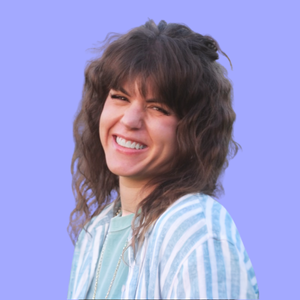
Stacey Ballard, Chronic Illness, Creativity and the Fine Art of Waiting
Meet Stacey Ballard, the woman empowering people with chronic illness to discover joy through small acts of creativity.
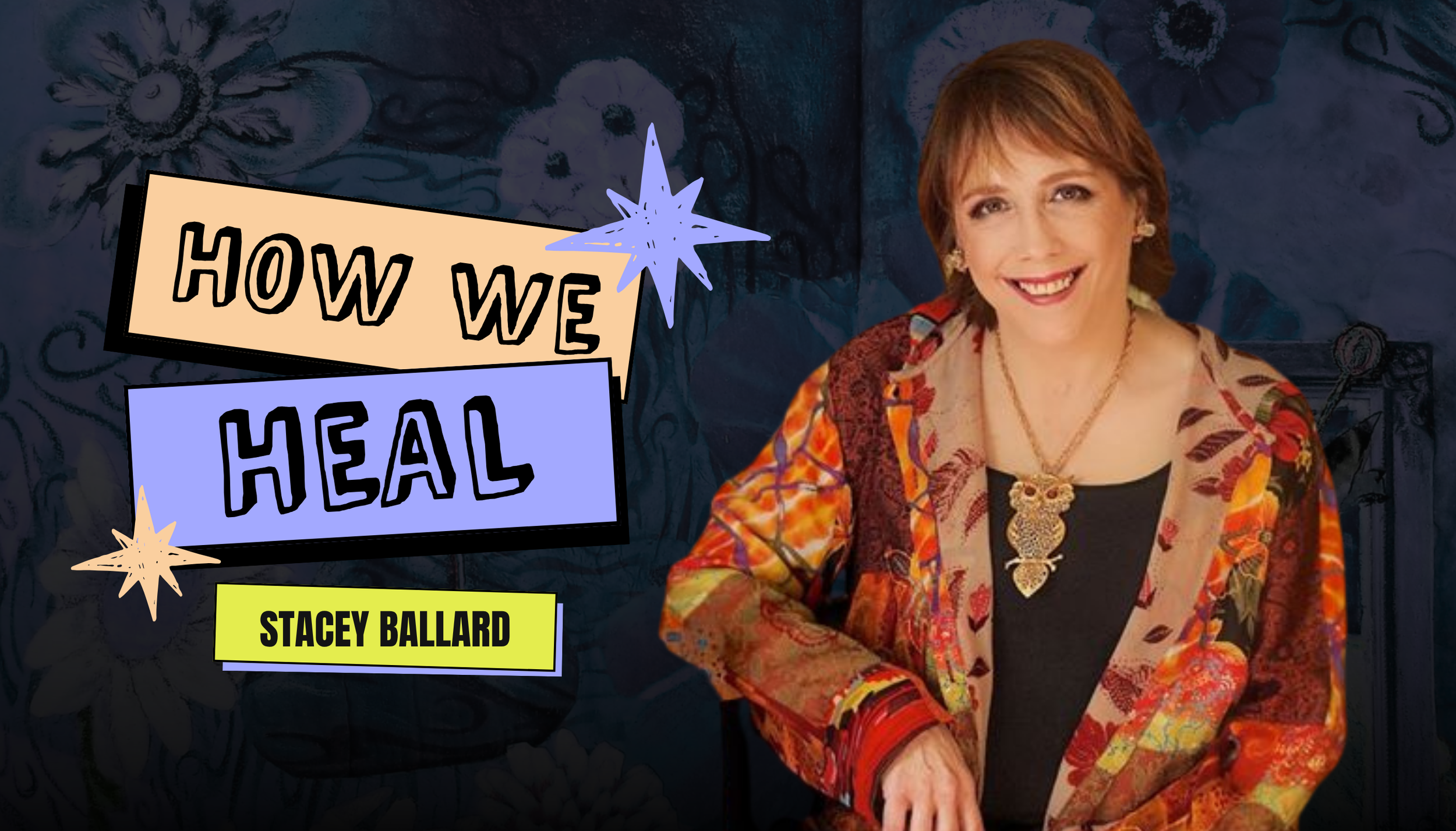
Healing is often described as a private act, something a person is expected to manage quietly, individually and efficiently.
But for people living with chronic illness, healing rarely follows a clean arc. It happens in waiting rooms, in recovery beds, in the long stretch between test results and in the grief of a body that often changes the terms of daily life without much warning.
For Stacey Ballard, who began her health journey at age 10 and has lived through hundreds of hospital visits, more than 20 surgeries and countless months in hospital rooms, creativity became a way to stay connected to herself inside systems that can make a person feel reduced to symptoms, charts and appointments.
Through art, meditation, workshops and the simple act of putting color to paper, she found a way to move fear, anger, uncertainty and pain out of her body and into something she could touch, change, tear up, keep or transform.
That practice eventually became The Fine Art of Waiting, a workbook designed for people navigating illness, pain and the endless suspended time that often comes with both. But Stacey’s work also pushes back on the more punishing corners of wellness culture, where healing is too often packaged as optimization, sold as a product or treated as proof of personal discipline.
As the first conversation in How We Heal, a new series by Hyvemind that explores the lived practices that help people move through pain, grief, illness and change, Stacey shares her story about living with chronic illness and the small rituals that can help people feel human again in the middle of uncertainty.
Hyvemind: Hi Stacey! Welcome. Please tell us a little bit about yourself and let us get to know you.
SB: I understand the emotional and mental toll of living with chronic illness. Having started my health journey at age 10. I’ve experienced hundreds of hospital visits, over twenty surgeries, and countless months in hospital rooms. Through it all, I’ve relied on creativity to support my well-being during treatments, doctor appointments, and healing.
These same creative techniques have not only helped me but have also empowered others to navigate their own challenges.
For over 35 years, I’ve shared art, meditation, and workshops with people who, like me, have faced the challenges of illness. I’ve seen how creativity can bring comfort, spark hope, and even shift the way we see ourselves. In my book, I invite you to explore these tools and insights—gentle ways to nurture resilience and discover your own creative strength. I have lived in beautiful Lake Tahoe, California for the last 30 years.
HM: How can creativity be a form of support for someone who is ill instead of just an artistic practice?
SB: You don't have to be an artist to benefit from the magic of creativity.
Why art? Creativity can help lower your perception of pain by giving you a meaningful distraction and shifting your mental focus away from the pain you might be experiencing.
Art then becomes not only a distraction, but a way to alter your mood and tune into a more relaxing state, so your pain doesn't overcome you. The American Congress of Rehabilitation Medicine says making or even just seeing art can impact the brain.
Whether it's part of a creative arts therapy exercise, or something you experience in your everyday life, art can help to promote wellbeing through:
Increased serotonin levels
Increased blood flow to the part of the brain associated with pleasure
Fostering new ways of thinking
Helping to imagine a more hopeful future
HM: When did you start to reimagine creativity? How do you define it now?
SB: I started reimagining my creativity when I could no longer do the things I used to because of my health.
I have had a side business as a creative person since I was 17. I was a photographer with a studio and darkroom.
When I could no longer do that (around 22 years old), I switched to ceramics, where there was less perfection and less stress. I had an entire ceramic studio with a kiln, slab roller, and all the equipment I needed, but it got too heavy for my body to manipulate anymore, and at 45 years old, I sold everything.
Currently, I am a mixed-media artist and I love working with collage and assemblage.
When I am in the hospital, I keep it simple: a kids' coloring book and crayons.
I love kids' coloring books because they are simple. Big lines, big spaces, and the pressure to make it look "good" isn't as strong.
Creativity is a part of our lives in ways we don't think about—from art, painting, doodling, photography, knitting, cooking, writing, listening to music, singing out loud to myself, playing an instrument, gardening, looking at art, looking at nature, learning new things, dance, cooking, baking, cross-stitch, coloring, having plants, problem solving, poetry, experimenting, trying something new, connection and daydreaming.
HM: Can you talk about the necessary parts of coping with a chronic illness (waiting rooms, recovery periods, uncertainty, etc). What have you noticed about how this can affect one's emotional state?
SB: That's why I named my book The Fine Art of Waiting ! Waiting in doctors' offices, waiting for test results, a diagnosis, or recovery is some of the toughest times, because I felt I had no control over what was happening. I needed a solution to get the fears, uncertainty and unknowns out of my head and onto paper.
That's when I started to feel some relief. I had control over that paper. I knew I had options with color to show my anger, my fear, my grief. Then I could tear up that paper, change it or feel compassion for what I put down on that paper.
Having a chronic illness for almost all of my life is different from being someone who has been newly diagnosed. It does change you.
I feel stronger as an advocate for myself, but it's wisdom born of pain. I know when my flare-ups get bad, I can't do much. It used to be depressing and I'd be mad at myself for not being more "productive."
Now I have steps and tools for taking care of myself. I have also needed support from other people, which is sometimes a challenge in itself.
I have lost friends and I have people around me who still don't understand. For 20 years I had a husband who was a huge help. Now that I'm alone, I have learned to ask for help, which has also been a challenge for me. I have always had at least one person I could call in the middle of the night or who will meet me at the hospital.
I have been in therapy for 40 years, which has been a lifesaver, and I have also used antidepressants and anti-anxiety medication for the last 30 years. I am also a member of Al-Anon and an art group on Facebook called Art for Insight that has many people who live with chronic illness and where no art experience is necessary!
HM: Can you talk a bit about the relationship between chronic illness and time? How has your experience, including working with others, changed the way you think about productivity?
SB: As a recovering workaholic, controlaholic, and perfectionist, this one can be tough. I have had a number of times when I have been very close to death, and that has taught me to enjoy the moments that are in front of me.
I can still get caught up in wanting to keep up, though I do it less often these days. I have pushed my body so many times trying to keep up, and I have learned over the years that it is not worth it.
HM: What's your take on the commonality of wellness culture to focus on optimization and self-improvement? How is what you do more accessible and different?
SB: I have been a part of wellness culture. I have tried everything from crystals to healers, every cleanse and detox, different diets, psychics, herbal formulas, supplements, energy work, chakra work, meditation, past lives and aura reading—I could go on.
Some of these things are very helpful to me today, like meditation, prayer and connection. What wasn't helpful was the cost of trying all of these things. Additionally, sometimes they had bad side effects.
People don't understand that the supplement companies out there aren't any better than pharmaceutical companies. It's gotten out of hand when you're treated like you're not doing the right thing and that's why you haven't healed.
People can feel a lot of shame from that, and I used to as well, many years ago. I don't anymore. I create artwork that anyone can do with any products they can find at the cheapest price.
Part of living with chronic illness is how much it costs:the doctor's appointments, lack of work, gas to get to appointments. Living with chronic illness robs people of financial security. I'm about products that are cheap, accessible, easy to find, and easy to use.
Everyone is an artist, but at some point somebody told them that their artwork wasn't good enough or their art didn’t measure up to someone else’s.
That's when most people shut down that part of themselves, they put down their crayons and pens and don't pick them up again. I want people to pick up the finger paints, draw flowers, put down colors they love and play.
HM: Why do you think small, accessible forms of making can matter so much during periods of pain, exhaustion or uncertainty?
SB: Big things can be overwhelming to my brain, hard to work on physically, and take a long time to complete.
Big things can be broken down into smaller sizes, but smaller work is easier. There is art called "Inchies" that are 1"x1", and ATCs are art done on playing cards. Pick a size that feels comfortable for you and your workspace.
HM: What are some of the smallest creative rituals that have genuinely helped you through difficult periods?
SB: One of my favorite rituals is for dealing with anger, disappointment, or stress.
I like to use a thick marker in red or black and scribble all over the paper. I can press hard, be aggressive, or use big movements to get some of that feeling out of my body and onto the paper. Then I can destroy it more if I want to.
Writing letters I never send is also a good one. I can use every bad word, write in all caps, and really tell people what I think. I have written many of these letters to doctors, surgeons, and others who have hurt me. Sometimes I'll throw it unaddressed into a mailbox, rip it up, or set it on fire (always safely).
HM: Illness can sometimes make people feel disconnected from their own identity outside of being "a patient." How has creativity helped you maintain a sense of self?
SB: I made a list of all the things people like about me, things I'm good at, and things I want to try, and I asked some of my friends to help me add to it.
I needed to focus on things that I loved to do, that reminded me of times when I felt good. I would color in coloring books, be creative, listen to music, get outside as much as possible, talk to people and listen to their stories.
I love to watch creative people on YouTube. It reminds me of things I can try when I'm feeling better. I have a project in my book called “My Path” that helps me keep my eye on my future.
HM: Can you tell us a bit about The Fine Art of Waiting and how it came to be?
SB: The Fine Art of Waiting is a 91-page workbook filled with over 25 projects to entertain and engage you during those endless hours of waiting.
This tool can be utilized to support your creativity and the artist within during times of pain. You don't have to be an artist to benefit from the magic of art therapy.
Why art? Creativity can help lower your perception of pain by giving you a meaningful distraction and shifting your mental focus away from the pain you might be experiencing.
It's not only a distraction, but a way to alter your mood and tune into a more relaxing state, so your pain doesn't overcome you.
This workbook was created to help you gain more insight into yourself, decrease your stress, and change your relationship with your illness and pain into one of transformation, possibility and hope.
HM: What have people you work with taught you about the importance of creating emotional space for others living through illness, grief or uncertainty?
SB: That space is so important. Until I feel safe with someone, I can't be completely myself, so it can take time.
Everyone is going through something difficult, and creating a space where people can share without getting feedback or advice is very important to me. I talk about taking care of yourself in any group when we are sharing. I am not a therapist, and no one in my classes are either. It's important not to expect that from the work I teach.
I highly recommend therapy to people dealing with the bigger emotions.
HM: For someone who feels emotionally exhausted, isolated or creatively disconnected because of illness, where would you suggest they start?
SB: Reach out to a safe person and ask for help. You are not alone, and there are those of us who deal with similar issues who might be able to help. I don't believe in giving advice, but people can share what they have experienced.
HM: What advice can you give to others struggling with chronic illness that you wish you would have received years ago?
SB: Ask for help and tell people what kind of help you need. Take someone to doctors' appointments with you if possible, or record the appointments. Rest when you need to. Have compassion for yourself. Don't try to prove anything to anyone.
When you find the right people, they will stand by you. Forgive your body; it doesn't want to feel like this either!