
The Lost Art of Looking Up: How Constant Connection Is Changing Our Relationships
No, you’re not imagining it, our phones are making conversations with family, friends and strangers more difficult.
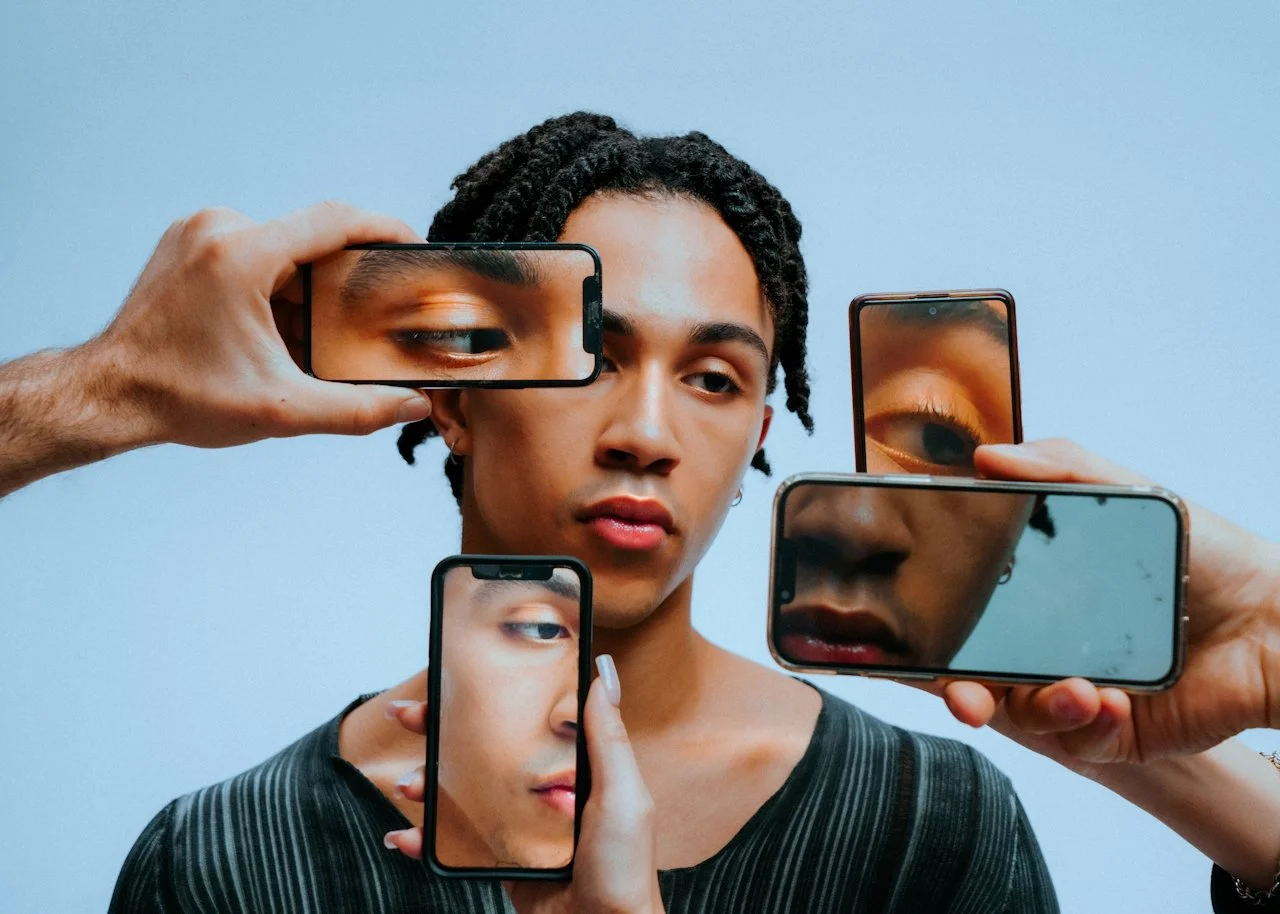
There is a certain kind of silence that has become all too common in both public and private life. It is the silence of a checkout line where no one looks up, a waiting room where every head is bowed over a screen or of a dinner table where conversation keeps stalling beneath the constant hum of notifications.
It is not exactly true silence. The empty time and space is filled with videos, podcasts, messages, emails, news alerts and the ambient churn of other people’s lives. What has gone quiet, however, is the ordinary human practice of noticing one another.
For years, the public conversation about phones and social media has been trapped inside the discourse surrounding “screen time,” as though the main concern was simply about how many hours a person spends online.
But the deeper concern, supported by both experts and research in the field, should be about what constant digital stimulation is doing to the conditions that make in-person communication possible.
A 2025 meta analysis of 33 studies involving 36,861 participants found that heavier media multitasking was associated with poorer attention, while research on phone use in social settings has also found that devices can make face-to-face interaction feel more distracting and less enjoyable.
Meanwhile, studies on “phubbing,” or ignoring someone in favor of a phone, have linked the behavior to lower intimacy, lower relationship satisfaction and greater conflict.
The concern is especially visible among Gen Z because they are the first generation to come of age inside that environment.
A 2025 study by Pew Research Center found that 95 percent of U.S. teens have smartphone access, 96 percent use the internet daily and 46 percent say they are online “almost constantly.”
For Gen Z, the question is less whether young people are inherently worse at communicating than whether they have had fewer chances to practice the slower, riskier parts of being with other people in real time.
If a large share of adolescence happens through screens, communication becomes something that can be edited, delayed, deleted, performed or avoided.
In-person conversation offers fewer exits. It asks people to stay through awkward pauses, imperfect wording, facial expressions they cannot control and moments of discomfort they cannot simply swipe away.
That is where Jennifer Lachance-Poirrier, a therapist and founder of Bloom Therapy outside Philadelphia, believes the problem begins to take shape.
Lachance-Poirrier works largely with trauma, grief, anxiety, depression and obsessive-compulsive symptoms, which means she spends much of her time listening to how people respond when life feels overwhelming.
When asked how phones and social media are changing the way people communicate, the first thing she pointed to was speed.
“Somebody asks a question and, if you don’t know the answer immediately, it’s like ‘we can Google it’,” she said in a recent interview with Hyvemind. “There is this need for instant gratification, whether it’s knowledge, whether it’s giving somebody that information and having them receive it in that moment.”
That immediacy now extends far beyond information. A person can order coffee without speaking to a cashier, send a text instead of making a phone call, scroll through discomfort before it has time to become a thought and fill every quiet or boring moment with sound.
That may feel efficient, even protective. It also removes the ordinary social friction through which people learn to read others, respond in the moment and feel part of a shared world.
“I need noise all the time,” she said, describing a pattern in which silence is replaced by music, podcasts, television, radio or background sound. “This need for constant stimulation,” she added, is “probably putting our brains into overdrive.”
The result is a culture in which waiting, wondering and sitting with uncertainty can begin to feel less like ordinary parts of life and more like problems to be solved.
If every uncomfortable moment can be softened by a device, people may get fewer chances to learn that discomfort is survivable. A lull in conversation, a glance from a stranger, a difficult exchange with a friend or an awkward social setting can all be escaped by simply looking down.
For people already prone to anxiety, that escape route can be especially tempting.
“Social anxiety can worsen when people no longer have to move through ordinary social encounters,” Lachance-Poirrier said. “You don’t get that natural exposure therapy.”
In this sense, our phones are, quite possibly, reorganizing our relationship to discomfort.
The fewer small interactions people have, the more threatening those interactions can start to feel. The more threatening they feel, the more attractive avoidance becomes. Over time, the world outside the screen can begin to seem more unpredictable, more exposing and more difficult to navigate.
That avoidance may be especially pronounced for young people who have grown up with the possibility of being recorded, posted or mocked online.
Lachance-Poirrier said some of the fear of being perceived is developmentally familiar, especially among adolescents and young adults. Social media appears to have intensified the stakes.
“I do think that the younger generations are so curated,” she said. “If it’s a situation where they don’t feel like they can control that outcome, I could see how that disconnect would cause anxiety.”
For Lachance-Poirrier, countering that anxiety means creating more chances to be present in situations that cannot be edited or controlled.
She recommends starting out with intentional, small acts of attention, such as going for walks without a device, leaving headphones out during errands and putting the phone down during ordinary exchanges.
“We can only pay attention to people around us when we’re not distracted,” she said. “What are the things that most distract us today? Our devices.”
For those who feel uneasy initiating conversation, she suggests starting with the smallest possible gesture.
“Eye contact and a smile can be enough sometimes,” she said. “But even a simple compliment can turn into a deeper conversation among strangers.”
And while those brief exchanges do not replace close relationships, they do widen the field of connection that mental health depends on.
Lachance-Poirrier described social well-being as having both depth and breadth: the intimate bonds of family and close friends, and the looser network of neighbors, strangers and people encountered in daily life.
“Those interactions are really, really important, too,” she revealed. “Because they help people feel more connected and more a part of their own community.”
The work, then, is not only to have better conversations with the people closest to us, but to recover the everyday attentiveness that makes human connection feel possible at all.
“Rebuilding deeper communication may begin with something as ordinary as looking up long enough to notice who else is there.”
