
Let's Imagine a Future Where AI Oligarchs Don't Destroy Rare Books to Feed Their Models
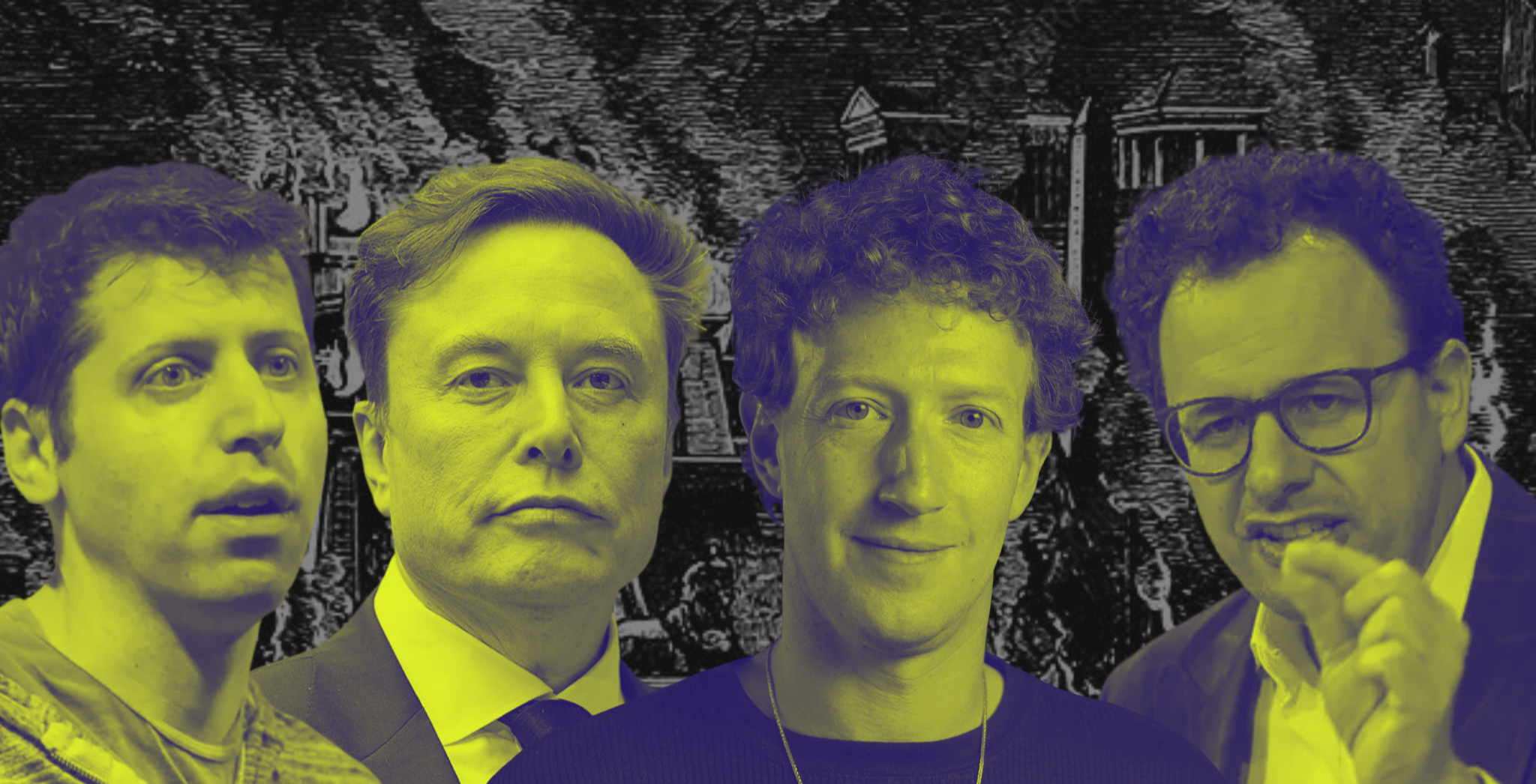
AI companies such as Anthropic have been destroying millions of print books, tearing pages from their binding and scanning them only to then throw them away to train AI models that are actively destroying our environment, our livelihoods and undermining what little is left of our civilizational cohesion and stability.
It's the perfect metaphor for the AI-phenomenon writ large in the last several years: the destruction of tangible human expressions and the violation of the spirit of all creative rights and copyright laws to train digital, privatized, deranged tech-valley utopian projects that masquerade as 'progress.'
AI as institutionalized in the West today is a clear representation of the neoliberal inversion of values, the denial of what makes human civilization beautiful, unique and admirable.
All is reduced to the service of a nihilistic silicon landscape that sees ‘progress,’ their insincere conceptual stand-in for ‘profit’ and ‘power,’ as the end goal of civilization. In truth, they are bending the entirety of our civilizational resources toward a cultish need for more personal wealth and dominance.
And indeed, nihilistic is the right word, because in no sense is this destruction necessary. As noted by Ars Technica’s report, digital archivists have already pioneered non-destructive approaches to scanning books without damaging their originals.
According to a post from 2015 by the Internet Archive, scanning methods and technologies suitable even to special book collections have already been developed by digital librarians.
Meta similarly feeds copyrighted books into its AI, but justifies it by saying the books have no 'economic value anyway,' another naked admission of the nihilism that drives and informs profit maximization.
What the tech oligarchs are doing is much the same as any capitalist abuse in the last 200+ years: saving a buck to maximize return, no matter the social cost, no matter the material loss, no matter the cultural degradation it implies.
Anything is 'worth it' in the race for 'high-quality training data,' any abuse of human AI trainers (including vulnerable women), any destruction of art or violation of intellectual property. For them, buying and destroying the books sidesteps licensing, ignoring the IP laws corporations themselves have so often done so much to build up and protect for decades.
Read More from Hyvemind: Scaling Harm: Platforms, Profits and the Rise of AI Sexual Abuse
It is in spite of this ‘at any cost’ fervor that business leaders are increasingly suspicious of AI and its costs, highlighting what I consider an overall schizophrenic and confused tone from the business world on the subject of AI.
For example, in a recent interview with CNN’s Fareed Zakaria, Microsoft CEO Satya Nadella warned that companies risk becoming too reliant on third-party AI tools, ‘outsourcing their thinking’ and turning over control of their data in a way that presents an existential risk to companies; while his comments are meant to suggest the need for developing in-house AI tools, this flies in the face of his own company’s efforts to force Copilot into every corner of Microsoft’s products.
In fact, Nadella has long helped to lead the charge on AI, allied closely with OpenAI’s Sam Altman and working with his AI CEO Mustafa Suleyman to do perverse things such as use Copilot to “lure Gen Z from rivals by behaving like a therapist.”
A question becomes clear: all for what? All of this destruction, theft, economic chaos and environmental pollution for what?
AI is clearly a financial bubble, what analyst Ed Zitron has recently warned is heading us into a ‘Tech Great Depression,’ and the bills are quickly coming due.
“Venture capital as we know it could die," warned Zitron. "One of the major tech companies could take a mortal wound; the amount of debt they’ve taken on, the amount of assets they’ve taken on, could actually be lethal. It will kill trust in the tech industry…The people at the top need to realize that the path we are on is broken.” (Emphasis added.)
As reported by Axios and the Economist, companies are now suddenly “scrambling to curtail” their AI costs, costs that far exceed the labor these services were implicitly advertised to replace as token costs have skyrocketed and perverse company incentive structures have landed them with extreme debt.
And while the lawsuits against tech companies destroying books and infringing on artists and authors’ IP rights should be slam dunk cases, a lack of clear legal progress has been made against what should be obvious abuses of not just copyright laws, but fair use laws.
One recent, notable legal battle between Meta and Sarah Silverman saw the judge siding with Meta, granting partial summary judgement to Meta despite claims from over a dozen famous authors.
This is despite the judge being a Barak Obama appointee and making comments to demonstrate his ‘distaste’ for Meta’s behavior, but not to the point of apparently recognizing the obvious legitimacy of Silverman’s case, dismissing it as ‘poorly argued.’
And while a more recent class action lawsuit by authors has seen a $1.5b settlement, hundreds of thousands of authors are involved, likely to be paid very little and left with a ruling that didn’t actually find it illegal for Anthropic to train its’ AI algorithms on authors copyrighted works.
This is the same absurd, hairbrained ‘thinking’ that allows companies such as Anthropic to destroy books under ‘fair use,’ a legal concept that feels as if it is losing its meaning. It represents well the corporate capture of the courts.
It’s a common story in the U.S. justice system: the bludgeoning of good sense and common decency within legal systems dominated by officials who have neither.
At Hyvemind, our message is simple: we must collectively reject these anti-human systems that see the very things which make our lives meaningful as 'lacking in economic value,' as resources to be exploited until depletion and destruction. If we do not find a way to come together and demand a new society, the gaping maw of these digital leviathans will come for all we’ve built.
We recommend the work of the Electronic Frontier Foundation as a partner in doing what you can to fight the encroachment of a technofeudal program of dominance into every corner of our lives.
We must imagine and strive toward a world where the interests of capital are not only not the driving factors in our social and economic lives, but where genuinely democratic, working-class centered institutions are created and maintained to ensure that the true legacy of human civilization—our art, our collective achievements and our cooperation with others—are preserved and cherished.