
Inside the Electronic Frontier Foundation’s Long Fight for Digital Freedom
For 36 years, the Electronic Frontier Foundation has challenged the surveillance, censorship and corporate control shaping modern life online.
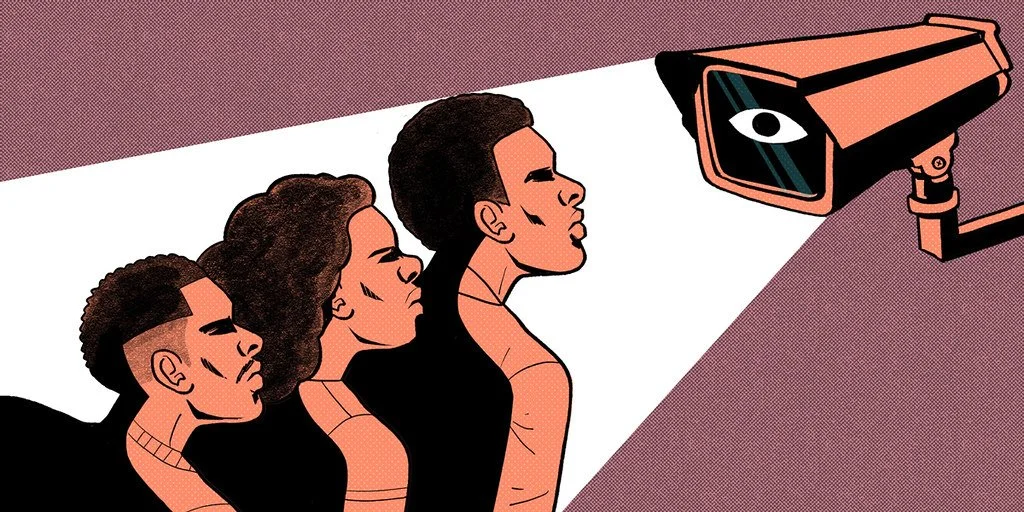
Credit: Chelsea Saunders
Electronic Frontier Foundation
Location
National (U.S.)
Founded
1990
Focus
Digital Rights Advocacy
In 1990, the internet was still largely the domain of universities, government agencies and hobbyists. Most Americans did not carry computers in their pockets, depend on digital platforms for work or use networked devices to navigate cities, manage their homes, communicate with family or access public information.
That was also the year a small group of technologists, lawyers and civil-liberties advocates formed the Electronic Frontier Foundation (EFF), a donor-supported 501(c)(3) that works through impact litigation, policy analysis, grassroots organizing and technology development, that operates under the belief that the rules governing the emerging digital world would shape far more than the technology itself.
They were right. Thirty-six years later, the technology once framed as “the future” has become the infrastructure of ordinary life. Stanford’s 2026 AI Index found that 88% of organizations now report using artificial intelligence, while U.S. Census data shows that roughly one in five American businesses had adopted it by spring.
The systems built around it are moving into workplaces, schools, hospitals, courts, housing and public services, often before clear rules exist for how they should be tested, disclosed or challenged.
Employers use software to monitor workers and measure productivity. Police agencies deploy tools that can identify, track and analyze people in public spaces. Schools, hospitals, courts, landlords, insurers and government agencies are testing automated systems that can influence who is flagged, filtered, approved, investigated or denied.
Yet, the expansion of these systems has rarely been matched by public understanding or meaningful oversight. A person may never learn that an algorithm helped shape a decision about them, that their movements were collected or that their face, voice, writing or behavior became material for a system they cannot inspect or challenge.
It is in that gap—between the systems making consequential decisions and the people expected to live with them—that EFF has spent more than three decades working to protect privacy, free expression, access to information, the ability to organize and the right to challenge power as our rights move through screens, databases and algorithms.
“We make sure your rights follow you wherever and whenever you use technology,” Electronic Frontier Foundation Communications Director Josh Richman told Hyvemind. “Whether that’s the internet, a phone, a wearable, a smart device, a car, or anything else. If you use technology, this fight is yours.”
Building a Defense for the Digital World
EFF was founded at a moment when the legal and political systems governing technology were still being built.
Over the last 36 years, the organization’s work has expanded alongside the internet itself, moving from early fights over online speech and encryption to modern battles over surveillance, platform power, artificial intelligence, data collection and the right to repair the devices people depend on.
The organization is comprised of lawyers who bring and support strategic lawsuits to expand freedoms, set precedents, and hold power accountable; technologists who build privacy-protecting, censorship-resistant tools that put control back in users’ hands; activists who build movements, rally support and nurture networks of resistance; and lobbyists who advocate for policies that protect human rights, not corporate monopolies.
“Our mission is to ensure that technology supports freedom, justice, and innovation for all people of the world,” Richman said.
On a typical day, Richman said EFF staff may be tracking litigation, maintaining privacy resources, meeting with working groups focused on police surveillance or intellectual property, and responding to new technologies or government actions that could reshape users’ rights.
The EFF also provides support and resources for activists, journalists, open-source developers and others seeking to protect their data.
Where Digital Power Lands Hardest
According to the organization, the consequences of surveillance, censorship and automated decision-making tend to fall hardest on people with the least power to challenge them: workers subject to workplace monitoring, immigrants navigating government databases, protesters documented by police technology, disabled people blocked by inaccessible systems, journalists whose sources face exposure and communities already subject to heightened scrutiny by law enforcement.
“EFF amplifies the voices of those most affected by oppressive applications of technology, especially marginalized communities that bear the brunt of digital control,” he said. “If your rights are at stake, we’re here to fight for you.”
Richman told Hyvemind that the organization’s cases and campaigns frequently reach beyond the technology sector because the systems at issue are now embedded in so many parts of public life. For example, a fight over police surveillance can involve protest rights, racial justice, due process and public-records laws, and a dispute over software locks can affect farmers, independent repair shops, environmental waste and corporate control over essential equipment.
“To fight such battles, we collaborate with like-minded organizations and people, standing with those who resist control and speak truth to power, from whistleblowers to repair advocates,” Richman said. “No single organization wins this fight alone.”
That coalition-building reflects a reality EFF has spent decades confronting: the technology may be new, though the underlying conflicts are often familiar. They are fights over who can gather information, who can withhold it, who can speak without retaliation and who has the power to decide how public life is organized.
The Privacy Vacuum—and the Long Fight to Close It
One of EFF’s largest and ongoing policy concerns is the absence of a comprehensive federal data privacy law.
In practice, Americans move through a fragmented system of state protections, sector-specific rules and company policies that can shift with little public notice. The information people generate through phones, apps, cars, websites and connected devices can be collected, shared, sold or used to build detailed profiles of their lives, often with limited visibility into where it goes next.
Richman said EFF repeatedly encounters a lack of political will among lawmakers to create a meaningful national framework for data privacy. The organization also faces what he called “privacy nihilism,” the belief that surrendering personal information is simply the price of participating in modern life.
That belief has helped make surveillance easier to normalize. People are told to accept invasive data practices because the product is useful, the platform is popular or the device has become difficult to live without.
Yet the decision to collect and retain information is still a decision, made by companies and institutions with the ability to design different systems.
“People think surrendering their privacy is a necessary part of using technology,” Richman said. “It’s not.”
EFF argues that privacy, free expression and access to knowledge are conditions for democratic participation, particularly as more of public life is routed through private platforms and networked devices.
Protecting those rights, however, requires working through legal and political systems that often move far more slowly than the technologies reshaping daily life. Court cases can take years. Legislation can remain stalled while the products and systems it was meant to regulate continue to evolve.
But Richman said EFF has learned to treat that lag as part of the work. A stalled bill, an unfavorable ruling or a campaign that fails to gain traction can expose gaps in the law, reveal where public understanding has not caught up or show the organization where its approach needs to change.
“Our work is incremental by necessity. If a strategy or tactic proves flawed, we cross that off, go back to the drawing board and try something new,” an outlook Richman said was shaped in part by former Executive Director Cindy Cohn, who left EFF in mid-June after 26 years with the organization.
“She always made it clear to us that the work is hard because it’s important,” Richman said. “We should expect to lose, sometimes repeatedly, on the long path to winning, and even if we can’t always visualize what complete victory looks like, we can always see higher ground.”
The Future EFF Is Working Toward
The future EFF is working toward is one in which people can use technology without being profiled, discriminated against, surveilled without cause or silenced by the government. It is a future where software is not controlled by corporate gatekeepers, information is not quietly restricted or walled off, and people retain the practical ability to communicate, learn, repair, organize and participate in public life.
“We envision a world where all people can flourish according to their values and priorities, without discrimination, unwarranted surveillance or government censorship,” Richman said.
Getting there, however, will require enforceable protections, public pressure and sustained challenges to the assumption that people must trade autonomy for access to the systems that now shape daily life.
“We’re not here to make digital freedom more convenient,” Richman said. “We’re here to make it non-negotiable.”
Take Action
8 Ways to Support Digital Freedom
Learn More About EFF
Explore EFF’s work defending privacy, free expression, innovation and civil liberties in the digital world.
Donate to EFF
Support the legal, technical and advocacy work protecting people’s rights wherever technology reaches.
Subscribe to EFFector and Action Alerts
Stay informed about digital-rights issues and learn when public action can help shape the outcome.
Download Privacy Badger
Install EFF’s free browser extension designed to stop companies from tracking you across the web.
Explore the Atlas of Surveillance
See which surveillance technologies police agencies have deployed in communities across the country.
Visit Street-Level Surveillance
Learn how police technologies work, what they collect and how they affect the people living around them.
Use Surveillance Self-Defense
Find practical guidance on protecting your data, attending protests safely and using tools like Signal more securely.
Volunteer Your Skills
Explore opportunities to contribute your expertise to EFF’s work for privacy, free expression and digital rights.
This feature was published as part of Hyvemind’s Working Models series: stories from the people and organizations reshaping care, community and system repair.
We’re always looking to highlight organizations, collectives, and community experiments that are changing how care, work and wellbeing are built.
If your team is running a program or initiative that others could learn from, we’d love to hear from you.
To be featured in an upcoming story send us a note: submissions@thehyvemind.com or submit your information to our form here.
