
The Cost of the Cloud: Big Tech’s Water Use Is Growing Beyond the Public’s View
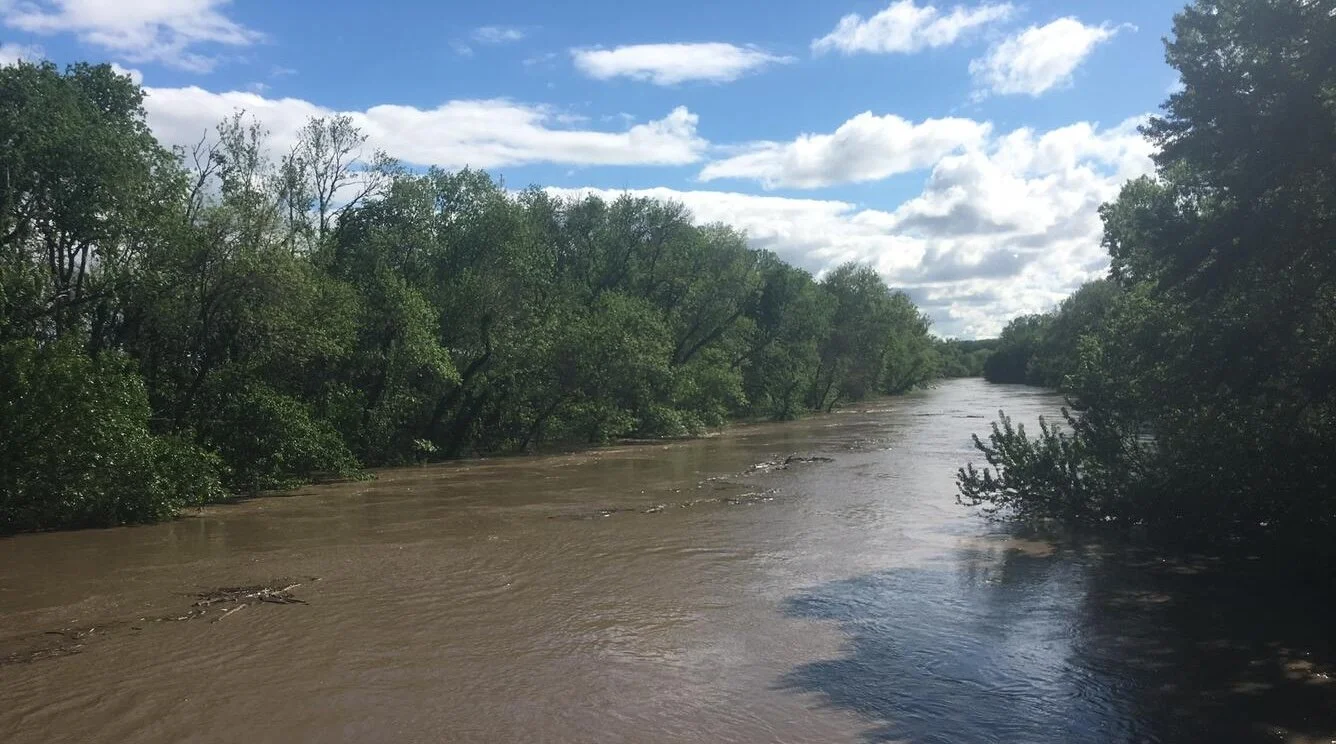
In Pryor, Oklahoma, a Google data center used more than 1.1 billion gallons of water in a single year, enough to fill roughly sixteen hundred Olympic pools, and returned only about 253 million of it to the Neosho River, according to utility records obtained by Investigate Midwest and The Frontier.
The rest of the water rose into the sky as it evaporated off the facility’s cooling towers. However, if you went looking for that draw in Oklahoma's water records, you would not find it.
Despite consuming more than a billion gallons of water, the campus never applied for a state water-withdrawal permit. It purchases water from an industrial park rather than pumping groundwater directly, so its water use does not appear in Oklahoma's water-permit records.
Picture the biggest customer a store has ever had walking in every day, paying in cash and the register keeping no receipt. That is what is happening across Oklahoma, Texas, Georgia, South Carolina and Ohio, where some of the largest new industrial water users receive water through municipal or industrial systems instead of holding direct withdrawal permits. As a result, significant water consumption can fall outside the state databases many communities rely on to track major water users.
The permitting records are not missing these facilities by accident. In many states, they were never designed to capture them. When water is purchased through a municipal or industrial supplier, the withdrawal is attributed to the utility, even if the data center becomes one of the community's largest consumers. Across five states, that reporting gap repeatedly obscures the scale of industrial water use.
In other words, the biggest new water user in town does not appear in the records built to track major water users because it bought its way around the meter.
I did not set out to write about water. I set out to follow the power, and the water was standing there underneath it, off the books, waiting for someone to read the meter. Everything Big Tech does to a town's water it does on the same trade: take the gain now, hand the cost to whoever is still living there in twenty years.
The Biggest User In Town, Off The Books
Oklahoma illustrates how this permitting gap operates in practice. A data-center advisory firm lists 55 facilities in the state, yet not one of them has filed for a water permit because they receive water through municipal utilities. Their combined water use therefore falls outside the permitting records many residents would expect to document major industrial withdrawals.
State lawmakers have begun responding to growing concern over data-center water use by passing Senate Bill 259, which restricts new groundwater permits for data centers to those using water-conserving cooling.
Although the bill does real work,it also misses the center of the target, because the facilities causing the alarm are not pumping groundwater directly. They are buying it from the city, and the city buys it from the aquifer, and no line in that chain triggers the disclosure the public would need to object.
Even if the state closed the gap tomorrow, it is not clear anyone could staff the fix.
Oklahoma's water board reported having fewer than 20 employees to review roughly 250 permit actions each year, investigate complaints, and conduct field inspections statewide. The agency can evaluate the permits it receives, but it has limited capacity to investigate water use that falls outside the permitting process altogether.
About 22 miles south of Atlanta in Georgia’s Fayette County, a data-center campus tied to the private-equity firm Blackstone and operated by QTS drew nearly 29 million gallons of water before the county’s billing center fully captured its use.
Residents first raised concerns after experiencing reduced water pressure. The county later sent a bill for about $147,474 but did not issue a fine.. County officials said they wanted to preserve their partnership with the company, and a subsequent dispute emerged over when officials became aware of the water use
As construction continued, the scale of that water use became clearer. County records show QTS was billed for approximately 109 million gallons across 13 water connections through mid-2026, largely for dust control, concrete production and other construction activities.
QTS says the finished campus will run on a closed loop and use only the domestic equivalent of a few households once construction ends around 2030. That may be true, and it does not undo the point. Much of that water was used before the facility became operational and during a period when the public had the least visibility and the least say.
And in the instances when reporting is public, it does not necessarily make the numbers less significant.
In South Carolina, where disclosure is further along, Google's Berkeley County campus withdrew 853.8 million gallons of drinking water in 2024, and a planned Google campus in neighboring Dorchester County is projected to use 978.2 million gallons a year at full build.. The figures were disclosed through public reporting requirements rather than uncovered after a dispute, illustrating the scale of water demand even where records are available.
Ohio tells a similar story. Records obtained by The Columbus Dispatch show that 115 data centers in the Columbus area used more than 1.26 billion gallons of treated city water between May 2025 and May 2026, representing roughly three percent of all water processed by the city's treatment plants during that period.
Where the numbers surface at all, it is often because a nonprofit or local advocacy group forced them into daylight. In Georgia, the Altamaha Riverkeeper has tracked roughly two dozen proposed data-center projects across the upper Ocmulgee basin, only about nine of which had filed the state's regional-impact review, and those nine alone projected close to ten million gallons a day.
Taken together, these cases point to two separate challenges. In some states, large industrial water users are difficult to identify because of how permits are structured. In others, the water use is publicly documented but reveals a scale of demand that local planning systems were never designed to accommodate.
THE INVISIBLE METER
What five data centers draw from their communities, and what state permit records reveal.
About 253 million gallons returned to the river. The remaining water evaporated.
Oklahoma data centers can purchase municipal water without filing a state withdrawal permit.
On Top Of The Drinking Water
This brings us to reserves, which, if you weren’t already aware, several of the country’s largest proposed data centers are being built directly above major underground water reserves.
In Texas and Wyoming, several proposed or under-construction facilities sit above or immediately adjacent to the Ogallala Aquifer, the largest underground water reservoir in the United States. The aquifer stretches beneath eight states and supplies water for homes, farms and local economies across the Great Plains.
The same siting pattern is emerging around other aquifers and watersheds. Data centers may receive their water through municipal utilities, yet the supply often originates from beneath the surrounding community, or they sit next to a recharge zone rather than on a wellhead.
Put plainly, the data centers are drawing from the same aquifers and watersheds that supply drinking water, and they do it through the municipal utility, which shields the draw from the state's water permits, so a community often cannot tell how close the take is to its own tap until the pressure drops.
In Hood County, Texas, that concern now surrounds the proposed Comanche Circle development. In Hood County, Texas, that concern now surrounds the proposed Comanche Circle, which could place up to nine data-center sites across roughly 2,600 acres near Tolar, a town of about 1,300 people, within the recharge zone of the Upper Trinity Aquifer and the Paluxy River watershed..
Residents warn the full build could draw up to a million gallons a day, much of it evaporated and gone. The developer disputes that, saying the campuses would use less than fifty thousand gallons a day of groundwater once running.
Both numbers deserve to be on the page, and the gap between them is the whole fight, because in Hood County no one is required to settle it before the concrete pours. Both sides do agree on one figure, the one-time flush-and-fill of about 95 million gallons drawn from groundwater before the first server runs, in a county that already worries about drought.
Where the water is scarcest, it is also being moved, and the movement runs one way.
The issue takes another form across the American West, where water rights can be purchased and converted from agricultural to industrial use. In Arizona’s Active Management Areas, qualifying farmland can be retired from irrigation and its grandfathered groundwater right converted to a non-irrigation use.
A data-center developer that acquires land with an eligible right may therefore use that groundwater for industrial operations, including cooling, subject to state requirements and approval procedures. The conversion generally removes that water from agricultural use on the retired acreage, potentially reshaping how a community’s limited groundwater supply is distributed.
Where The Water Actually Goes
The amount of water a data center withdraws does not, by itself, reveal its effect on the local water supply. Some water is returned to a river, utility system or aquifer. Some evaporates during cooling. Facilities also use water indirectly through the power plants that generate their electricity. Understanding the total impact requires knowing how much water is withdrawn, how much is consumed and how much returns to the watershed.
Let’s start with evaporative cooling, which produces some of the largest consumptive losses. These systems circulate water through cooling towers, where heat causes part of it to evaporate. That vapor leaves the local watershed and does not come back, which is the Pryor story in one line: 1.1 billion gallons in, roughly 253 million back to the river with the rest exhaled over the county.
Some operators are moving toward cooling systems designed to reduce on-site water consumption. Microsoft, for example, has recently announced a closed-loop, zero-water-evaporation design, that recirculates water after an initial fill and eliminates routine evaporation from cooling. The company says the design could save roughly 125 million liters of water annually at each facility, with its first deployments planned for Phoenix and Mount Pleasant, Wisconsin, in 2026.
These systems, however, still come with a catch as dry-cooling can require additional electricity. The production of that electricity may still consume more water at power plants, depending on the energy source and cooling technology involved.
The honest question to put to any operator promising zero water is the simplest one. Zero water at the building, or zero water including the power plant that feeds it? Those are two different claims, and only one of them is the whole truth.
Then there are cases in which water is consumed without being fully measured, billed or disclosed. Residents often describe this as water being taken, and in a handful of documented cases, the public record supports that characterization.
Amazon’s internal accounting offers one of the clearest examples of how much water can disappear from public reporting. A leaked internal document showed the company's data centers consumed roughly 105 billion gallons of water in 2021 once the electricity was counted, while executives chose to report only the smaller direct figure, about 7.7 billion, out of stated concern for "reputational risk."
Amazon has since begun disclosing an annual number, 2.5 billion gallons for 2025. Read that one twice. A company measured its own water at more than ten times what it told the public, and the reason written on the page was reputation.
Third is buried, and this is the part that sounds like it’s borderline conspiracy but it is not. Water can also be returned or stored underground through two legitimate techniques worth knowing by name. Aquifer thermal energy storage, or ATES, treats the ground like a thermal battery, pumping cool groundwater up to chill the servers and sending the warmed water back down into the same aquifer to draw on later, consuming no water and touching no drinking supply.
The second, aquifer storage and recovery, or ASR, is a water savings account, banking surplus surface water underground in the wet season to withdraw in the dry.
Google developed an ASR system in The Dalles, Oregon, designed to inject about 100 million gallons of water annually into the local aquifer. The company later transferred the system and associated water rights to the city. At the same time, Google spent years opposing the public release of its water-use records in The Dalles, contributing to community distrust surrounding the project.
You read that correctly: The same company that built that transparent water bank in The Dalles spent years fighting to keep its water use in the same town secret, until residents took to calling it Voldemort, the thing you are not allowed to name.
As it turns out, the legitimate engineering and the corporate secrecy run down the same street, so when a town watches its water table drop and gets a vague answer from the operator, the rumor writes itself.
What Comes Back: PFAS and Public-Health Risks
For the water that does return, it does not always come back the way it left. For nearly half a century, the Cape Fear River in North Carolina has carried PFAS contamination traced to Fayetteville Works, a chemical plant operated for decades by DuPont and later PFAS and Public-Health Risks in the Data Center Supply Chain.
PFAS, commonly called “forever chemicals,” resist heat, water, oil and chemical reactions. Those properties have made them useful across industrial applications and allow them to persist in water, soil and the human body.
They also connect the Cape Fear contamination to the expanding data-center industry. PFAS are used in dielectric fluids for some forms of immersion cooling, clean-agent fire-suppression systems and semiconductor manufacturing. Industry assessments have identified more than 1,000 PFAS applications across the chip supply chain.
In June 2026, the Environmental Protection Agency and Justice Department announced a settlement requiring Chemours to pay approximately $450 million to resolve PFAS-related claims across three states. The settlement included a $22.5 million civil penalty. Most of the remaining money was committed to alternative drinking-water supplies and cleanup projects that Chemours would help carry out. North Carolina, which has experienced a significant share of the contamination, did not participate in the negotiations.
The settlement addresses contamination associated with decades of chemical production. Chemours is also expanding production of materials intended for data-center cooling and other parts of the artificial-intelligence supply chain. The agreement does not prevent the company from producing or selling PFAS for those uses.
Federal data-center policy may accelerate that expansion. In July 2025, the White House issued Executive Order 14318, “Accelerating Federal Permitting of Data Center Infrastructure.” Under the order, the EPA established an expedited review process for new chemicals used in qualifying data-center projects.
Together, these developments raise questions about how the government will regulate chemicals associated with the next generation of computing infrastructure. Communities along the Cape Fear are still managing the consequences of earlier PFAS production as the same industry prepares to supply materials for a new wave of data-center construction.
In the Virginia counties west of Washington sits the densest concentration of data centers anywhere, a corridor Loudoun County calls Data Center Alley, carrying a large share of the world's internet traffic with Amazon Web Services the biggest operator among them.
In February 2026, three George Mason University researchers published the first assessment of what living beside that machinery does to human health, and the striking thing is how late it arrived. The world's largest cluster of these machines ran for years beside schools and homes before anyone measured what it did to the people inside them.
The study starts with water, which is why it belongs here and not only in the power piece. It found Northern Virginia's data centers drank close to two billion gallons in 2023, up sharply over four years, and that nearly a third of the state's data centers sit within two hundred feet of someone's home.
What that neighbor does is hum without stopping, a constant drone the study places between forty and fifty-nine decibels, around or above the fifty-five the EPA recommends as an outdoor ceiling, a level tied in the medical literature to disrupted sleep and cardiovascular strain.
The second exposure is air, from the coal burned upstream to feed the load and the more than four thousand backup diesel generators the centers keep on hand for when the grid wavers. A separate modeling study from Caltech and UC Riverside, not yet peer reviewed, estimates the air pollution from United States data centers is on track to carry a public-health cost above twenty billion dollars a year by the end of the decade.
What Comes Next
The water that a farm held for a century will run a server farm instead, the wells will keep testing positive long after the models they cooled are obsolete, and the biggest draw in the county will keep arriving without a permit until a state decides to require one. The people of Cape Fear will keep buying bottled water while the company that contaminated their river sells the same chemistry into the next boom, and the neighbors of Data Center Alley will keep sleeping under the hum while the first study of what it costs them sits fresh on a journal server.
You were told the cloud was weightless but it is drinking your aquifer through a meter nobody reads. So read it. Find your own county, ask who signed for the water and where it went, and do not accept "partnership" as an answer.. That is the whole fight, and it becomes winnable the moment the number is public. A tool to do exactly that, to search your own county and see what the machine takes, is coming. Until it does, the records are already yours to request.
Part Three of this series follows the dollar the whole way home. The water moved because someone signed for it and someone profited, and the profit runs through a small, recurring cast of lawyers, funds and tax engineers who book the benefit this year and leave the reckoning to the towns downstream.