
The Trump Administration Is Quietly Destroying Our National Forests
For the first time in 120 years, the U.S. Forest Service is being gutted. A handout to oligarchs, its HQ will be moved to Utah where logging and mineral interests dominate.
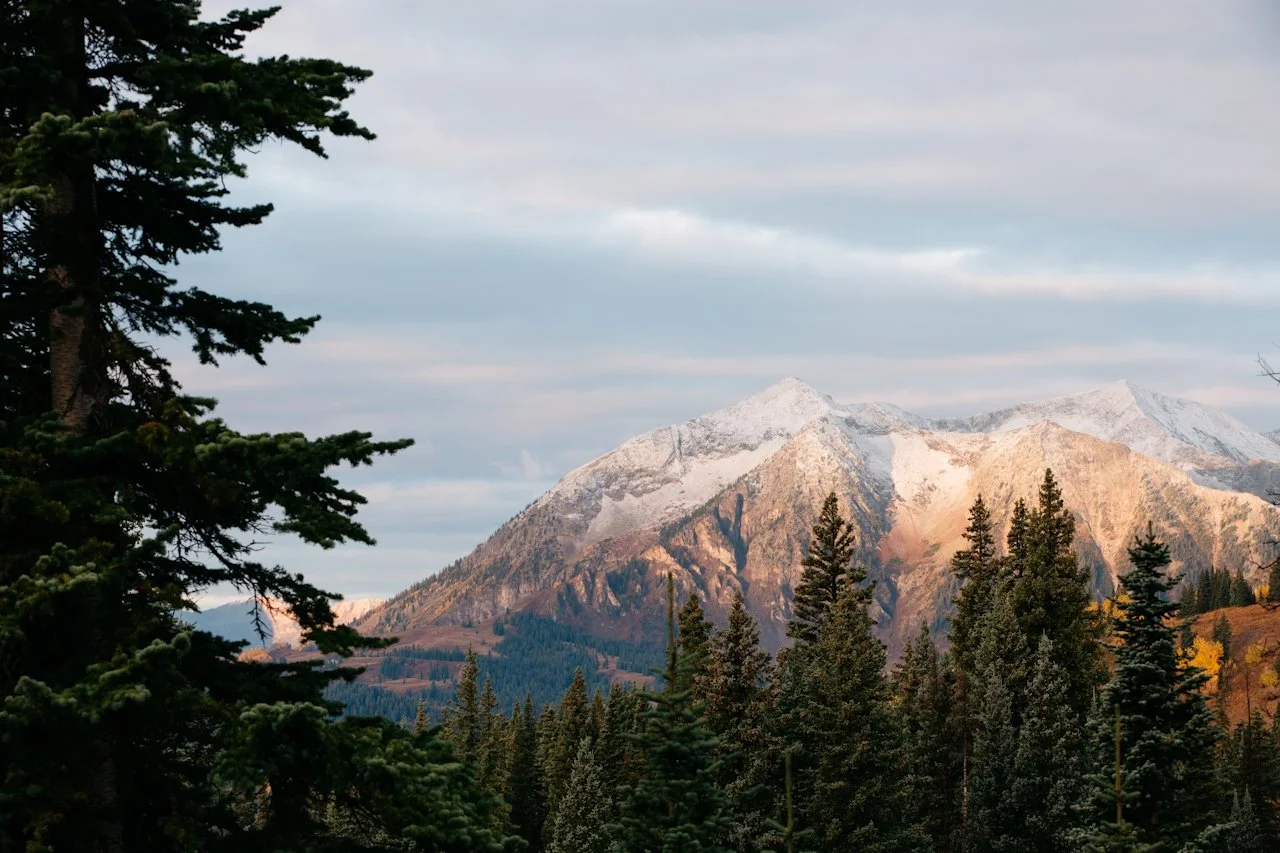
In the latest of a long line of brazenly corrupt highway robberies to the American public's wealth and prosperity, the Trump Administration has quietly ushered in a series of restructurings that effectively amount to a dismantling of the U.S. Forest Service.
The administration has ordered the shuttering of all regional offices and moved the headquarters to Utah, where oligarchic logging and mineral interests have long lobbied for the privatization and prostitution of public lands. The moves come at the same time high profile headlines concerning rising oil prices and the horrific war in Iran dominate public attention. That’s no coincidence.
For each inane social media post, humiliating public gaffe, unconstitutional military operation, or murder of citizens both domestic and international, the administration tirelessly works to “flood the zone” (a favored strategy of Steve Bannon’s) while making the behind-the-scenes changes it was put in office to do: handing away what little is left of the public good to the very same oligarchic forces who already own nearly everything. All while they hope you’re not looking.
That’s why at the very same time as yet another announcement that appears to escalate the criminal war in Iran, the administration saw fit to devastate the Forest Service despite a long history of overwhelming bipartisan public support for policies that support conservation efforts.
According to a recent poll by the International Fund for Animal Welfare, 81% of Americans voice concern for the environment, animal welfare, and conservation while 70% support “the value of nature” in government decision making.
Another poll by the National Parks Conservation Association found that “a strong bipartisan majority (69%) of Americans oppose President Trump’s proposed $1 billion cut to the National Park Service’s budget,” moreover finding that 3-in-4 Americans (77%) support the ability of the president to designate more national monuments, not help to tear them down.
“Does Not Serve the Public Interest”
In a recent interview with Hyvemind, Katie Davis, executive director of the Wildlands Network and Salt Lake City resident, said the restructuring raises immediate concerns about both staffing losses and long-term ecological oversight.
“I'm sure [the changes] will result in the loss of staff, which has already been absolutely devastating in this Administration and does not serve the public interest,” she said before further explaining that it’s the policy changes that are even more problematic and “likely to undermine management to benefit wildlife.”The new efforts include effectively destroying the Forest Service’s research program by shutting down research facilities across 31 states.
It’s the most recent move in the administration's outright reality-denying campaign to shut down various Federal research projects whose work and findings are inconvenient to the special interests who funded Trump’s revenge-fueled reelection efforts.
That includes Trump’s long-standing vendetta against climate activists, which is why the administration recently attempted to dissolve the National Center for Atmospheric Research (now battled in court).
These changes threaten even the Federal government’s ability to respond to massive environmental disasters, including wildfires, a rapidly growing risk that cost $424 billion annually: found one study, ‘structure loss’ to wildfires in the Western U.S. increased 246% when comparing 1999-2009 to 2010-2020.
Included in recent Trump admin efforts are the finalization of rules to “fast-track approval of logging, mining, drilling, road building and other projects in America’s national forests by eliminating decades-old public participation requirements for environmental reviews” according to a press release by the Center for Biological Diversity.
Gallingly, the changes include the removal of any public notice or opportunity for comment on any federal activities that may adversely impact wildlife populations.
These changes represent transparent efforts to make it impossible for scientists and activists to raise awareness, legally challenge, or otherwise halt development efforts that would destroy often already-endangered habitats.
Disingenuously framed as a streamlining operation designed to “bring leaders west, where the forests are,” the Trump admin’s dismantling of the U.S. Forest Service joins a long, multi-administration neoliberal lineage of false promises for increased government efficiency aimed squarely at pillaging public services and confiscating the very last vestiges of the commons everyday Americans can turn to.
Yet, it speaks deeply to the unprecedented depravity and detachment of the Trump administration that even prior neoliberal administrations did not deign to touch the U.S. Forest Service, an institution with 120-year history that has not once seen such sweeping, destructive reforms.
In the grand scope of the U.S. budget, it’s a public service which accounts for only 5.3% of all Department of Agriculture spending.
That’s nothing, particularly when you consider that the DoA itself accounts for a mere 3% of all Federal spending; that means the U.S. Forest Service represents 0.16% of total U.S. federal spending, or the cost of about nine B-2 bombers.
Another Handout to Oligarchs
Why such an inevitably unpopular move for a public service that costs comparatively nothing?
Volumes could be written answering that question, but the primary reason lies at the heart of all corruption in American governance: service to a ruling class of fabulously wealthy private interests. Specifically, Trump’s brand of ‘management’ speaks to the pathologies of oligarchic power.
Yes, the Forest Service presents little in the Federal budget, but what it does is protect and preserve public lands from exploitation.
Writes Chris Hedges in a 2024 piece, “Oligarchic power thrives on chaos and, as Steve Bannon says, the ‘deconstruction of the administrative state.’ [It] seeks the total eradication of all impediments to the accumulation of profits including regulations, laws and taxes.”Chaos.
That’s why oligarchs will seek to cut an agency whose job is to help study and manage wildfire risk when the U.S. Forest Service’s budget represents a paltry 2.5% the annual costs of wildfires in the U.S. “Efficiency” has nothing to do with any of this.
“In the short term, I think we can expect confusion and disruption, especially given other cuts to federal staffing and funding,” Davis explained. “Forest Service decision-making and processes often have long timelines, so any changes to personnel, reporting, or decision-making structures will complicate work and communication with external partners and sow some chaos.”
The Trump administration together with these oligarchs see only the industrial, extractive value of the land. They feel no love for the natural beauty of that land. They feel no care for the people whose heritage, history, or spirituality are rooted in that land.
They carry no concern for the long-term ecological viability of the country as a nation, even at a time when biodiversity is plummeting in a sixth mass extinction. They harbor no understanding let alone curiosity for the depth to which humans rely on that biodiversity for their own continued survival. To them, nothing outside their own control and profit effectively even exists.
These are the mediocre and the soulless, people who can no longer be left in charge. These are the very land strippers and resource barons who Teddy Roosevelt and even the Rockefellers knew had to be stopped 120 years ago lest they destroy every divine corner of the American heartland.
This is the kind of degenerate, reactionary, Enlightenment-denying and post-ethical ideology that sees what few wildlands we have left as acceptable sacrifice zones to an owner class that relies on war, exploitation, and disaster to continue to maintain dominance.
What could be more patriotic than wanting to stop the destruction of America’s natural beauty? To defend the meager, underfunded public institutions which protect that beauty and our National Parks, what Ken Burns described as America’s Best Idea?
What Can We Do?
There is no more effective halt to collective action than the public belief that no action can be taken.
Billions of dollars are spent annually among state and corporate media platforms to help create the illusion that not only do Americans never agree with one another, but are unable to even politely speak with one another let alone act cooperatively.
On any number of issues relevant to the public good, we can readily see that this is a lie. We must reject these disempowering circus acts that convince us to give up our own agency before we have even attempted to exercise it, to disinvest from our own communities before we even attempt to rebuild them.
In response to what appears to be a wave of anti-human, murderous, and ecologically destructive assaults on American life, we must make it clear what our values are and our willingness to defend those values.
Argues Davis, states playing an increasing role in Federal lands management (code, in this case, for removing federal barriers to privatization) has informed the Wildlands Network’s strategy to continue building local power, emphasizing the importance of bottom-up local organizing in the protection of public lands and the environment writ-large.
“The American public does not support [these efforts], nor do the majority of people who live in the West, and we and others will absolutely continue to fight against that,” Davis said.
In a statement from Wendy Park, senior attorney from the Center for Biological Diversity,“Information is power. Our voices are power. And the Trump administration is trying to strip both away so corporations can make a quick buck off our public lands. We’re not going to stand by while Trump officials rubberstamp destructive projects that’ll devastate our forests, contaminate our water and harm nearby communities.”
To enable change, collective action must be taken. That’s why it is so important to ask “what we can do” rather than “what can you do,” rather than reduce change to a series of atomized actors making individual lifestyle choices.
For example, when it comes time to vote for representatives, don’t assume that additional, local-level issues aren’t also up for referendum.
Even presidential elections can hide votes to preserve local parks depending on your area, and only through local organizing can we collectively help to ensure those parks remain protected. Moreover, seek out national and local-level conservation-focused organizations (and their local chapters) such as the ones linked below.
Take Action
Organizations readers can support
Readers looking to support public lands, wildlife protection and conservation advocacy can start with the organizations below.
Make donations. Get involved. Become a member. Join group advocacy events and trips to local legislatures.
In other words, become part of the organized force to say that what power in the U.S. is doing not only fails to represent our collective interests, but harms everyone for the benefit of a fraction of a percent of the wealthiest people on Earth.