
Inside The Artist Closet: Oklahoma’s Free Art Supply Hub Supporting Local Creators
Images provided by Katie Graham
On the day The Artist Closet began, Katie Graham didn’t have a plan—she had a portable shelf and a pile of unused supplies she’d been too exhausted to deal with.
It was 2022, a year when everything in her life seemed to hit at once: full-time retail shifts, full-time school, a young sibling newly in her care and an art practice squeezed into the leftover hours. Paying bills was a weekly calculation where buying materials for her own work often wasn’t an option.
So she packed the shelf with whatever she could spare—yarn she’d overbought, brushes she no longer used and paints that had been sitting untouched—and brought it to a pop-up market.
People stopped, lingered, took a few things, left a few more. What she thought would be a one-off gesture quickly revealed itself as something else: evidence of a need she hadn’t been the only one feeling.
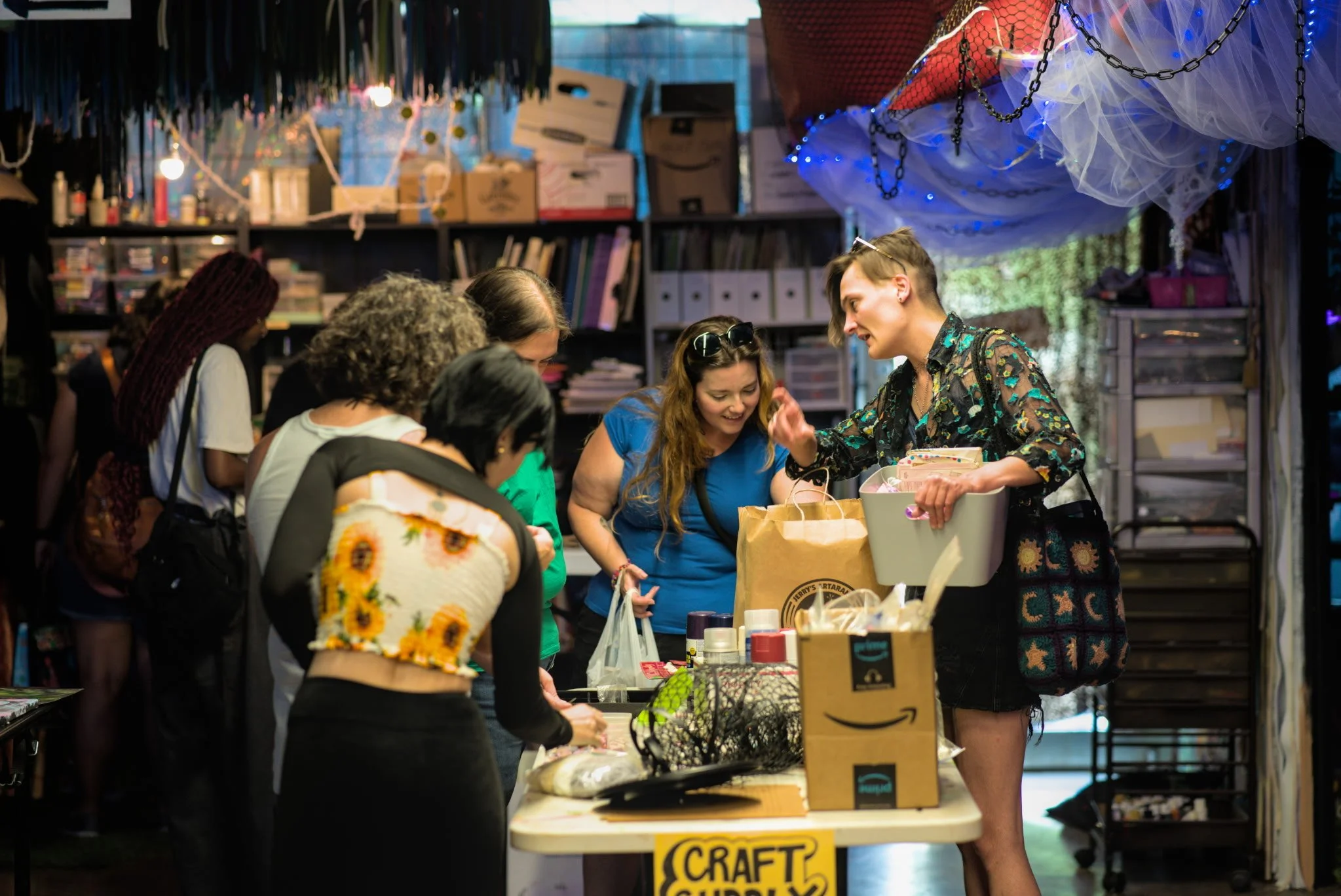
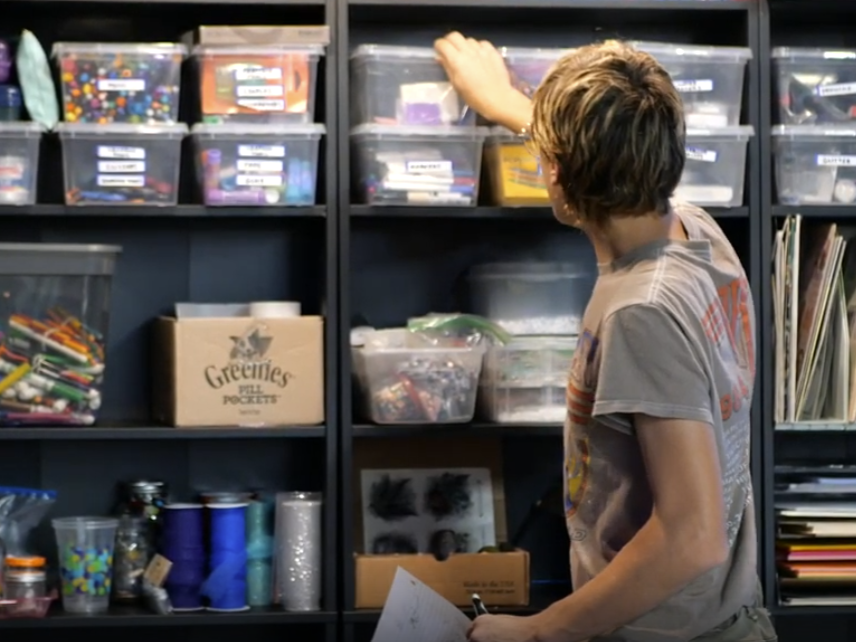
Three years later, The Artist Closet has outgrown that portable shelf. It now lives inside Oklahoma City’s Mycelium Gallery, where seven overflowing bookcases cycle constantly between donation and reuse. Hundreds of artists pass through each year, some dropping off supplies, some picking them up, many doing both.
Graham still organizes the shelves herself most weeks, a quiet, ongoing labor that mirrors the project’s origins: built piece by piece, donation by donation, in response to the financial and emotional pressures that shape who gets to make art in Oklahoma.
In her conversation for Hyvemind, Graham reflects on how the Closet took shape, the moments that have stayed with her, and why the simplest tools can open creative paths that would otherwise be closed.
HYVEMIND: Hi Katie! Tell us a little about who you are, and what’s the origin story of the Artist Closet?
Katie Graham: Hi! I’m Katie Graham, a full-time fiber artist and emerging author based out of Midwest City, OK. I was inspired to start The Artist Closet in 2022 after seeing a similar initiative based in California called Broad Room.
They have an entire warehouse filled with art supply donations, they support artists who need studio space, and host regular shows and events for artists to display/sell their work. It was something that I really wanted to be a part of, but there is nothing similar to the Broad Room in Oklahoma.
At the time I was struggling financially, emotionally and mentally. I worked in retail full time, started my art business on the side, attended school full time and I had just received full custody of my sibling who was 13 years old at the time.
I was discouraged and wasn’t sure how I would find the funds or support to create something like this with where I was. I had been selling my work at pop-up events around the metro area and I had the idea to buy a small portable shelf online that I could take with me to my events and I filled the shelves with my own unused art supply hoard that was taking up space in my home studio.
Just like that The Artist Closet was born. Fast forward three years and now we’re located inside of an Oklahoma City-based Immersive Art Gallery, Mycelium Gallery, where we now have 7 overflowing bookshelves! We’re currently working towards non-profit status to help us continue expansion of The Artist Closet.
HM: What gap or need in the community were you hoping to address with The Artist Closet?
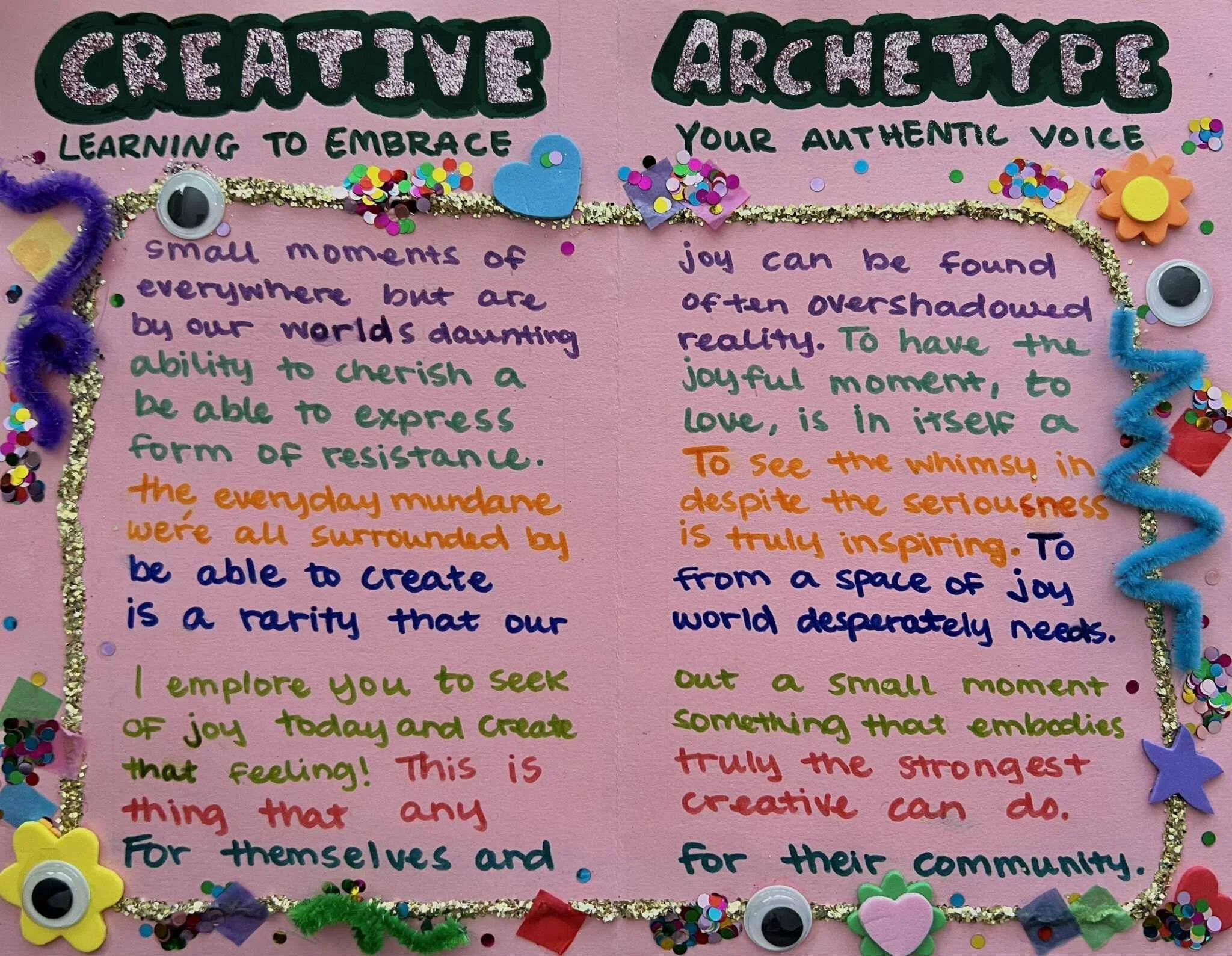
KG: We believe that creating art is a human right. People shouldn’t have to decide between buying food/paying bills or buying art supplies. For some, it’s not an option to spend a portion of their budget on art supplies. For every artist, it's necessary to have supplies in order to create. Whether you’re paying your bills with your art or not, it’s important to have access to supplies.
HM: If someone walked in for the first time, what would they experience?
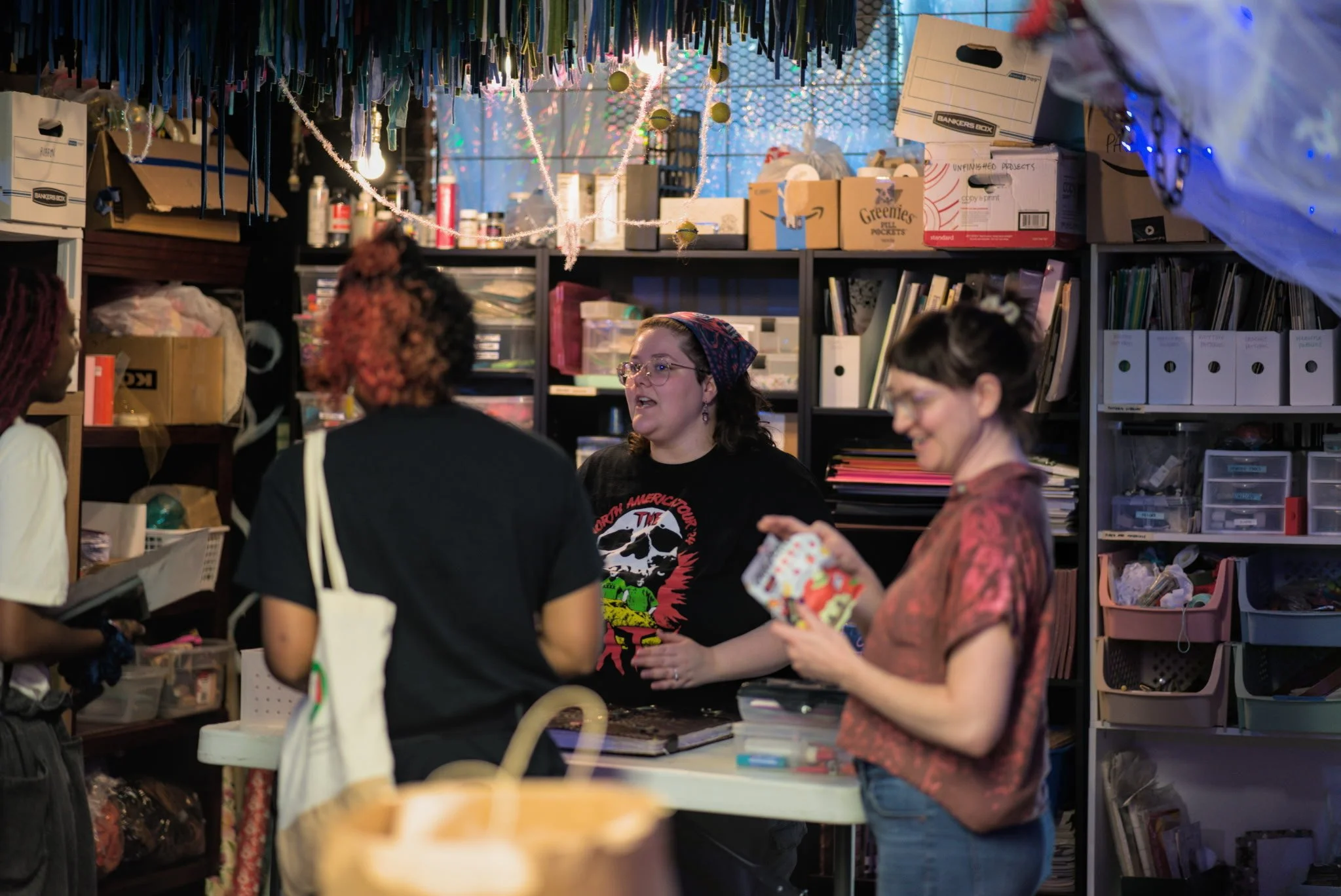
KG: When you first walk into Mycelium Gallery, you’re greeted with over 30 local artist’s work in all directions. The gallery has immersive art builds that mimic nature throughout the space—some hanging overhead or crawling up the walls. They also have a rotating installation that changes each month with a themed group art show.
As you make your way through their unique space, you’ll find The Artist Closet tucked along the back wall, filled with every kind of art supplies you can imagine.
HM: Who tends to use the closet (to donate, exchange, or get free items)?
KG: The Artist Closet goes through a continuous cycle of receiving donations, restocking donations, and clearing donations from our shelves. Almost everyone who visits drops off donations, but people are not required to give a donation to receive free items.
HM: What are the supplies that disappear the fastest, and why do you think that is?
KG: I’ve noticed that fiber art supplies, drawing supplies, painting supplies, and crafting tools like glue, rulers and sharpeners are always sought after.
I think it’s because these items are most used by beginners. People have likely drawn or painted in school, or watched a family member crochet before. These mediums are familiar if someone is interested in reigniting their creativity later on in life.
HM: What’s one moment of impact or connection that came out of this project and has stayed with you?
KG: I have had so many wonderful connections that sit with me when I spend time at The Artist Closet, but this one always sticks out to me:
We were set up at The Red Dirt Collective Mutual Aid Fair in Norman, OK, and this older man asked if I had any yarn. When I showed him our box of yarn, he shared that he taught himself how to crochet while in rehab.
He told me that once he picked up crochet, his desire to use substances subsided, mentioning that the repetitive rhythm was soothing. Once he became more advanced, he started making clothes for his daughter as a way to reconnect after lost time.
He doesn’t know this, but I always set aside a small box just for him in case he arrives late when I set up at that event.
HM: What’s something behind the scenes that people don’t realize it takes to keep this running?
KG: Over the last three years, I have done my best to dedicate one day each week to show up and organize art supplies by myself. Up until the last few months it’s been manageable but we have had an influx of visitors due to posting about The Artist Closet on TikTok.
I’m currently trying to rework my personal schedule to see if I can dedicate two days a week to organize supplies, but I’m really in need of more volunteers.
HM: What access or equity issues does this project reveal about art and creativity?
KG: There are programs for individual artists and small-scale art teams to receive grant funding to help fund one-time, larger-scale creative projects.
However, there are not a lot of programs that help a mass majority of creatives have access to long-term, small-scale assistance.
Not everyone qualifies for grant funding or has the experience to know how to apply for funding—or that applying for funding is even an option for them. We need different ways to support artists at every scale, whether an artist is pursuing their creativity as a career or as a hobby.
HM: How do you keep the project sustainable?
KG: While we’re still figuring out this project's full capability, we’ve started by making it a true community effort. We ask community members to donate new or gently used art supplies they no longer use.
Sometimes people purchase brand new supplies to donate and sometimes they bring in what they already have but no longer need. Sometimes when someone drops off a donation, they grab a few items on our shelves, but most of the time, people who drop off donations don’t take anything.
It’s been a continuous cycle of some people taking supplies, some people exchanging supplies, and some people donating supplies. We also encourage community members who have shown interest in helping us organize to come in on their own time during the gallery’s open hours to help us how and when they can.
HM: What’s your dream for what this could grow into in the next few years?
KG: I would love for The Artist Closet to grow in size, comparable to the Broad Room. For us to have a larger space and regular funding that allows us to support more local artists through various types of programming.
I also have some ideas on implementing an art supply mailing system for any Oklahoma community members who can’t visit us in person.
I also think it would be cool to expand this into every artistic practice—imagine an Artist Closet off-branch that specifically helps performing artists with things like costumes or acting lessons—or, an off-branch that helps musicians find used instruments.
The possibilities for what I’d like The Artist Closet to become one day are endless.
Check out The Artist Closet’s website here to learn more or make a donation.
Interested in volunteering? Email Katie at theartistcloset.ok@gmail.com.