
Staying Tender In a Harsh World: A Conversation with Cassidy Rae Marietta
Artist Cassidy Mae Marietta discusses her work and how to stay embodied through all seasons of life
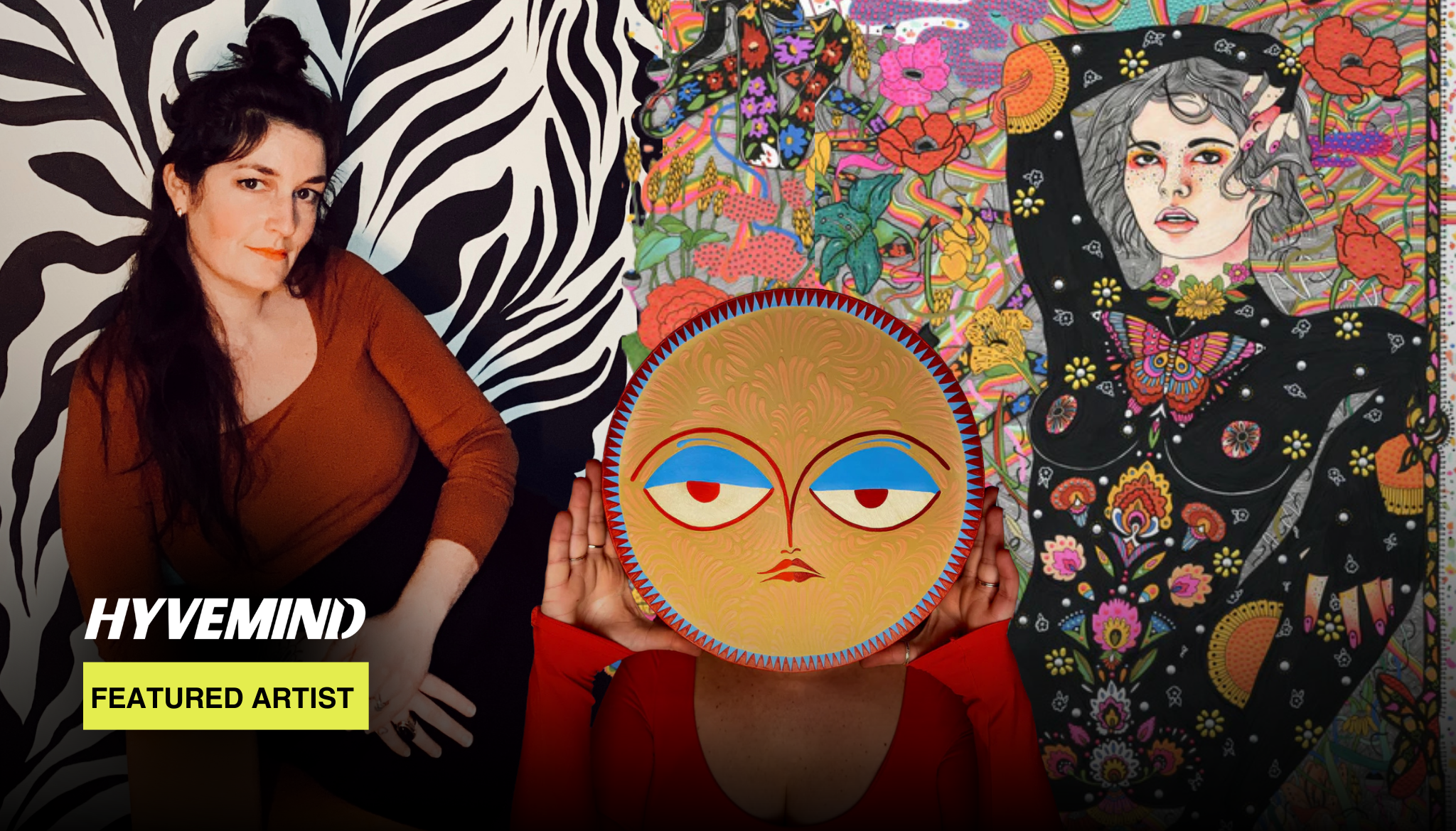
On a typical day in Columbus, Ohio, artist Cassidy Rae Marietta works quietly from her home studio, balancing the rhythms of motherhood with the slow, deliberate work of drawing. Her illustrations begin in black ink, built patiently with Micron pens, before unfolding into intricate compositions filled with figures, botanical forms, skeletal characters and saturated color. The images feel immersive, inviting viewers into interior worlds shaped by emotion, memory and instinct.
Marietta’s relationship to art formed early. Growing up as an introverted child who moved frequently, she learned to draw wherever she landed, filling notebooks and loose pages as a way of observing the world and staying oriented within it. When she eventually settled in Columbus, that private habit became a sustained practice, supported by a city whose pace and creative ecosystem allowed her work to deepen.
That way of working never left her. The same attentiveness that once filled notebooks now shapes her studio practice, where drawing remains a process of discovery rather than execution.
Marietta rarely begins a piece with a fixed idea. Instead, she draws until forms emerge, allowing intuition and revision to shape the work as it develops. Figures and skeletal structures anchor her compositions before giving way to intricate ornamentation that can take months or years to complete. Themes of femininity, life and death, grief and individuality surface organically through this process, informed by lived experience rather than concept alone.
Beyond her studio, Marietta’s work is accessible in many forms, from art prints and posters to home goods that carry her vivid designs into daily life. Whether through limited series or collaborations with major brands, her imagery resonates because it manages to be both deeply personal and immediately relatable.
In the conversation that follows, she reflects on process, symbolism, censorship and the ways art can hold complexity without resolving it.
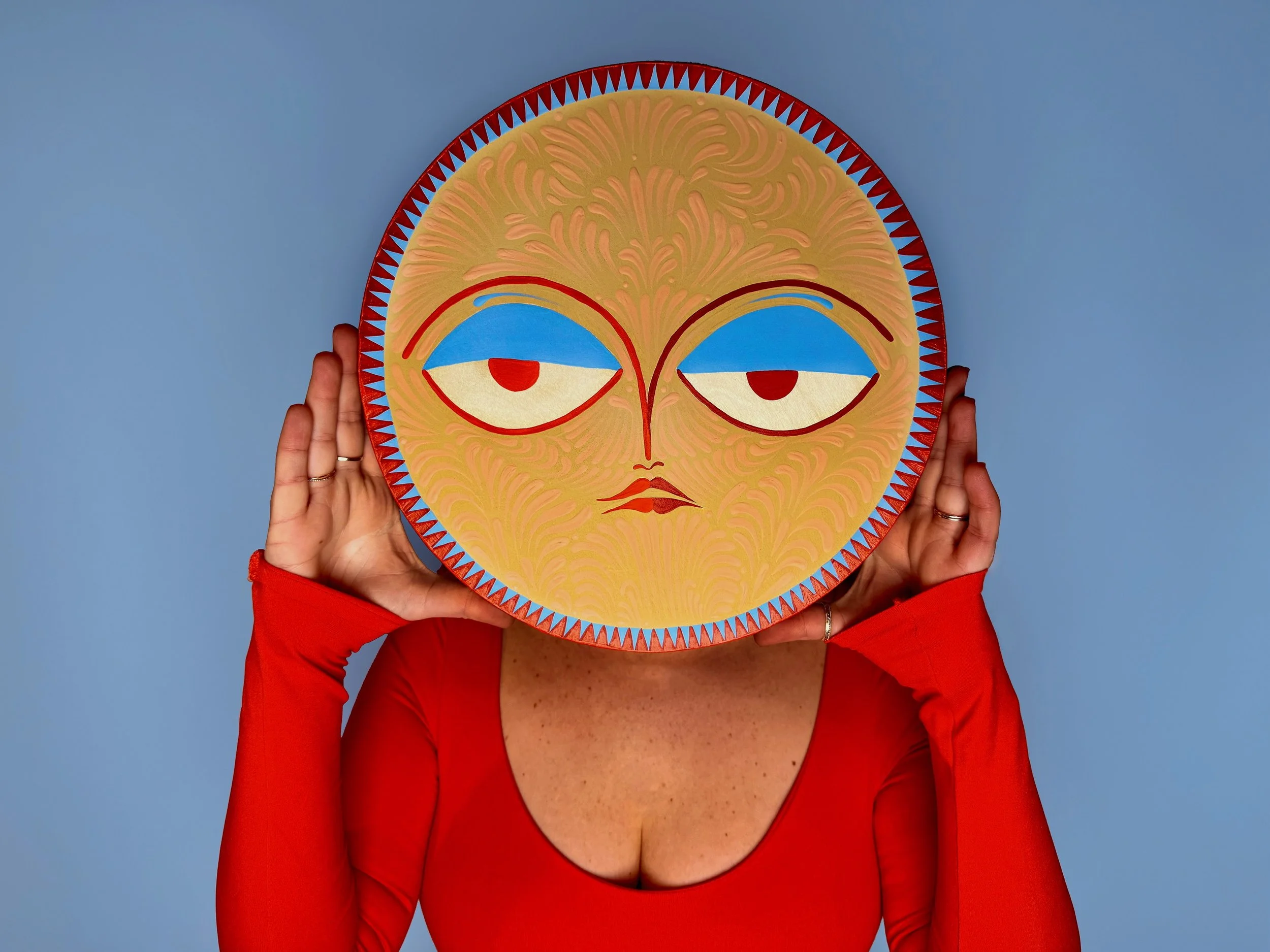
Images provided by Cassidy Rae Marietta
Hyvemind: Hi Cassidy! Welcome. Let our audience get to know you—tell us a bit about yourself!
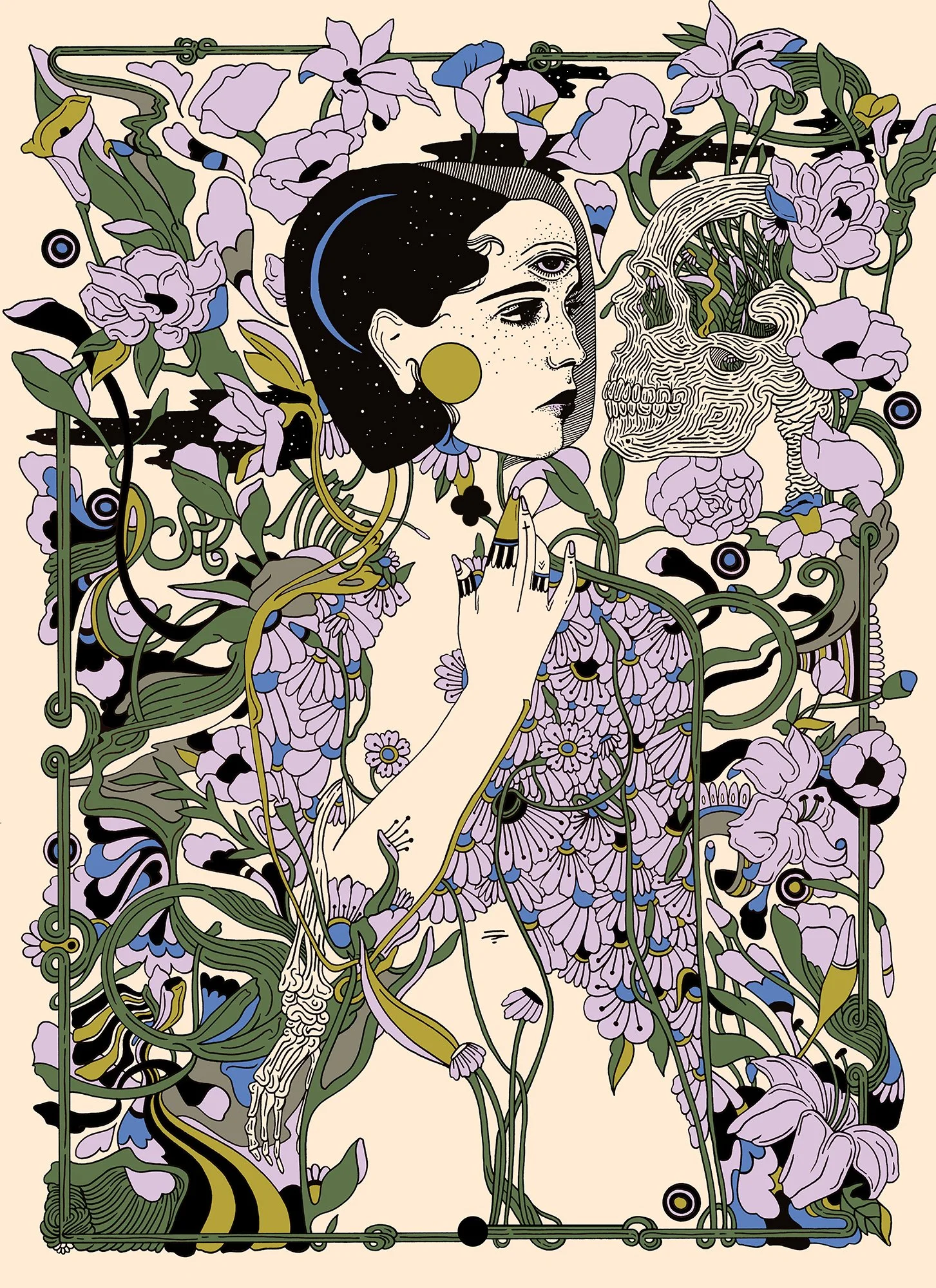
Cassidy Rae Marietta: I am a multidisciplinary visual artist based in my home studio in Columbus, Ohio. My work primarily features Micron illustrations that are complemented by rich colors and expressive figurative elements. Through my art, I aim to celebrate the modern woman, while intertwining themes of botany and psychedelia.
HM: What were some of your early inspirations and moments that drew you to becoming an artist?
CRM: I have always considered myself creative and somewhat of an introvert. Growing up, I moved around a lot, and being the middle child, I naturally began to express myself visually in small notebooks or on scraps of paper. Along the way, I received encouragement from some great mentors, which made me realize how much I needed art as an outlet. When I chose Fine Art as my major, everything fell into place; it felt like second nature.
I have always drawn inspiration from nature, life, loss, and the human condition. I allow myself to feel deeply and express these significant emotions through my work. For me, creating art is a way to process the inevitable peaks and valleys of life.
HM: What influences you now (music, books, other artists)?
CRM: We have a beautiful vinyl collection and are passionate music lovers. Music is life, and before we had our daughter, we used to attend live music events whenever we could. While those outings have decreased significantly, we still have some exciting shows lined up in the books. I consider myself a bit of a maximalist and enjoy DIY home projects, cooking, and collecting art.
I worked as an assistant art curator for Society6 for about ten years, which allowed me to discover many of the artists I now love and follow. Some of my all-time favorites include Landon Sheely, Emily Winfield Martin—who recently published the beautifully illustrated children's book *The Wildest Thing*—NVM, LEOVY, AITCH, Leslie Kirchhoff, Linas Vaitonis, Maggie Cowles, and the list goes on and on.
HM: What’s your process? Do you have any rituals or ways you get in flow to create? Is it different depending on your mood or the piece?
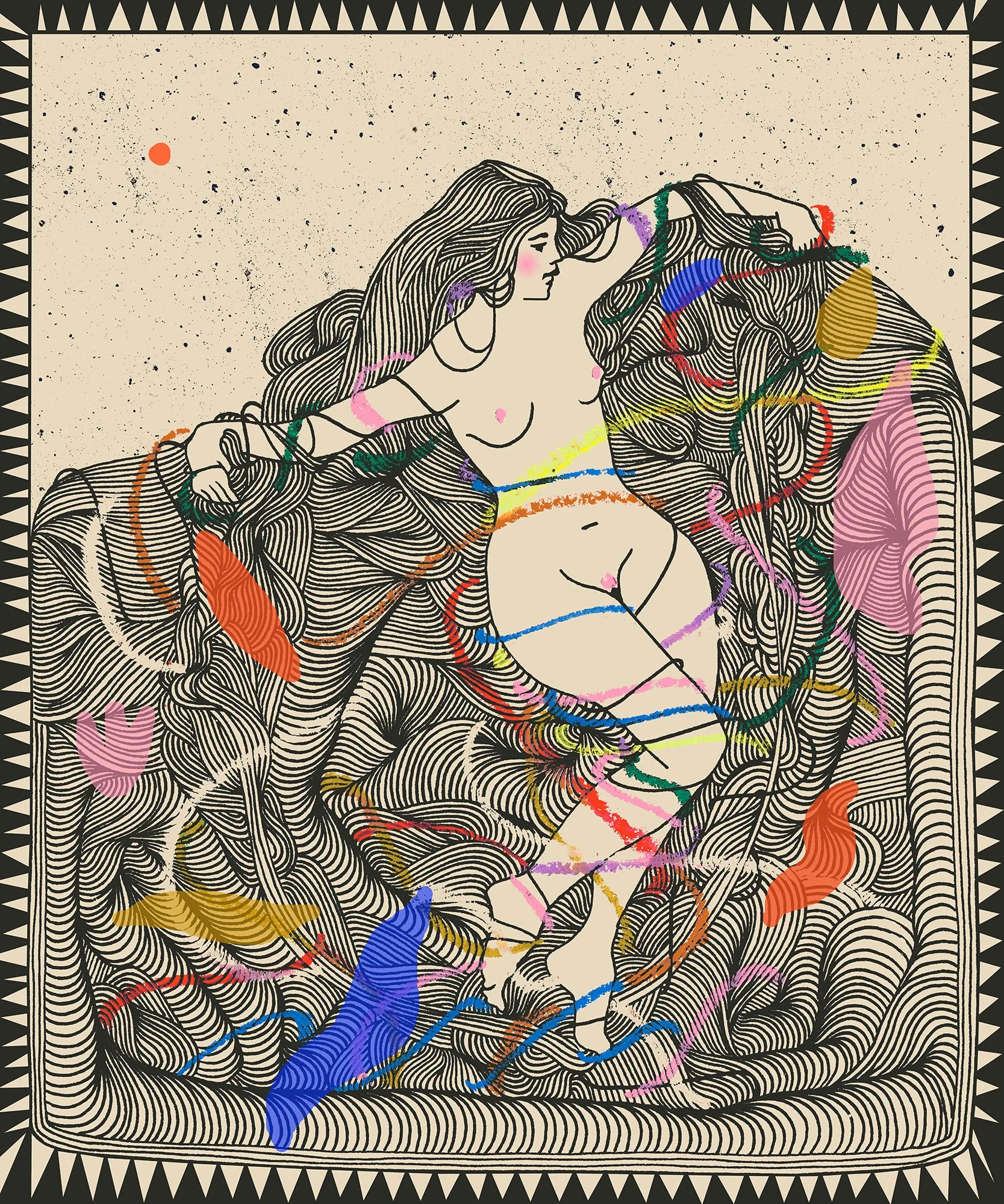
CRM: I constantly jot down notes and ideas for new pieces, but my work is heavily influenced by the subconscious mind. The main substance of a piece usually doesn’t emerge until I begin actively working on it. For example, I start by composing the "mass" portions—figurative elements, human forms, skeletal structures, and so on. Once I have the majority of that narrative on paper, I begin to add fine details and ornamental elements. The wrapping and twisting of line work and decorative features can take me days, weeks, or even up to a year to complete.
I draw my pieces with black ink, using my preferred Micron pens. After that, I scan them in sections, stitch the images together in Photoshop, and then color them digitally. Additionally, I experiment with various media, including gouache, acrylic, and marker.
My first passion was painting. As a fine arts major focusing on painting, I initially worked large in college. However, after leaving school and losing my studio space, I had to downsize and shift my focus to pen and paper. Illustration now gives me the control that I prefer, and the variety of colorful media reflects my lightheartedness.
HM: What role does censorship and societal norms take and why is it important to you as an artist to tackle these subjects?
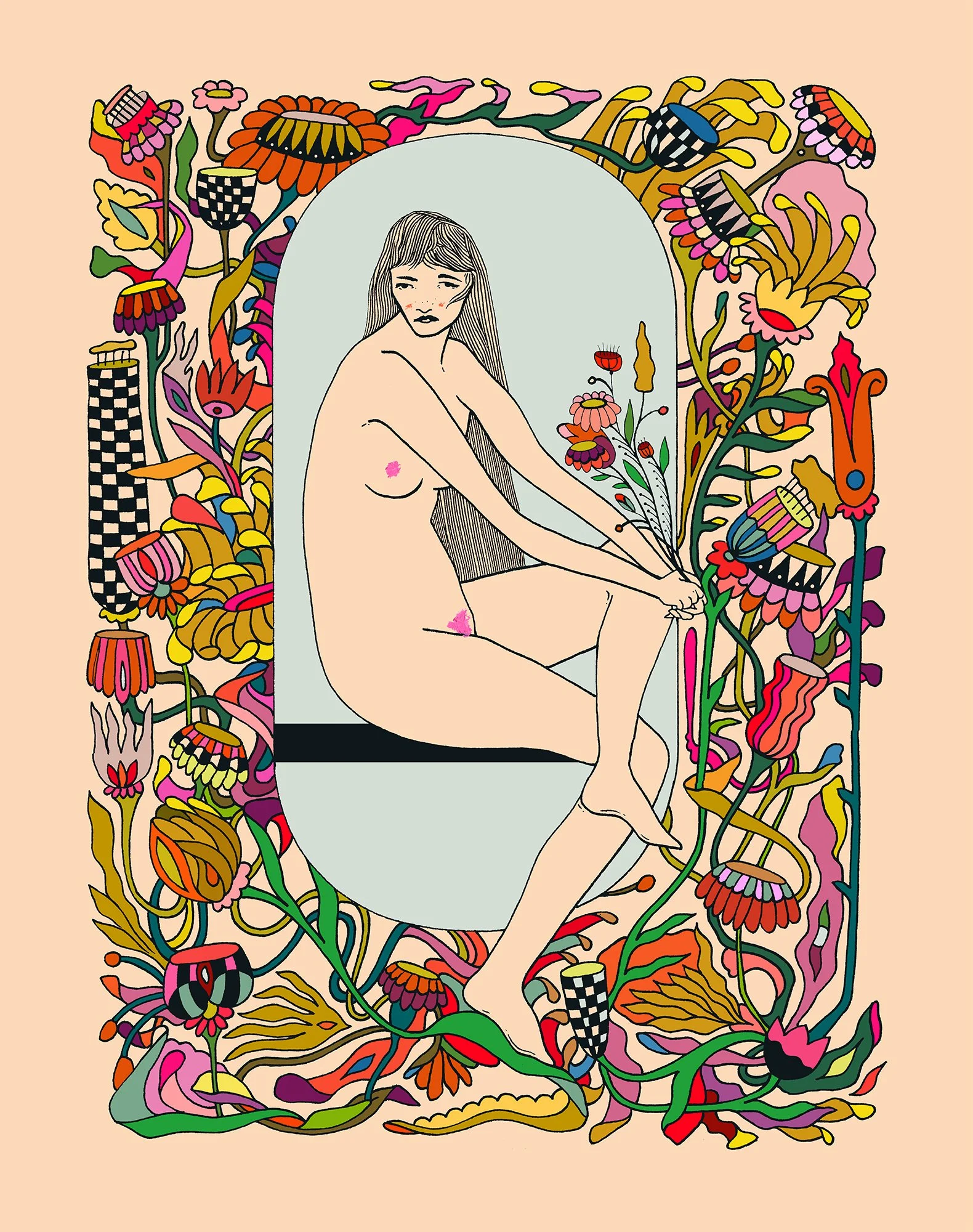
CRM: Life organically humbles us all. We live, we die, and in between all that is rawness and unpredictability. Bodies are merely the vessels through which we navigate life, and censoring them numbs us from truly experiencing the full range of them and the connectedness we might feel with others, as well as the healing that comes after loss or the celebration of new life, for instance.
I've always been fascinated by social acceptance, particularly how people prioritize group thinking and actions over their personal judgment. While many may find safety in conformity, it can lead to a gradual erosion of individuality. AI advancements are moving faster than lightning, and with the stripping of free press, it’s impossible to know what exactly is authentic. This really keeps me up at night.
Censorship in art is especially relevant today. The suppression or removal of artwork because someone considers it "inappropriate" often affects marginalized voices and limits free expression. Censorship or restricting access to art is dangerous because it effectively allows people to rewrite history.
All these larger themes of our political climate and biology, cultural expectations, habitual overgiving, and generational conditioning all contribute to the bucket of topics I draw from when creating art. These topics are always sources of inspiration for me, both as an artist and as a member of the planet, a woman and a mother.
HM: Let’s talk about your work that includes the female form. What aspects of femininity and the female body are important to you to depict from your own visual lens? What’s the emotional or conceptual vision for you beyond just aesthetics?
CRM: Femininity has become a dirty word, no? Inferior to masculinity. While traditionally associated with nurturing, beauty, and sensitivity, it is sometimes weaponized as an insult or used to box individuals into rigid stereotypes.
I mean nudity and femininity can be objectifying, depending on the context, but it can also be freeing. An act of liberation, if you will.
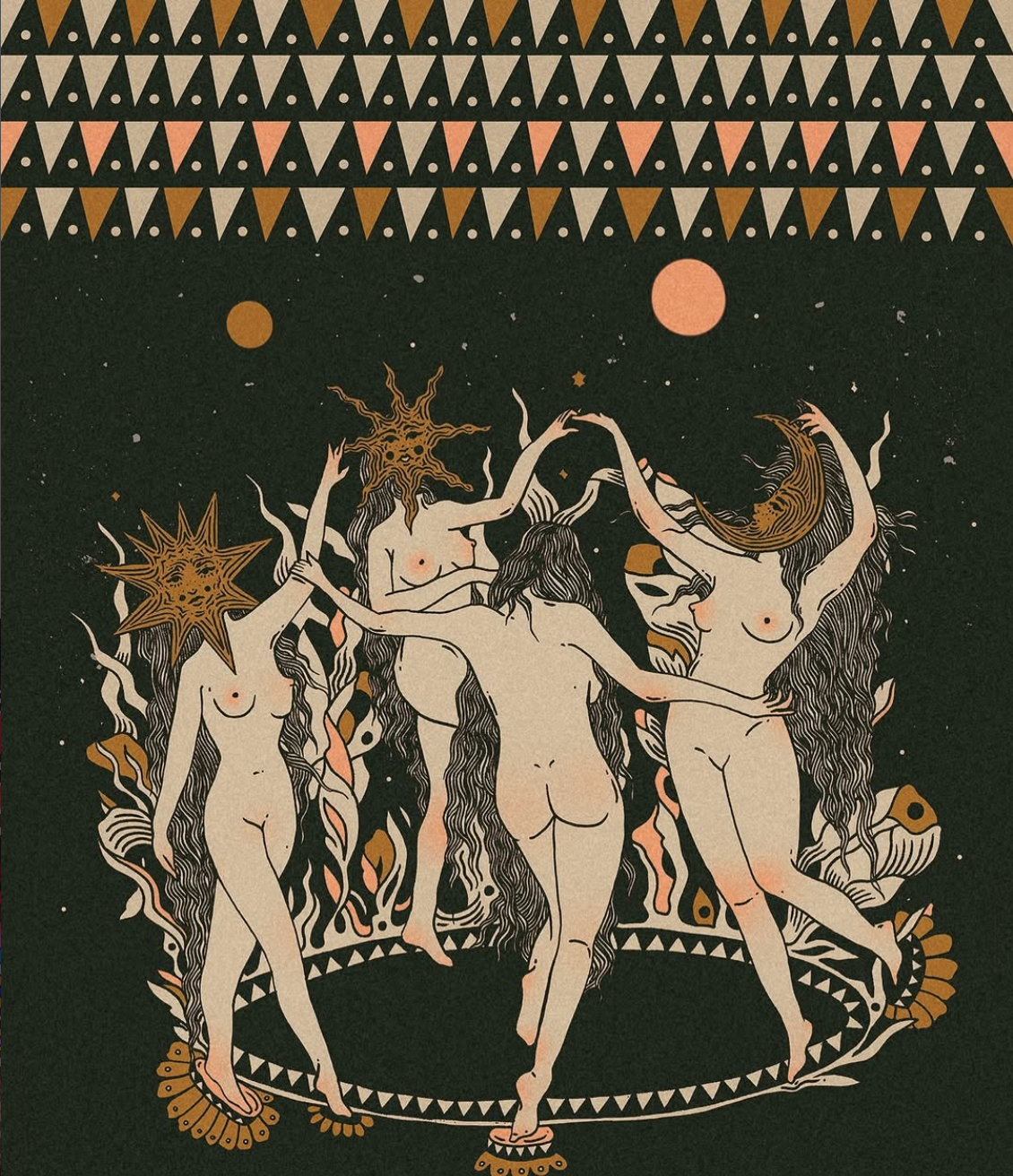
Bodies are the most common and most controversial thing, which confuses me because each of us has a body that brings us all into the world and carries us through life. The folds and contours of the human shape are both fascinating and very beautiful to me. I’ve always had such adoration for drawing the figure.
My silhouettes are a force, strong and unapologetically themselves. They often turn and stare back at the viewer as confident and empowered portraits. I would love for people to see that in my work—to perhaps spark a stronger dialogue and connectedness within themselves. My take is, however you identify–you own that and never apologize for it. The blessing of individuality is one of the only things we can control and is a great tool in the personal toolbox towards happiness.
HM: What other symbols or objects appear in your work repeatedly? Why are they important to you and what do they represent?
CRM: I often incorporate eyes in my artwork as symbols of an inward voice, either watching over or looking outward, as if to say, "I see you." I frequently use skeletal characters to represent inner turmoil, depicting them as manifestations of a main character’s imagination—an ornery reflection of her life stressors, anxieties, and moral dilemmas.
Life and death are recurring themes in my work, as well as the balance between fate and free will. Art has always served as a method of healing for me, and I take pride in being as authentic as possible in my creations. It involves a delicate balance of observing the significant moments that shape us while ensuring they do not define us.
I consider myself sensitive and loving, and as I grow older, I realize how easy it is to lose those qualities. I am now embracing my tenderness and allowing myself to be vulnerable. It is often in these moments that I produce my best work.

HM: You’ve done some pretty cool collaborations with brands. Please tell us about them!
My favorite collaboration so far has been with Star Wars. I created five classic Star Wars posters, followed by a series of works featuring The Mandalorian. These pieces were sold through Urban Outfitters, Society6, and a few other shops. I was flown out to California for the Star Wars celebration in Anaheim in 2024, where I signed an event-exclusive poster that I had also designed. It was an amazing experience. So weirdly perfect. Some of my other favorite brand collaborations include Dr. Martens USA, Showtime x Penny Dreadful, Bookish Box, and various band posters, t-shirts and album artwork.
HM: What pieces are your favorite or are you most proud of? Why is are they personally important and significant to you?
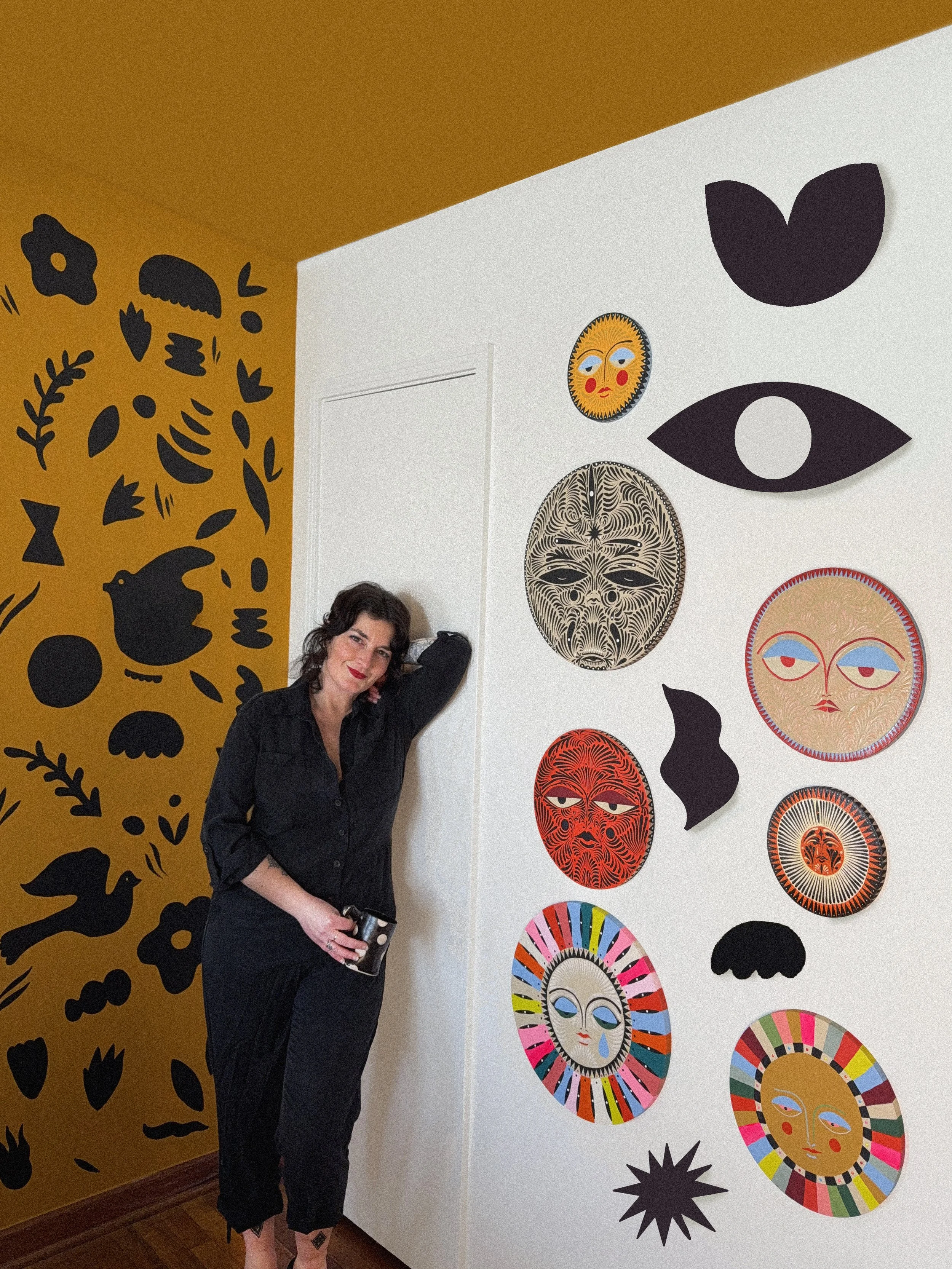
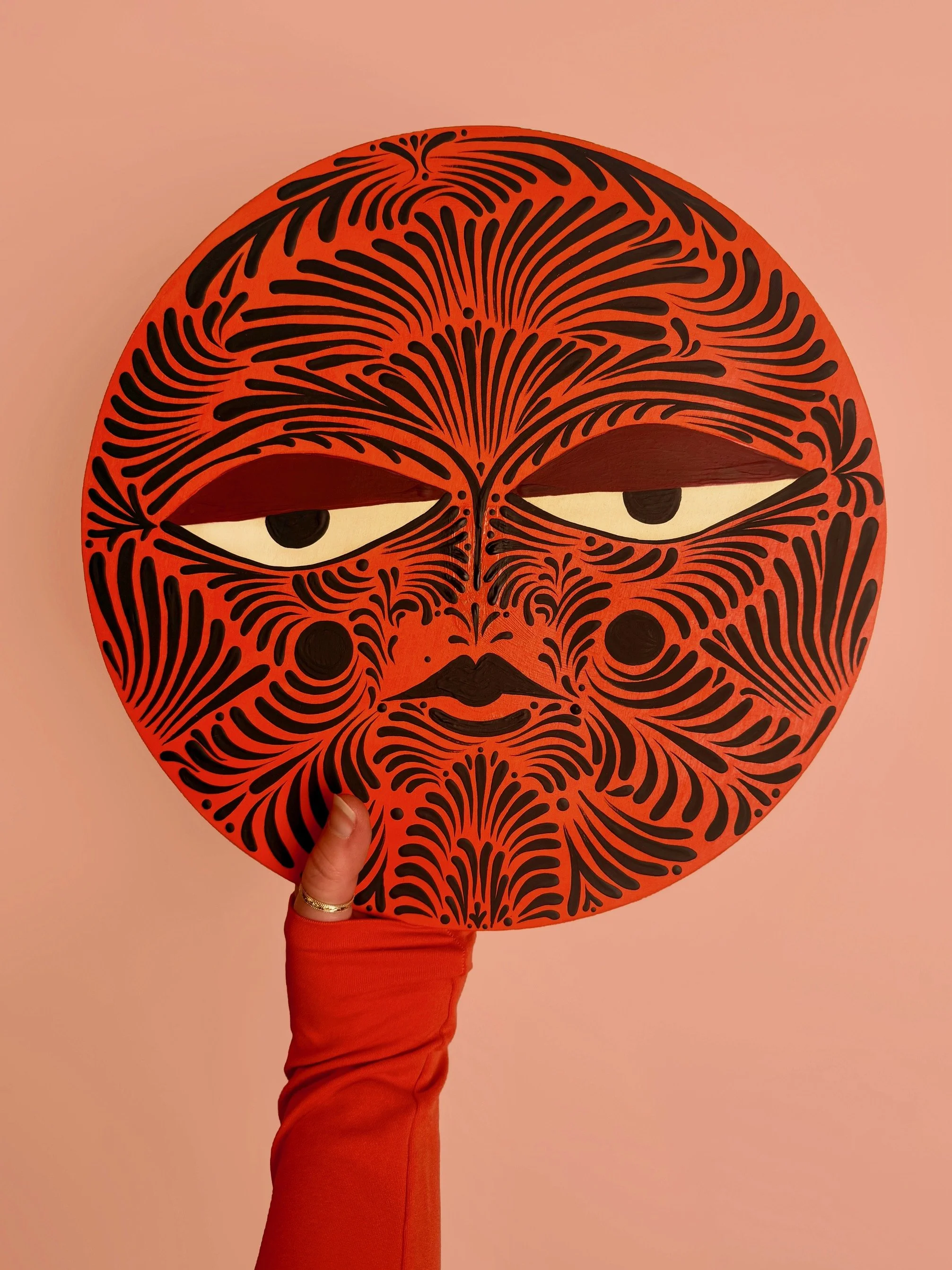
CRM: Time is so limited, living with a four-year-old, so I feel like whatever I’m currently working on is a victory. The nesting sets were an exciting transition for me from working predominantly 2-dimensional, followed by the sun panels that I’m actively painting.
HM: What are your current obsessions or inspirations? How has your work changed to reflect these?
CRM: Illustration is my primary focus, but I also enjoy experimenting with different mediums. I started creating these wooden sun panels as a way to honor my grief after losing my dad in November. Just days after his passing, I was yearning for a sign from the universe when a brilliant beam of sunlight poured through the window, warming my face. Lately, in between my drawing sessions, I’ve been painting and using that time to truly meditate on all of that.
Check out Cassidy’s work on her website here and Society6 here.
Follow Cassidy on IG: @cassidyraemarietta