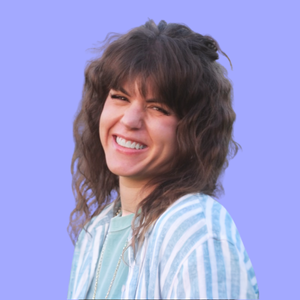
Aunty Beast’s Magical World of Creatures
Meet Aunty Beast, the Pennsylvania Artist Who Creates Creatures with a Life of their Own

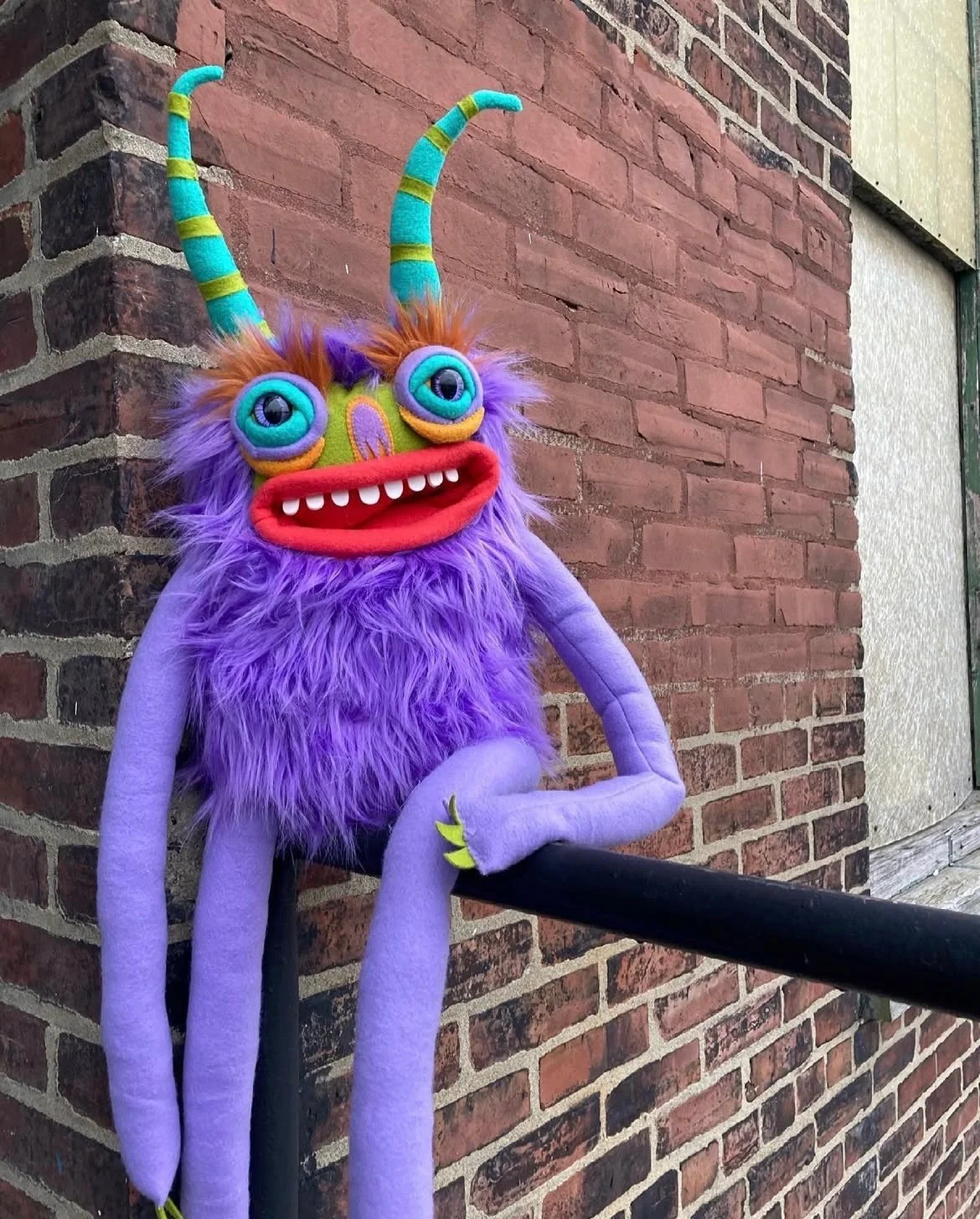
Aunty Beast creates hand-sewn creatures that sit at the intersection of soft sculpture and puppetry—plush forms with exaggerated features, expressive faces and a strong sense of character.
Working from her studio in Pennsylvania, she builds each piece from faux fur, vintage textiles and found materials, constructing figures that feel at once playful, strange and distinctly alive.
There are Plushies, with full limbs and bodies; Stash Mouths, designed with hidden compartments; Hand Pups, built for puppeteering; and Hybrids, which combine elements of all three.
The work traces back to an early belief that objects hold their own inner lives. As a child, she believed her plush toys were alive, each with its own identity and inner world.
She holds onto that in adulthood, in the way each of her creatures seems to already know who it is before it’s even finished.
“The thought of being their creator doesn’t cross my mind too much,” Aunty Beast told Hyvemind. “It feels a lot more like solving a puzzle with a great punchline every time.”
That approach carries through in the process itself. Materials—often sourced from flea markets, thrift stores and friends—are added, removed or replaced as each form takes shape, with decisions driven by the piece rather than a predetermined outcome.
What arrives is a world of gentle, slightly mischievous creatures that feel like they’ve been waiting for you, like something you loved once and forgot and are just now remembering.
In this conversation, Aunty Beast reflects on feeling, trusting the process and letting things become what they are.
Hyvemind: Hey Aunty Beast, welcome! What inspired you to start making beasts and other creatures? How do you describe them to someone who has never seen your work before?
AB: When I was a peanut, I firmly believed that my plushies possessed individual consciousness.
The earliest inspiration probably stems from that relationship and an understanding that those creatures were really distinctly their own.
The draw to puppets might come from an obsessive thought experiment about the body as a vessel for spirit. Are we material animated by some force?
Of course, this is a silly way to work through the idea, but I’m a silly gal. I’ve discovered a lot spiritually since these initial thoughts, but I don’t want to get too long winded.
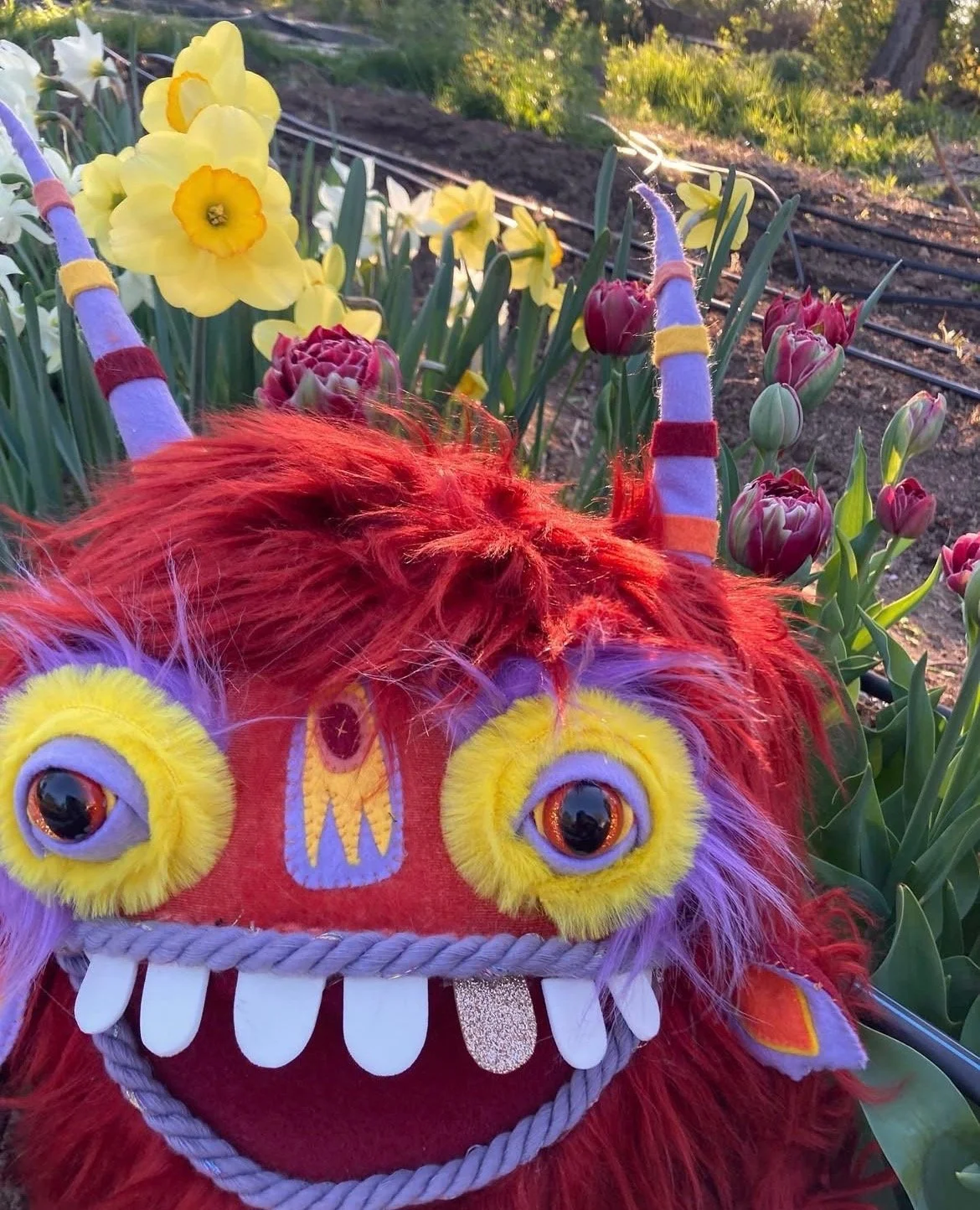
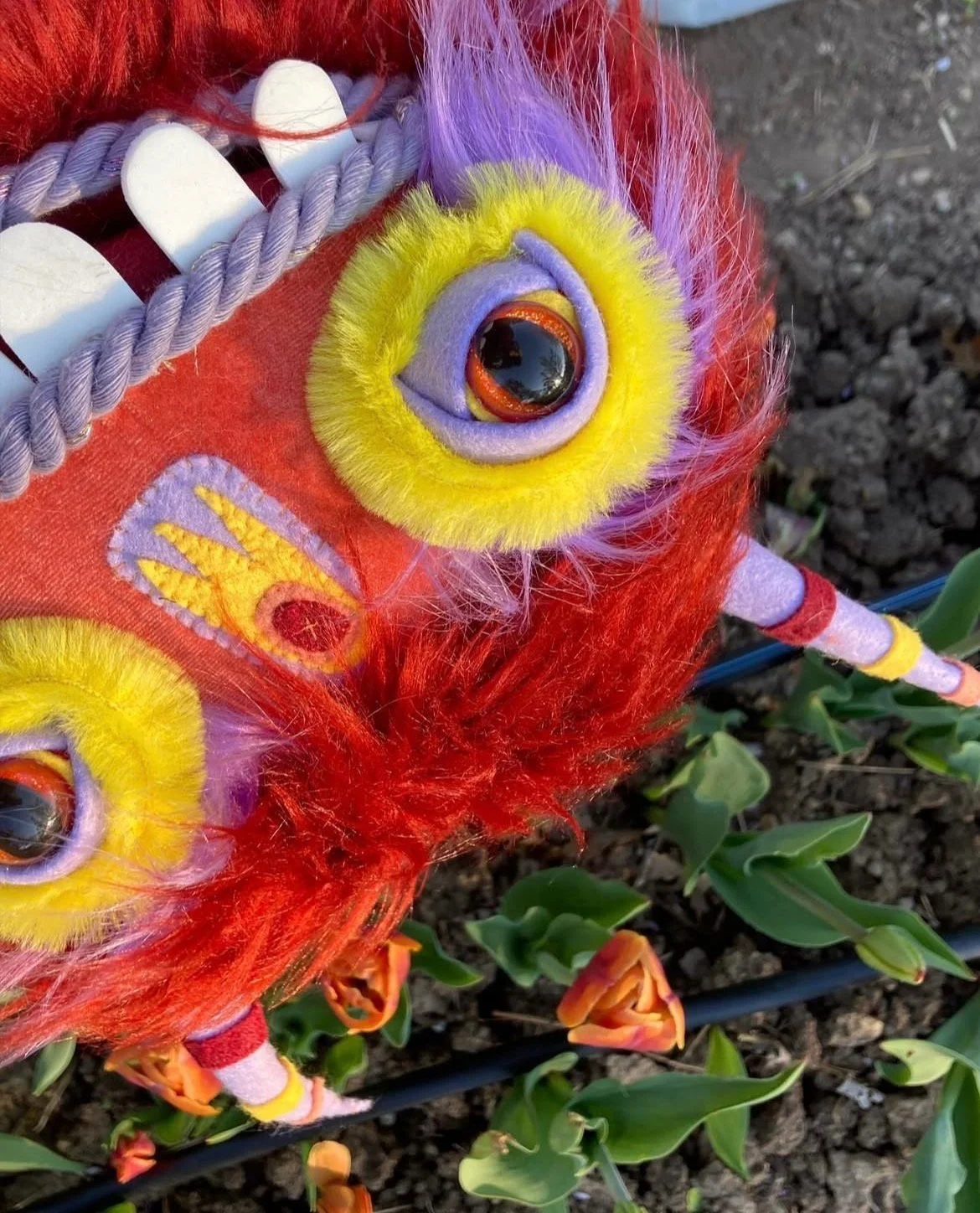
HM: The creations you make all have distinctive characteristics, dare I say, personalities of their own. How do you see yourself in conversation with them as their creator?
AB: Thank you. The creatures definitely have a lot to do with locality. I incorporate found materials like vintage trims and fabric from flea markets, thrift stores, and scraps that friends have given me.
I suppose they sort of quietly document the history of where I’ve been and who I’ve interacted with.
The thought of being their creator doesn’t cross my mind too much. It feels a lot more like solving a puzzle with a great punchline every time.
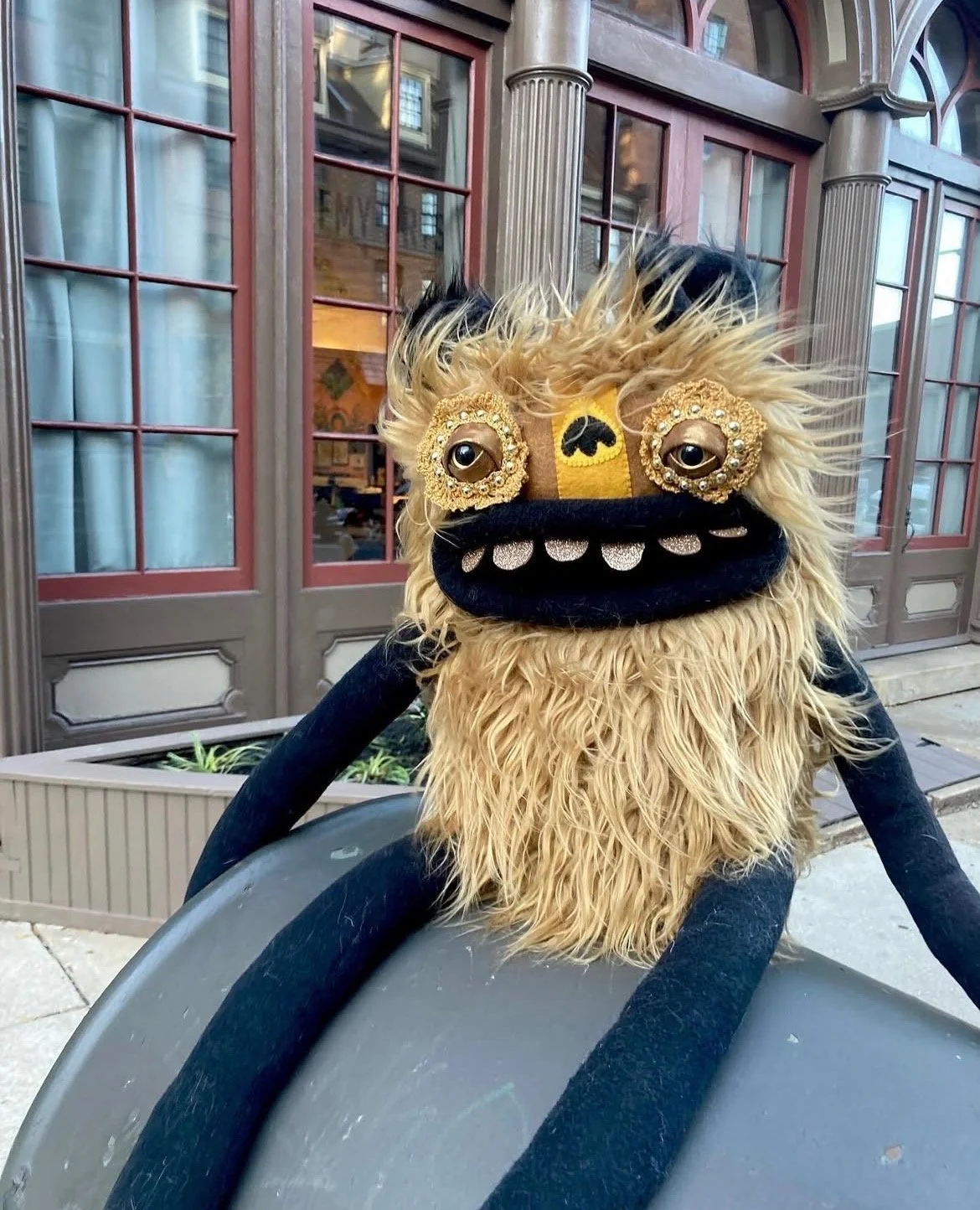
HM: Can you describe what it’s like when you get the idea to create a new beast? What’s your process like from idea to a new finished creation?
AB: The process is typically informed by the materials. I usually start by making various piles of things that seem to belong together and experiment with building multiple creatures at once, responding to how they shape up by tossing some of the first materials chosen and picking new ones that seem to fit the personality better.
I rarely sketch them first. Almost never. I also don’t make patterns or really even measure anything.
HM: How have your creations evolved over time?
AB: Oh yeah. The first critters were made from loner socks my friends gave me in college.
The next was a very simple cat-monster-pillow-thing.
After that I did more experimenting with wool felts, wax, and polymer clay. I think this version was more folk art looking. I made a lot of wizards and foxes in like 2009-2012ish for some reason. It was a precious indie motif in a precious indie era, I guess.
I eventually discovered the faux fur and that’s become the foundation for almost everything since then.
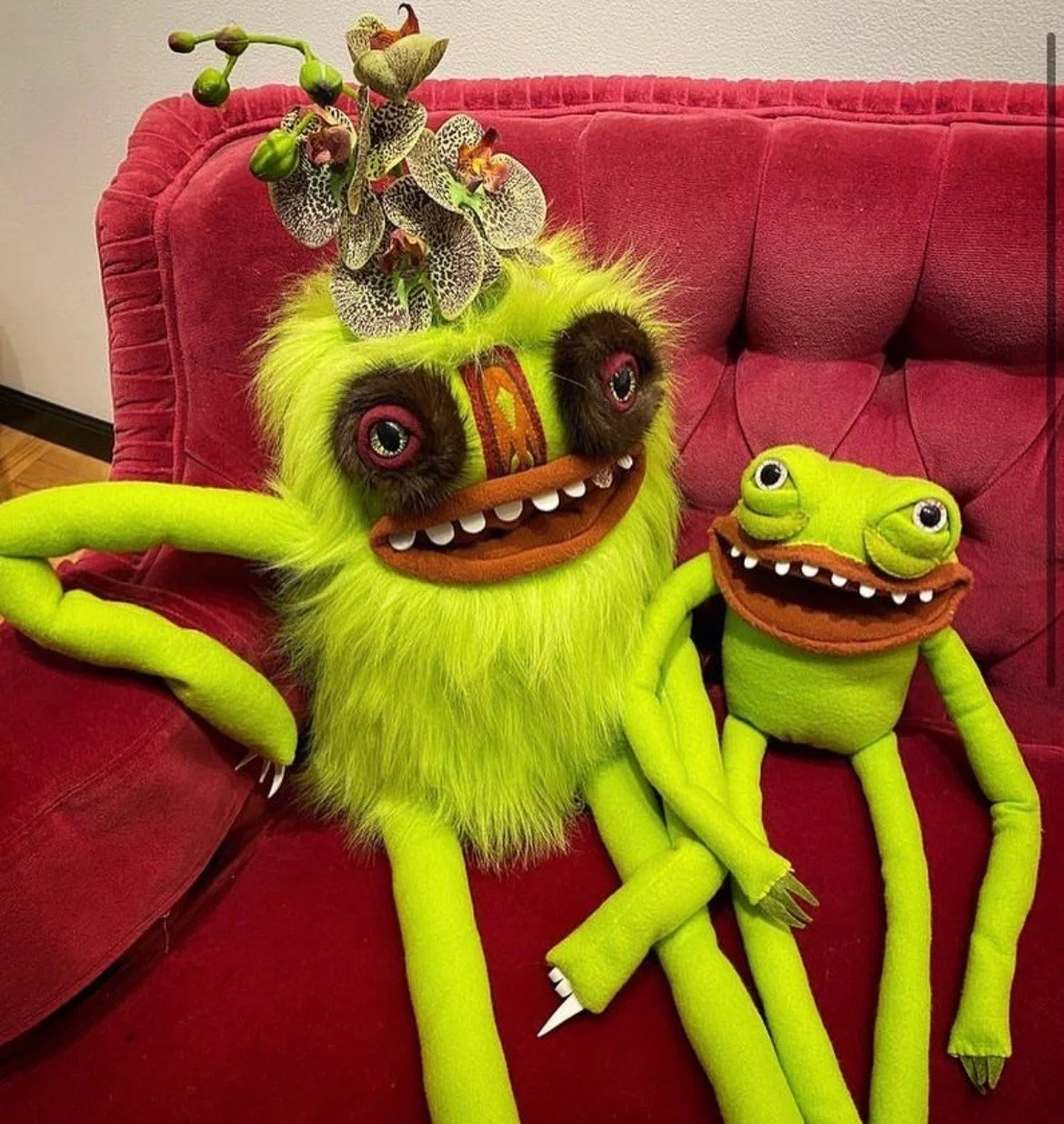
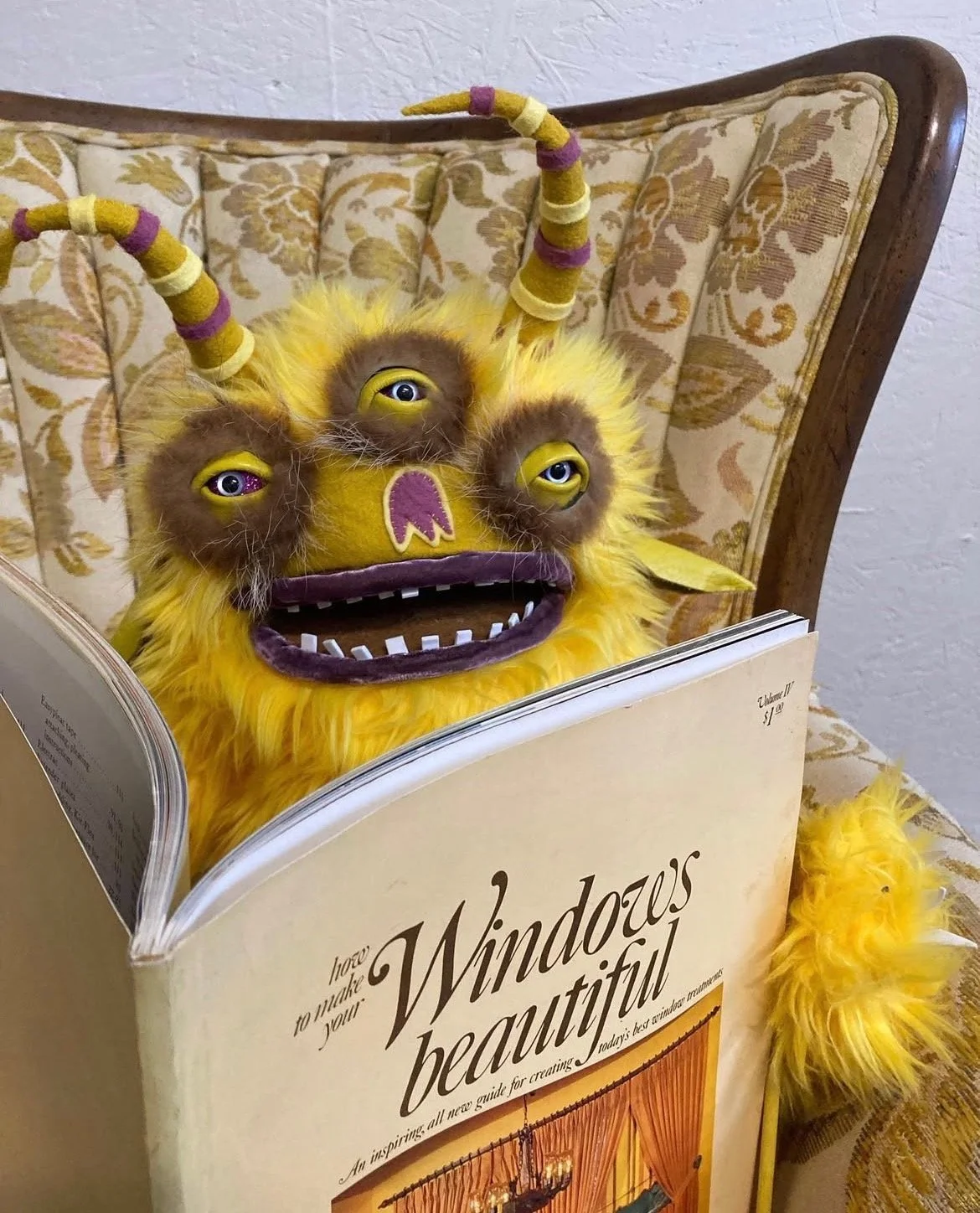
HM: Do you find yourself returning to certain themes, colors, or imagery? What do these things mean to you, if anything? (fur types, number of eyes, horns, etc)
AB: There’s probably a set of elements and a formula working through my subconscious, but I actually hadn’t thought about this. Hopefully people just find something about the work that resonates with them for whatever reason.
HM: Do you have a favorite creation? Please tell us about it and what it represents and means to you.
AB: I’ve been almost too into a few of them to let them go, but I did.
I hope they have good homes.
I do have a few for my own collection that I love and I’ll never part with and I’m not even sure why.
I have a bunch of friends like that too.
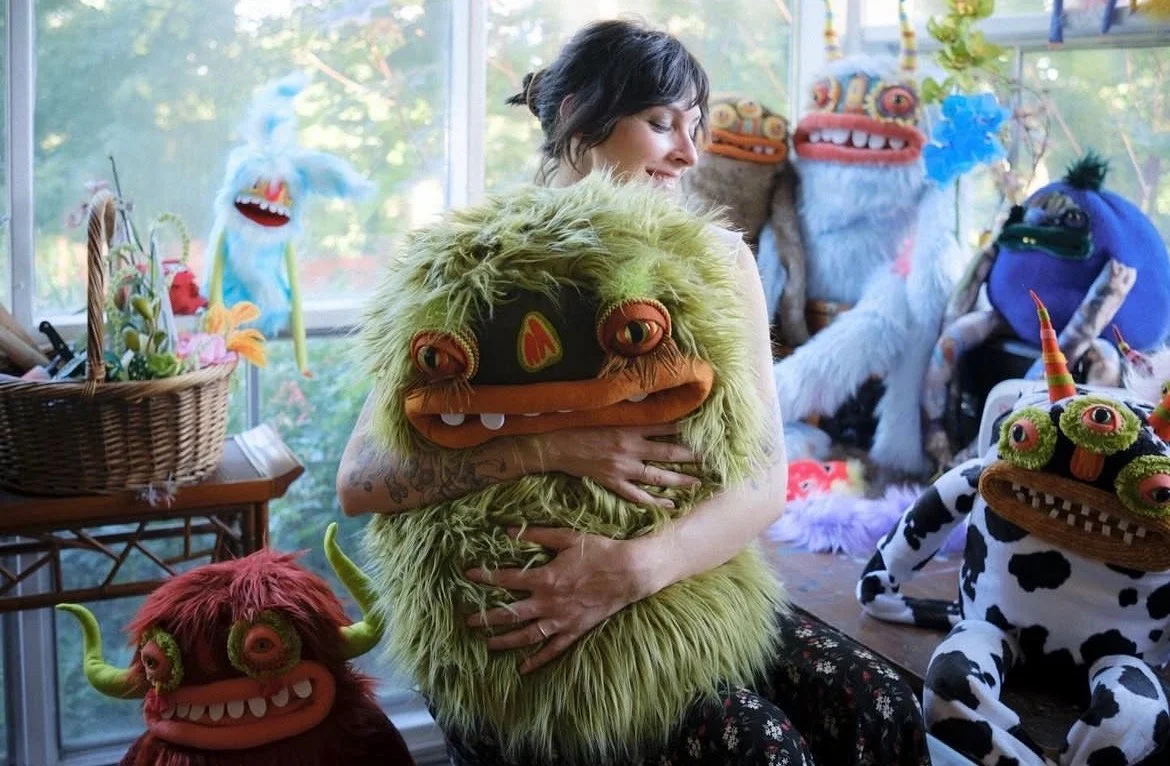
Photo by @bus9tonowhere | @joymasiphoto
HM: Do your beasts/plushies/puppets/creatures have a message for us about belonging, fantasy, playfulness or anything else?
AB: Well it definitely starts with not taking life too seriously… also that you’re not alone.
Every snapshot of every moment is imbued with deep meaning and humor is the best way to soften some difficult messages and lessons.
HM: What’s next for you, Aunty Beast? What new ideas, exhibitions or collaborations are you dreaming up?
AB: Hopefully, a podcast/mini series where myself and a puppet will be interviewing artists. This is very early in the works, so I don’t want to say too much.
Stay tuned!