
Artist Cristian Mera Builds Collages That Feel Both Timeless and Immediate
Meet the Calgary-based artist shaping collage through memory, music and an instinct for composition
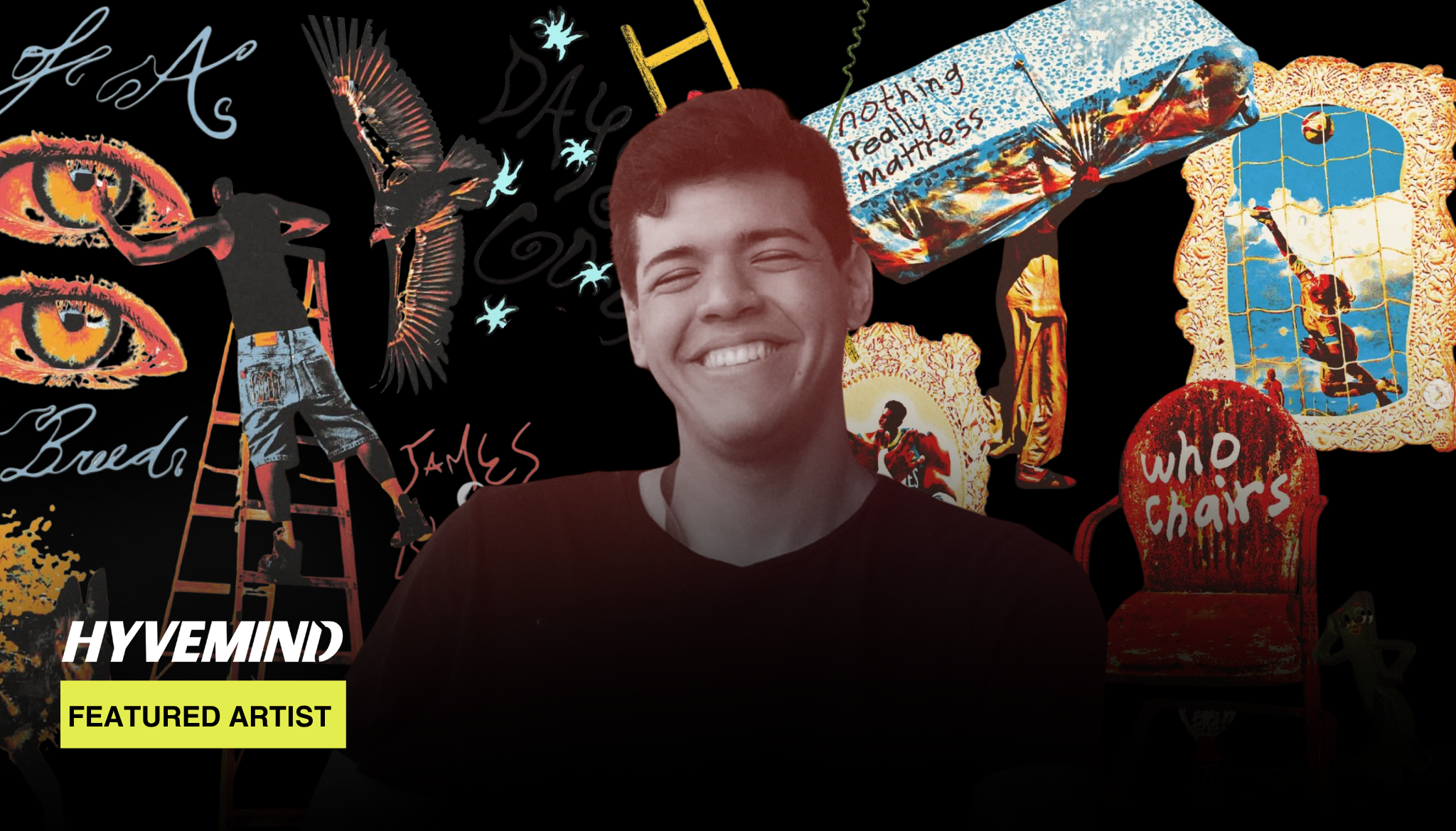
Cristian Mera is an artist and designer working at the intersection of composition and feeling, where typography, image and texture come together in layered, atmospheric collages that hold both structure and spontaneity in the same frame.
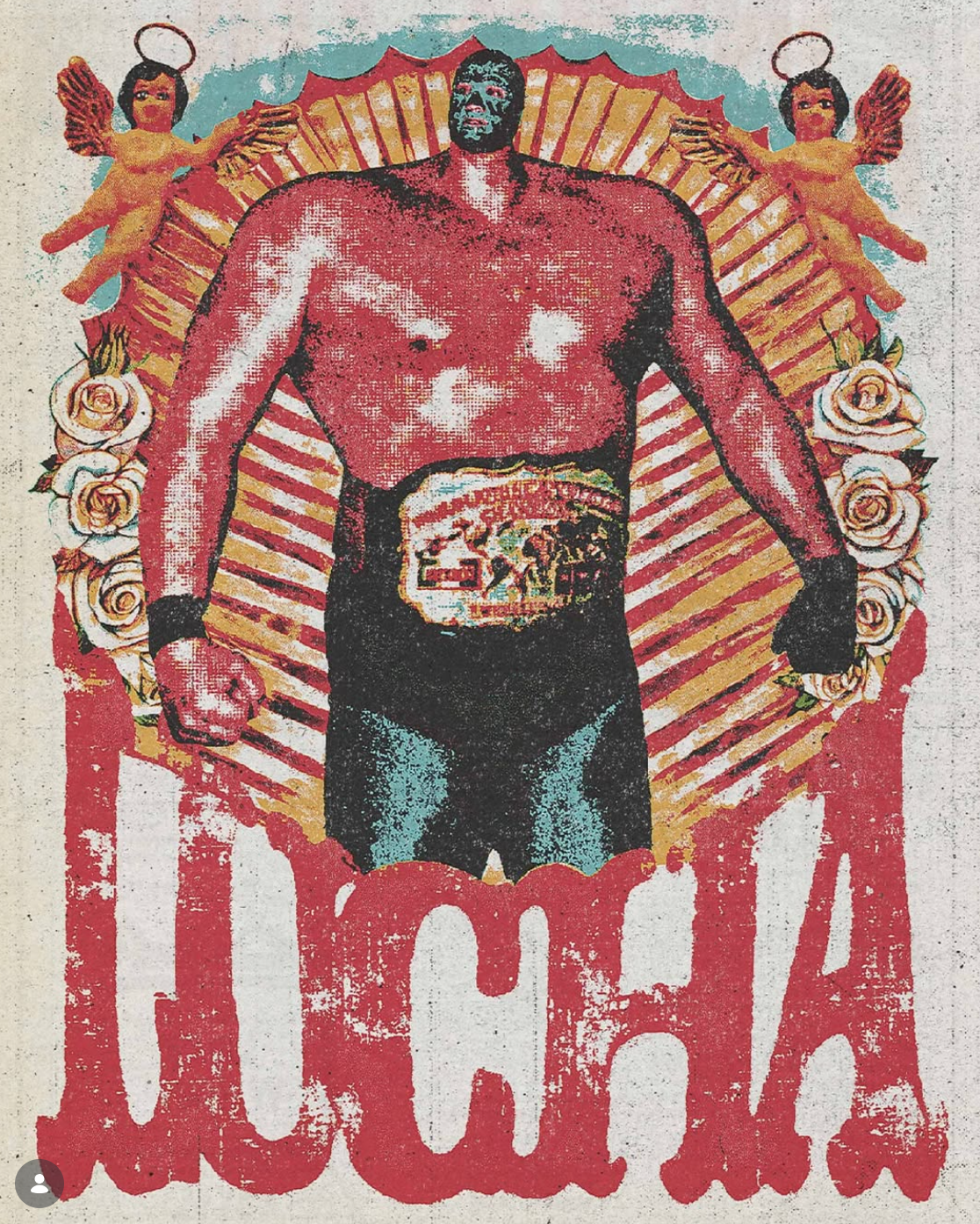
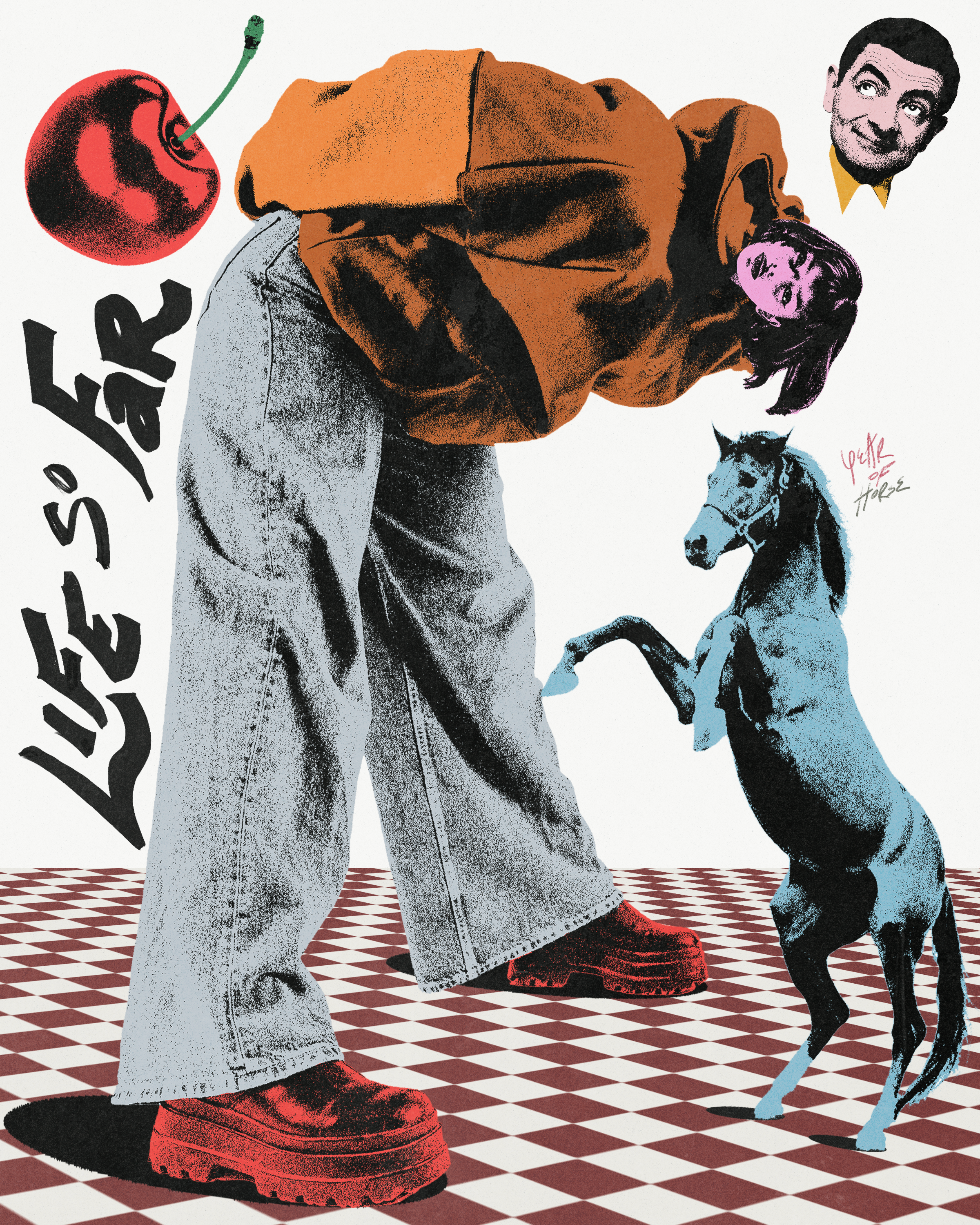
Based in Calgary and originally from Ecuador, Mera builds his work digitally, but it carries a tactile, almost analog sensibility. Grain, distortion, layered imagery and scattered text create compositions that feel both deliberate and unsettled.
Color sets the tone throughout much of his work. Bold reds, yellows and high-contrast tones move through each piece, shaping the mood as much as the subject itself.
Surfaces feel treated rather than flat, with textures that echo vintage print, photocopy and editorial design. Those references are present, but they’re reworked through a more personal lens, often tied to memory, relationships and internal states.
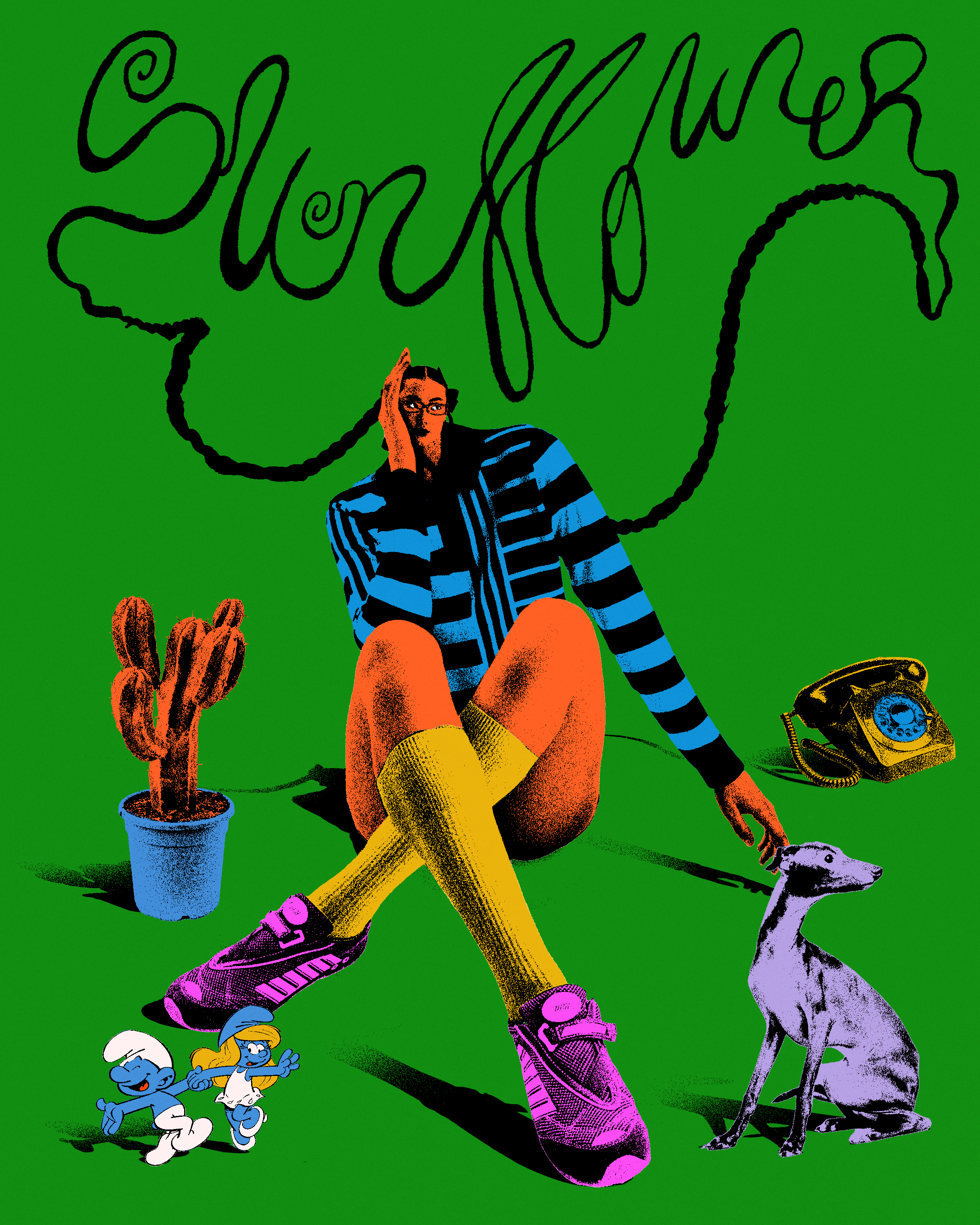
Typography is central to that process. It doesn’t sit outside the image. It’s embedded within it, guiding the composition and adding another layer of meaning. Words stretch, scatter or cluster around the figure, sometimes pulled directly from music, sometimes placed instinctively to balance the frame.
As Mera describes it, text can be as important as the visuals themselves, shaping how a piece is felt as much as how it’s seen.
That instinct-driven approach carries through his process. The work often begins with a feeling or a loose idea rather than a fixed concept, building through layering and adjustment until something clicks. Music plays a key role in that rhythm, influencing both the emotional tone and the visual direction.
Across the work, there’s a sense of ongoing exploration. Patterns begin to emerge—distortions in proportion, scattered text and dense compositions—but they remain flexible, evolving alongside the work itself.
What comes through is a practice grounded in intuition, where each piece becomes a way of working through something rather than arriving at a final answer.
In this conversation, Mera reflects on building a creative identity alongside a full-time career, the role of emotion in shaping visual work and the ongoing pull toward making something that feels honest, instinctive and entirely his own.
Hyvemind: Hi Cristian. Welcome. Introduce yourself—who are you and what kind of art do you make?
Cristian Mera: Hello! I’m Cristian, I’m a designer and artist based in Calgary, Canada originally from Ecuador. I immigrated with my parents when I was 10 years old and I have been in Canada ever since.
I make work that sits somewhere between graphic design and art. A lot of it is collage-based, mixing typography, textures, and characters. It’s usually a balance between something structured and something a bit more emotional or surreal.
HM: How long have you been creating? How did you arrive at this stage of your artistic career?
CM: I think I’ve always been creative in some way. Art was my favorite thing growing up, and I always wanted to do something with it. But to be honest, I didn’t fully believe in myself at the time, and it didn’t feel like the most stable career path. So I kind of put it to the side and focused on something that felt more practical.
I ended up taking an IT diploma because I liked computers, but I honestly didn’t enjoy most of it. The only classes that really stuck with me were marketing and UI/UX design. That’s when things started to click, and I realized I could actually pursue something creative.
To graduate, I needed to complete 200 hours of work experience, and I left it pretty late. I was struggling to find something until a coworker sent me a web design internship, even though the deadline had already passed. I still applied anyway, sent an email, and luckily they gave me a shot. I ended up completing my hours there and stayed on for another six months as a marketing coordinator.
During that time, I found a real passion for design, especially when I was creating posters and marketing materials in Canva. After that, I applied to design studios and one of them took a chance on me. I worked there for about 10 months, which helped me grow a lot. I finally had a chance to play around Photoshop, Illustrator, InDesign at that job.
I moved into a marketing role at the company I’m with now, which has been great, but I started to feel like I was losing a bit of my creative identity in a 9 to 5. I needed an outlet to express myself, so I started my Instagram and began posting personal work.
Over time, that turned into commission projects and a really supportive community.
I feel lucky to be in a position where I have both a stable job and a creative space where I can fully express myself.
HM: What materials do you use and what’s your process?
CM: Mostly digital. Photoshop is my main tool, then Illustrator and Procreate. My process usually starts with a feeling or a rough idea, not something super clear. I’ll build from there, layering images, textures and type, moving things around a lot until it feels right.
It’s pretty intuitive, I just keep going until everything clicks.
Music is a big part of it too.
I’m almost always listening to something while I work, and a lot of it shows up in what I post on Instagram. The lyrics usually help shape the whole scene or mood of the piece.
I also get a lot of inspiration from photography, especially model poses and the way people carry emotion through body language.
HM: What are your inspirations?
CM: Music is a big one for me. I usually gravitate toward indie, R&B, and soul. I’m also really into old editorial design and vintage prints. I like things that feel timeless but still hit.A lot of my ideas come from real life too, how people act, relationships, memories—all of that.
Design-wise, Braulio Amado and Kel Lauren are two artists I’ve always looked up to. Their work has definitely influenced how I approach composition and helped shape my identity over time.
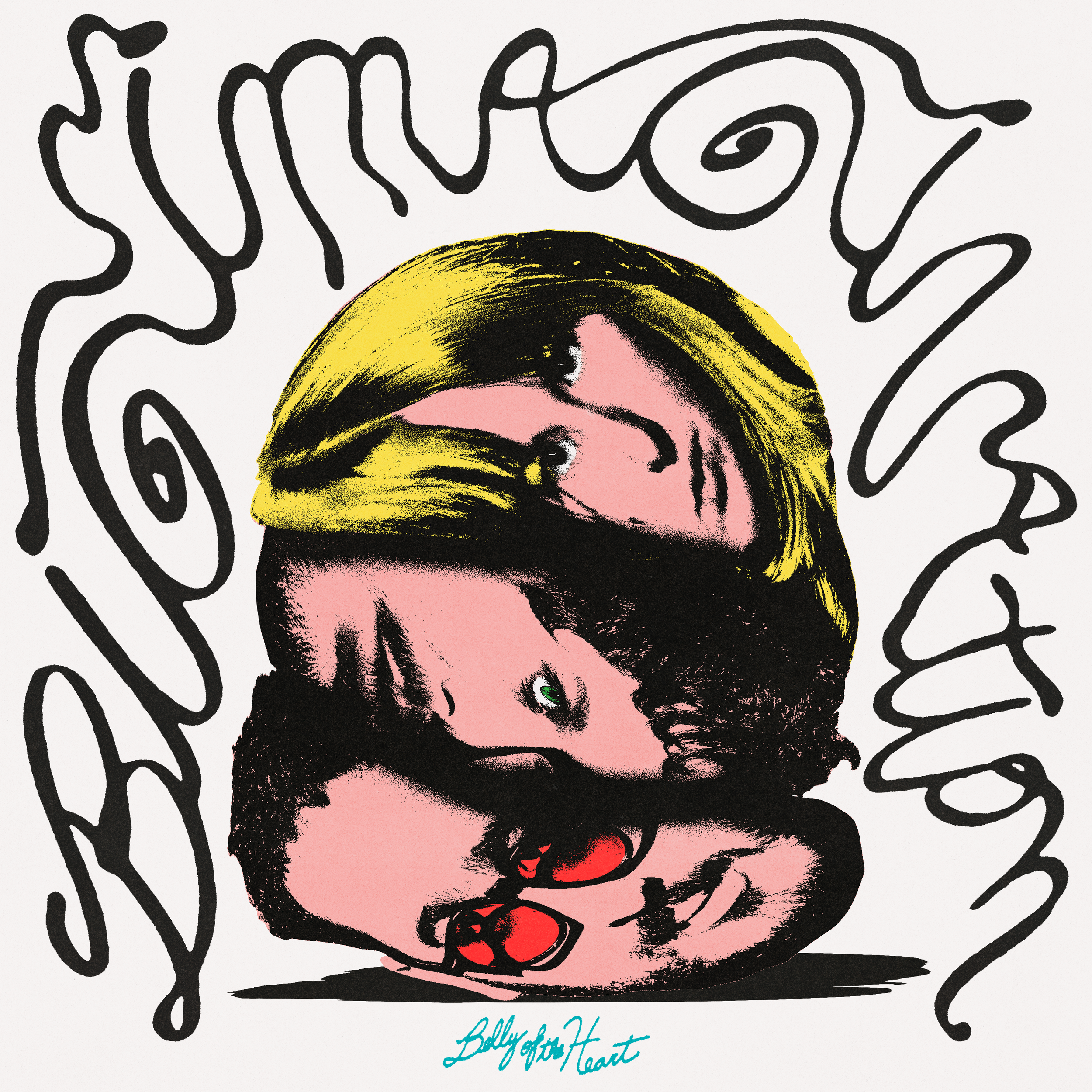
HM: When did your work start to feel distinctly yours? What aspects or imagery makes your work feel like you?
CM: I think it started when I let go a bit more and just made what I was actually inspired by. In the beginning, I was emulating artists I liked and tweaking things here and there, which helped me learn, but over time I started gravitating toward what felt natural to me.
I got really into this threshold: grainy texture and started leaning into bold colors. I also noticed I had these habits, like making heads slightly smaller, adding flowing or scattered text around the body, and building these random collage compositions. Somehow it all comes together in the end.
There’s usually a bit of tension in my work, something clean but also a little chaotic.
And yeah, sometimes I feel like I don’t have a style, but I guess that is part of it too.
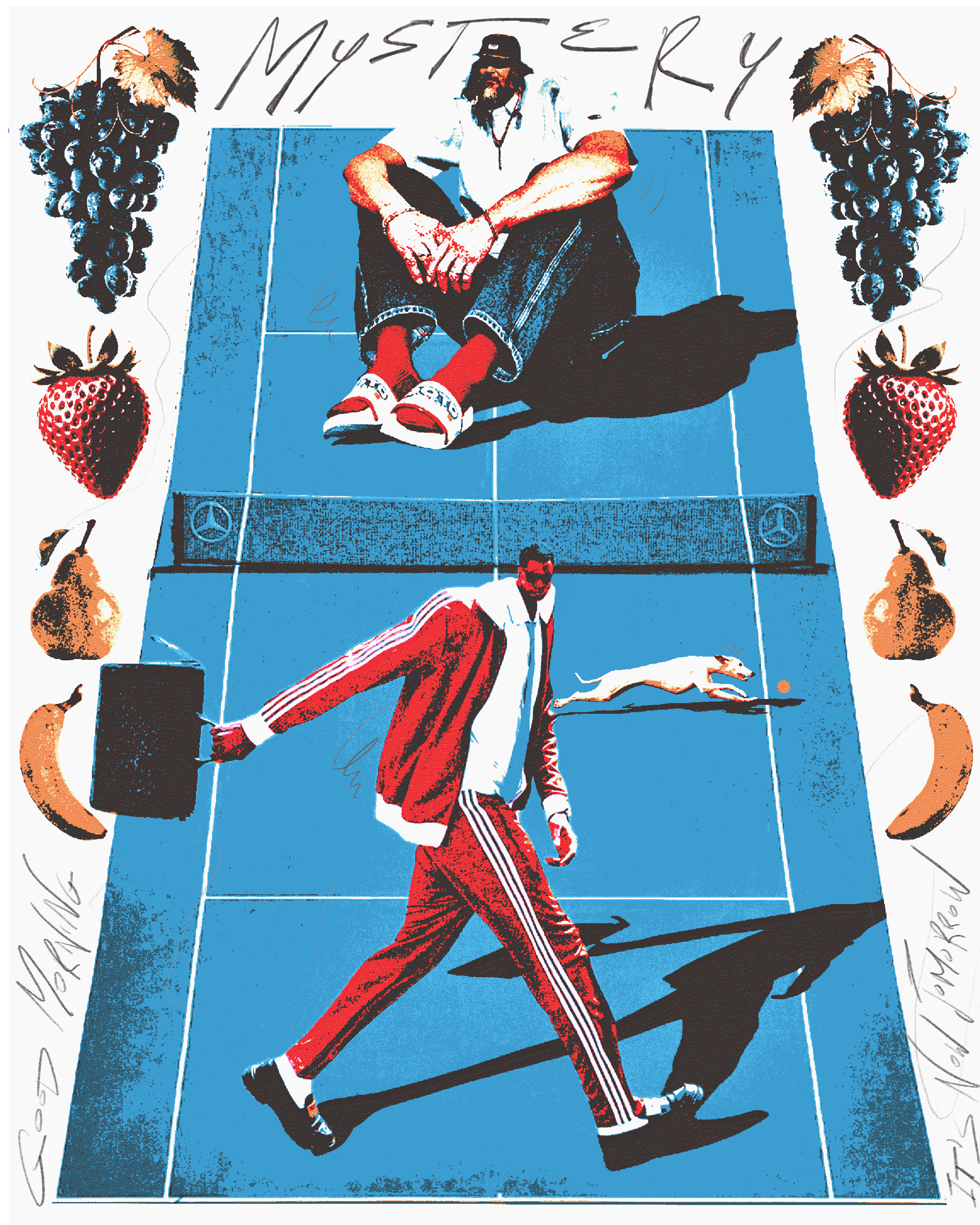
HM: Can you talk about your use of text in your work? How do you see its role in a finished piece?
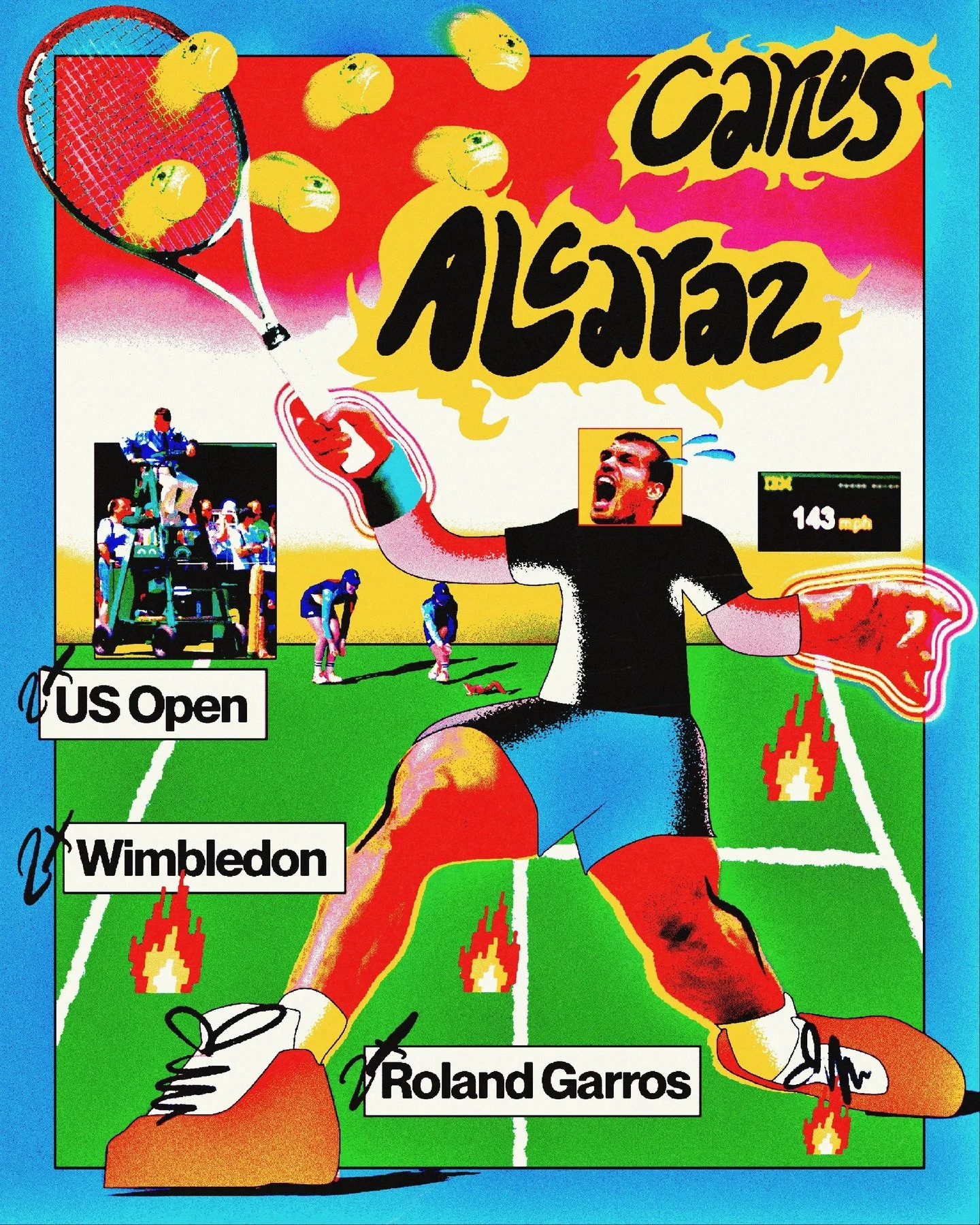
CM: Text is just as important as the visuals for me. Sometimes it’s the main focus, sometimes it supports everything else. I use it to guide how someone reads the piece or to add another layer of meaning.
It can make things feel more direct, or more personal.
It might look random, and sometimes it is, lol. A lot of the time I’m using it to balance the composition or fill negative space.
I’ll also pull from music lyrics or poems to reinforce the feeling of the piece. It adds a kind of raw energy and creates a nice contrast with the visuals.
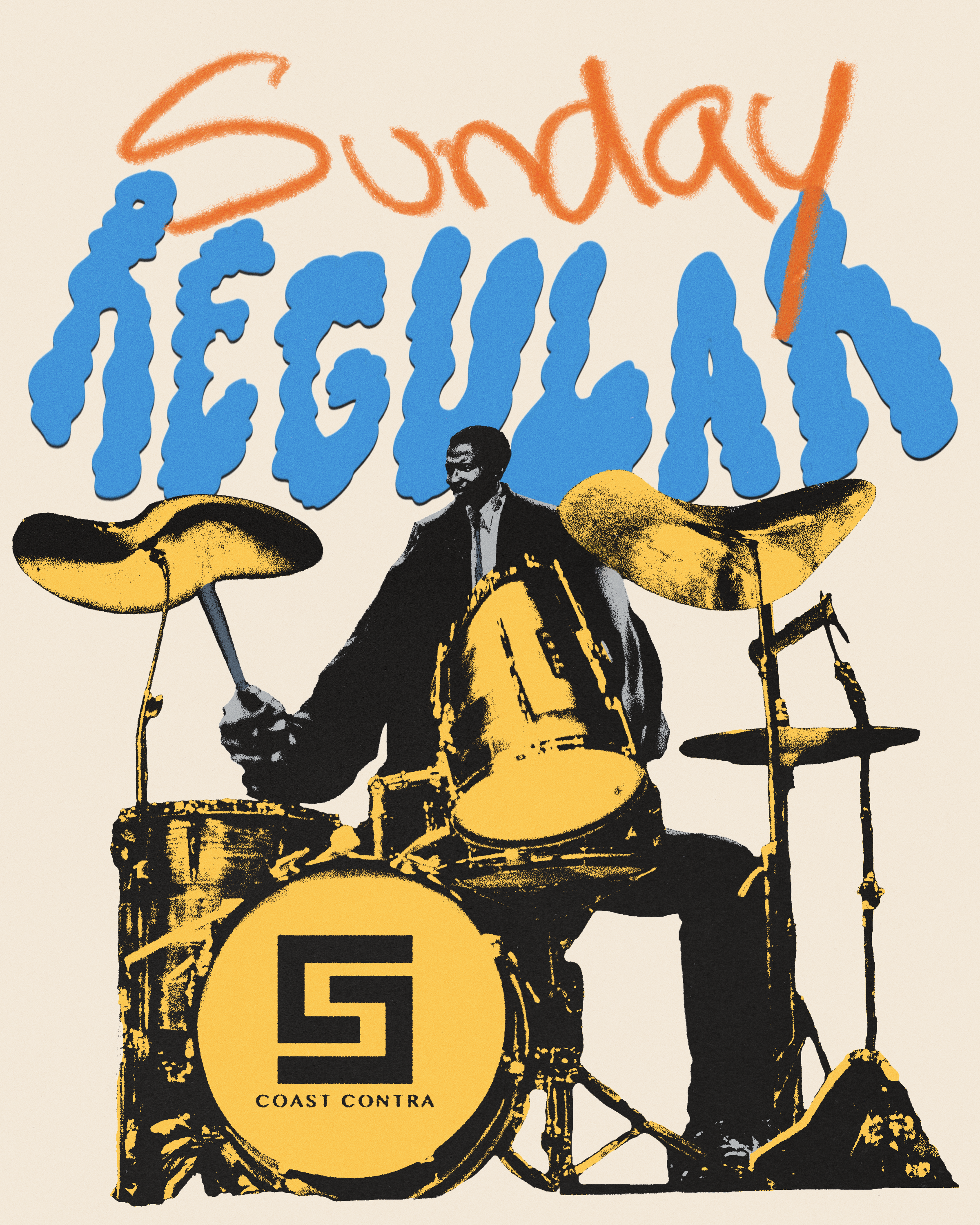
HM: Does your inner emotional state play a role in what you create? If so, can you describe what that’s like?
CM: Yeah, for sure. Even if it’s not obvious, it’s always in there. The mood, the colors, the subjects, it all comes from how I’m feeling at the time. It’s kind of how I process things without having to explain them fully.
I’d rather show it than say it.
Colors play a big role for me. I think of them as a reflection of what’s going on in the back of my mind. I listen to a lot of music while I work, especially heartbreak songs, and I’d say a lot of my pieces come from that kind of emotion.
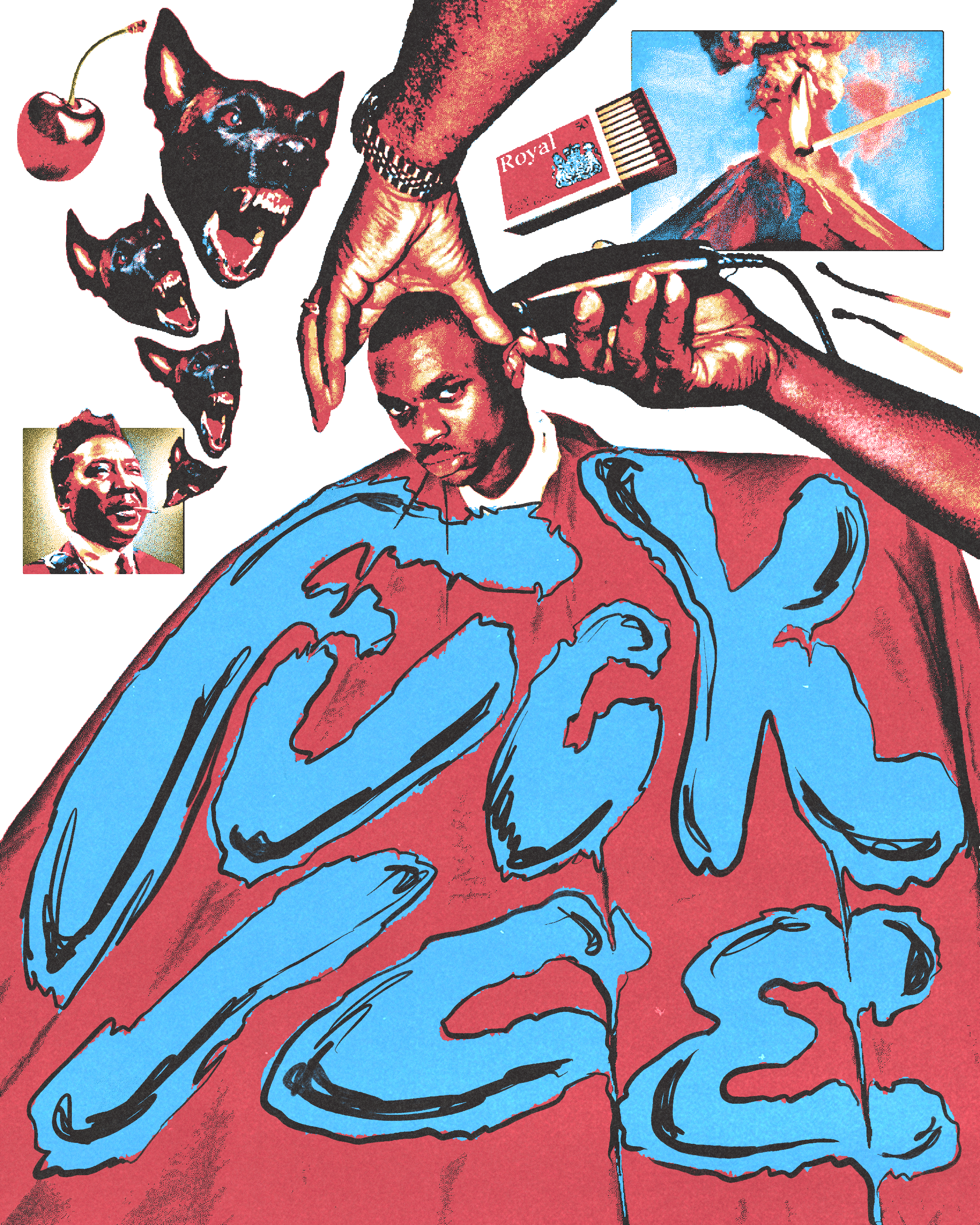
HM: What feels important to you right now, and as a community member?
CM: Right now it’s just staying real with what I make. Not forcing things or chasing trends too much.
Also being part of a creative community where people actually support each other and put each other on.
That matters a lot.
HM: What’s next for you? (dreams or plans!)
CM: I want to keep collaborating with more people on projects I’m genuinely excited about. The goal is to eventually take freelancing full time, I know it’s not easy, but it’s something I’m working toward.
I’d also love to work with brands like Nike, Adidas, or New Balance at some point. That would be a dream for sure.
