
We Must Protect Our Public Libraries At All Costs
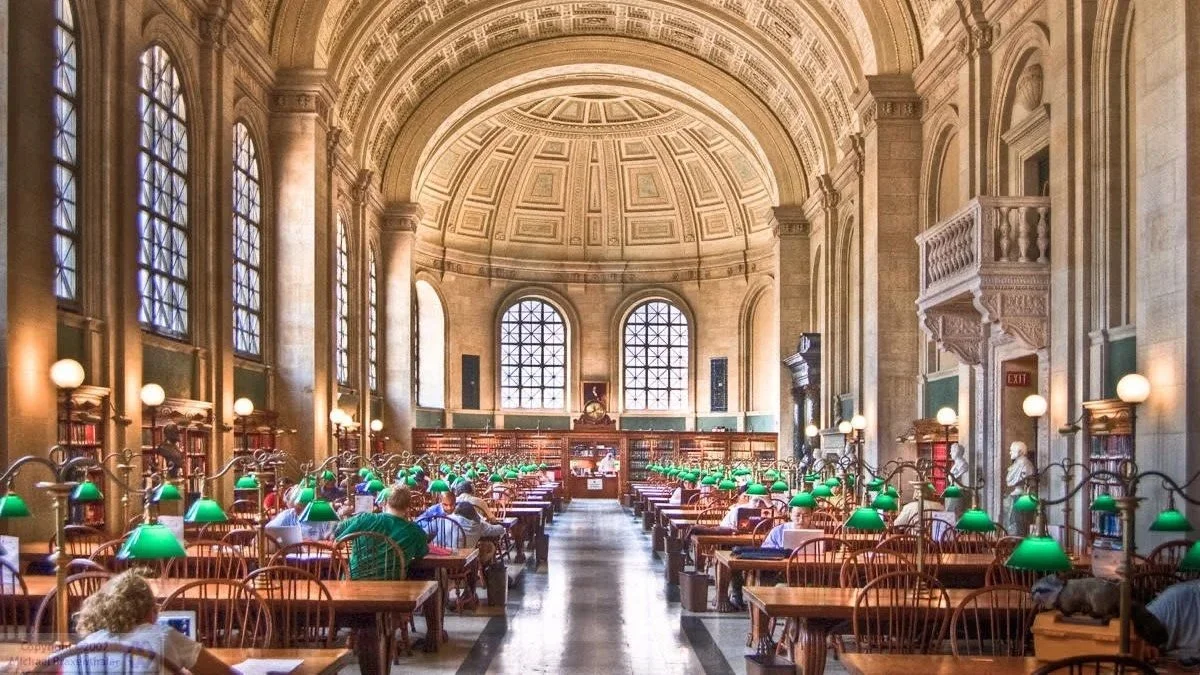
I remember well what stepping into a library felt like as a child and, in many ways, still feels like.
It’s like the exhalation, the release of tension one can feel when they step into a forest. It’s a feeling of safety, peace, and that, at last, for a little while, things will make sense.
I remember the sense of contemplation, the whirring of the AC units, that gentle aroma of a clean and loved space. The isolated study rooms, the freely available computers, the actually helpful and purpose-driven librarians, the sound your sneakers made on the carpet, the hum of the lights and indeed, that feeling of almost-dizzying lightness when you found yourself at the end of a seldom visited row of books…at last alone and free to think.
That feeling of refuge is part of what makes the current moment so alarming. Across the country, public libraries are being pulled into political fights over what people should be allowed to read, what librarians should be permitted to place on their shelves, and increasingly, whether communities should continue funding these institutions at all.
Highlighting an essential report by PEN America titled Out of Circulation: Expanding Censorship in Public Libraries, the Guardian has reported that U.S. libraries are at a “breaking point” due to ideological attacks via funding cuts, threats to librarians themselves, thousands of book bans and some communities have even faced attempts to privatize their public library systems.
This cannot be allowed to continue: citizen action must be made, now, to stop these attacks and preserve one of the only reminders of the social contract left to Americans in a nation on the edge of losing every last bit of its humanity.
Libraries: A Reminder that We Can Fund Ideas that Actually Help You
Libraries held and hold, for me, the sanctity of a temple; in the context of American life today, that is indeed what I argue they are.
Once wrote Argentine poet Jorge Luis Borges in his 1959 work titled Poema de los dones, “Yo, que me figuraba el Paraíso / bajo la especie de una biblioteca.” (Often translated as “I have always imagined that Paradise will be a kind of library.”)
I think too of much beloved quote by the late luminary James Baldwin that, while not explicitly about libraries, I strongly associate with them: “You think your pain and your heartbreak are unprecedented in the history of the world, but then you read. It was books that taught me that the things that tormented me most were the very things that connected me with all the people who were alive, who had ever been alive.”
This is precisely what a library offers: a portal into worlds innumerable and unknown to you, each an opportunity for life-changing enrichment, growth and self-reflection. Much as reading helps to strengthen the empathetic muscles in the brain, libraries are places of wonder, welcoming, and a wholesome respect for learning, peace and privacy.
It’s a place where, particularly if you have sensory sensitivities, is at last quiet, at last not assaulting your senses with the tyranny of pop music; the nauseating and endless chatter of 24/7 news stations; the unceasing screeching of a frier or coffee machine or construction equipment.
A library is a purpose-built place for ideals that are increasingly disappearing from the rest of American society: a functional belief in pluralism, in that sense of privacy, in your public rights and entitlements as a citizen of an ostensibly wealthy nation, in access to free education and materials, free access to community resources and a general sense of cooperation—of a society that still believes in cooperation.
Largely absent is the abject nihilism, hedonism and madness that has crept into and rotted out hollow every major American institution of note today.
As an adult, you realize you are entering a place where the taxes you already paid and have paid your entire life are actually working for you. A place where you are not expected to pay more for the privileges that should already be afforded to you as a citizen. A place where the social contract feels alive and functional in any meaningful sense.
The Relentless Efforts to Censor and Privatize Our Libraries
According to the new report from Pen America, those who would seek to not merely defund and deter libraries from their mission but destroy the very principles and values on which they were founded are out in force, determined to destroy the scraps of the social contract that are left available to Americans through sweeping censorship efforts.
Writes Pen America, “In 2026, the role of the public library as an essential democratic institution is in profound jeopardy,” citing efforts across the U.S. to “pressure and censor” libraries by dictating what ideas and books should be readily publicly accessible, attacking the very concept of the “free exchange of ideas.”
“There is nothing quite like public libraries: institutions whose core purpose is to facilitate the informed citizenry that sustains a democracy.
Since the idea for such publicly funded institutions emerged in the United States, libraries have served as bastions of independent thought and intellectual freedom, predicated on the rights of all people—patrons of all ages, races, and socioeconomic backgrounds—to access information, ideas, literature and art, all free of cost,” the report continues, explaining that book censorship, political pressure and personal attacks are impacting book access, library systems, and even individual librarians.
Some have stood up together with local support. In Rutherford County, Tennessee, librarian Luanne James responded to censorship mandates which demanded books with LGBT themes be moved to an adult section (despite not being written for adults), refusing on the grounds of the First Amendment rights of Rutherford County citizens. Yet, in response, James was dismissed.
Even if you personally take issue with those books, by attacking a libraries right to offer and organize those books in a commonsense way, that very privilege and right is threatened into the future; once legal precedent is set, power will surely be expanded on and abuse it until targeted institutions no longer have the agency to perform their functions meaningfully.
In a recent interview with Jon Stewart, New York City Mayor Zohran Mamdani described the library as the kind of institution that, if proposed for the first time today, would likely be dismissed as radical socialist nonsense.
I think if you go back to some of the Democrats that we most admire — FDR, La Guardia — you will see a lot of democratic socialist principles in their vision. And if you think about a lot of what we've come to accept as just the facts of life across our country, a lot of it is also still driven by democratic socialist principle. Now, if today, you and I were to introduce the idea of a building that lends out books for free, we would be slandered in the same way that so many new ideas are slandered today, and yet that's the library. And the same thing with the Fire Department and the same with Public Schools.
— Zohran Mamdani, speaking with Jon Stewart
Like so many issues affecting American life, Americans are simply unaware of it, misinformed and led astray by a corporate electronic media designed to distract while robbing them of what pennies remain in their back pocket.
EveryLibrary, a library-centered political action platform, notes the “sharp rise in book bans across the country,” citing the American Library Association’s report that 2025 saw the highest number of challenged titles (read: attempts to censor) ever recorded.
The overwhelming majority of Americans, even those who may regularly enjoy the services of their local library, simply have no idea. Yet, like forest preserves, Americans broadly support libraries.
One recent poll in by the Michigan Library Association found that “79 percent of the public approves of the work done by Michigan’s libraries” and “75 percent trust the decisions made by librarians when curating collections,” while 50% say books should never be banned and 39% argue there are only rare instances where it may be inappropriate (read: a majority are either strongly or largely in opposition to book bans).
A similar poll in Texas (a wildly different state from Michigan, politically), found that “95 percent of Texans agree that public libraries play a vital role in providing free and equitable access to information, promoting literacy and supporting workforce readiness,” while 90% say they should be treated as essential public services.
Moreover, 80% of those surveyed argue that materials should be offered “even if some community members strongly disapprove of those titles.”
Meanwhile, several recent petition efforts by EveryLibrary have met and exceeded their goals, including an urgent petition to “Stop the Senate Book Ban Bill,” which exceeded 10,000 signatures.
Fighting against Those Who Would Rob us of our Right to Knowledge
Libraries are key not only to a healthy society, but in this historical moment, as a way of teaching that civic action can work, should work, will work if people simply have faith in one another and gather together. What can you do? A great deal.
Returning to the Pen America report, citizen-led action in Huntington Beach, California saw a win against politically motivated book bans as well as efforts to privitize their local library.
Three residents sued and won in state court in September of 2025. Later, they successfully stopped the privatization efforts, quite literally saving their public library because, believe me,privatization would destroy absolutely every decent, human thing about libraries.
Libraries have boards often made up of everyday local residents, and their budgets are the concern of municipal and county level boards, power centers regular citizens can reliably access (as seen in the many victories against data center construction across the U.S.).
I say to you with the greatest urgency: look into your local library, its issues, its board members and whether any actions are being taken either for or against them, and get involved.
And if you do, and if you’re successful, take the victories therein, the lessons learned therein, the wisdom gained and turn it toward other problems that affect you and your community. Organize likeminded neighbors and community advocates. Become permanently organized. Fight the forces of nihilism and entropy that would rob you of a public library.
Take Action
Start locally: learn who governs your library, follow its board meetings, understand its funding, and pay attention when censorship or privatization efforts emerge. National advocacy organizations can also help you stay informed, organize, and take action.
Reporting, research and advocacy defending free expression, intellectual freedom and the right to read.
A library-focused political action organization offering campaigns, petitions and direct ways to support libraries under threat.
A coalition of writers and book creators organizing against censorship and restrictions on the freedom to read.
National data and resources tracking book challenges, censorship attempts and threats to intellectual freedom.
Find organizations already defending libraries and the freedom to read in their communities.