
How AJ Hawkins Turned Her Death-Positive Shop, KALMA, Into a Gathering Place for Grief, Disability and Collective Care
In Port Townsend, Washington, artist and deathworker AJ Hawkins is pairing retail with peer support, disability education and mutual aid to build a more caring community around grief and mortality.
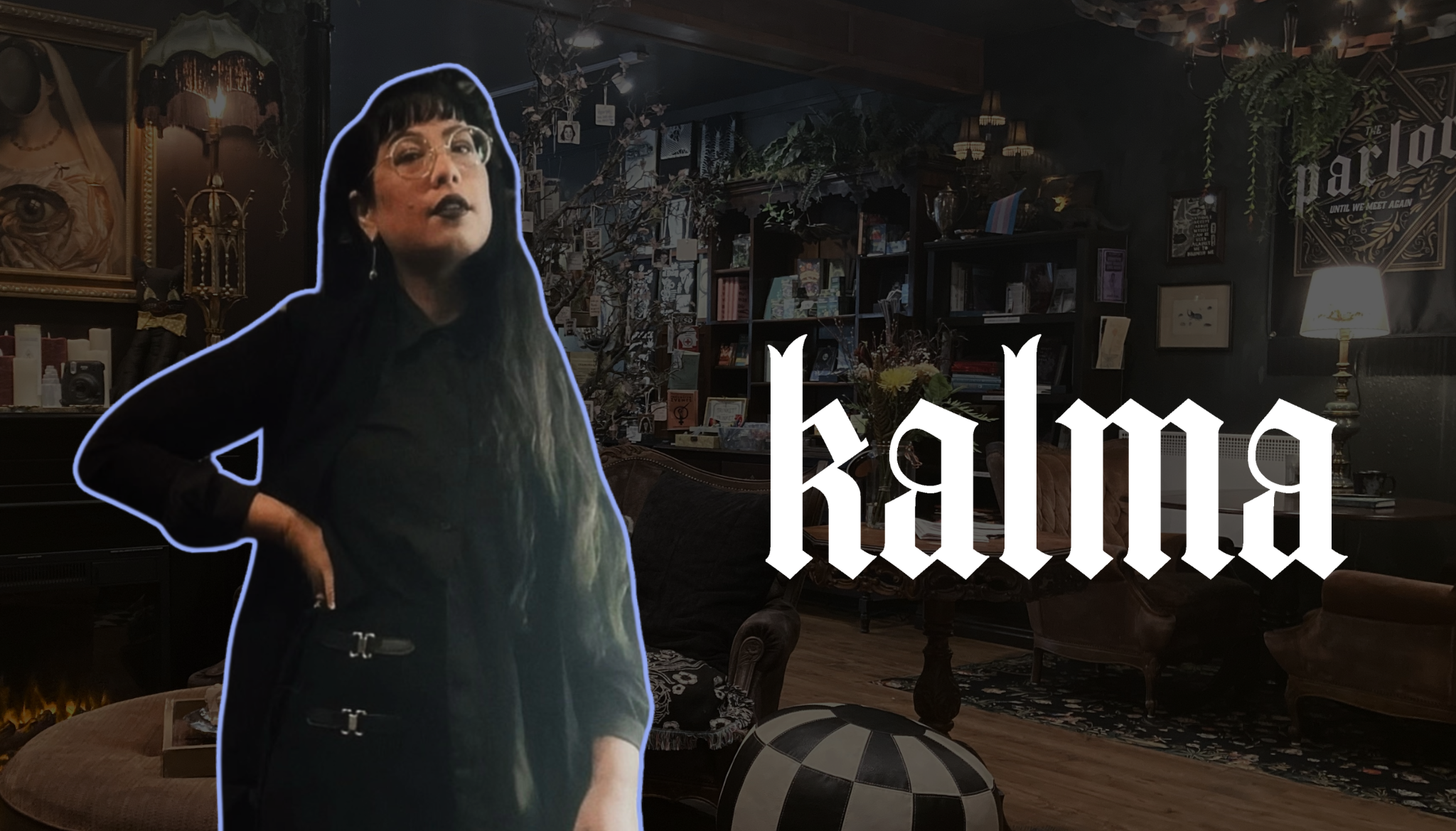
A shop centered around death may sound unusual to some, but in Port Townsend, Washington, KALMA has become a place where people come to talk about grief, disability, care and the realities of being alive.
Founded by artist and deathworker AJ Hawkins, KALMA is a death-positive shop and community space that brings together retail, education, peer support and mutual aid under one roof.
“It’s easy for folks to imagine “The Death Store” as this severe, solemn, stodgy place,” Hawkins told Hyvemind. “Instead, I designed the space to invite life and death, grief and joy, to exist alongside one another.”
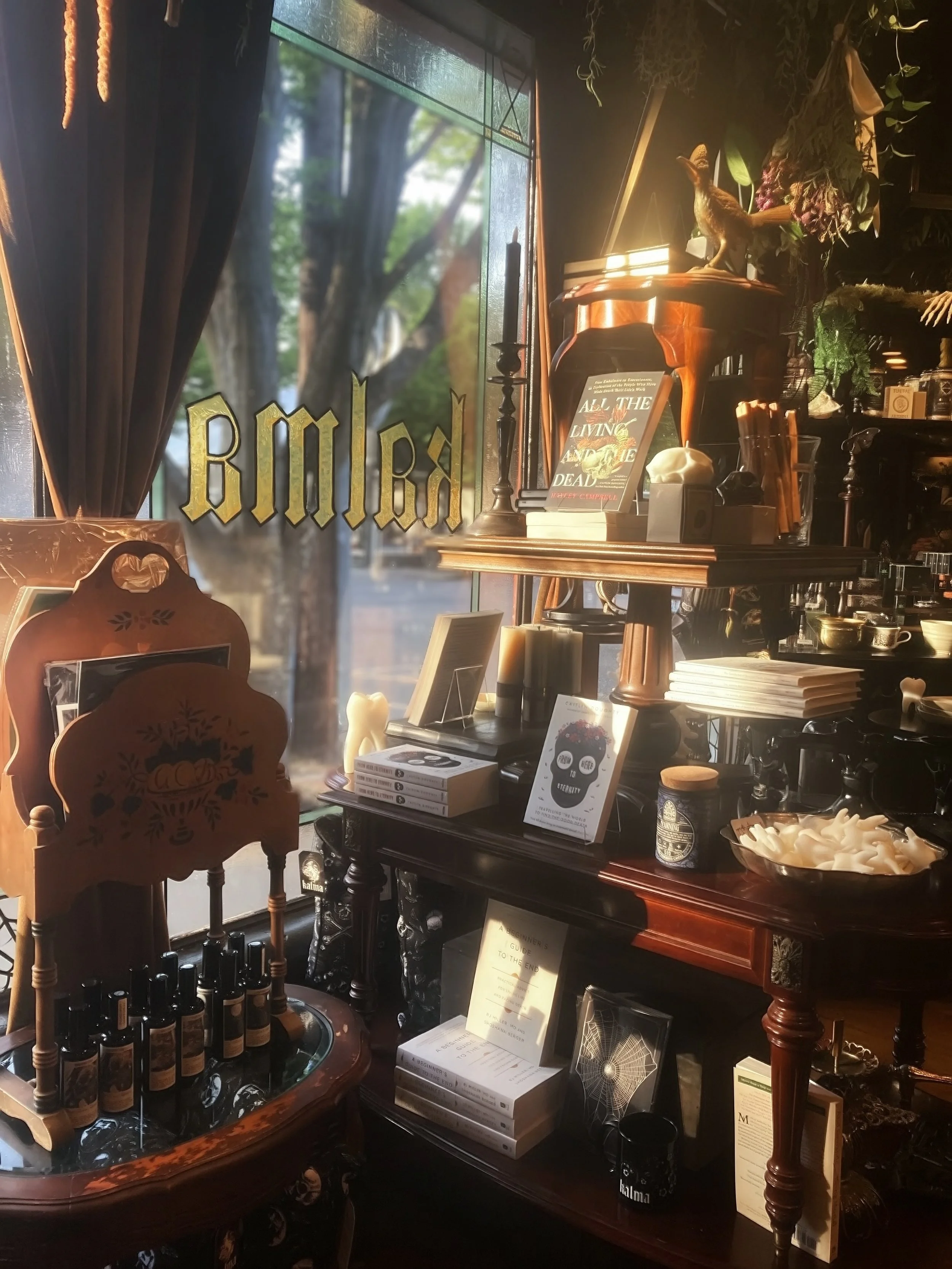
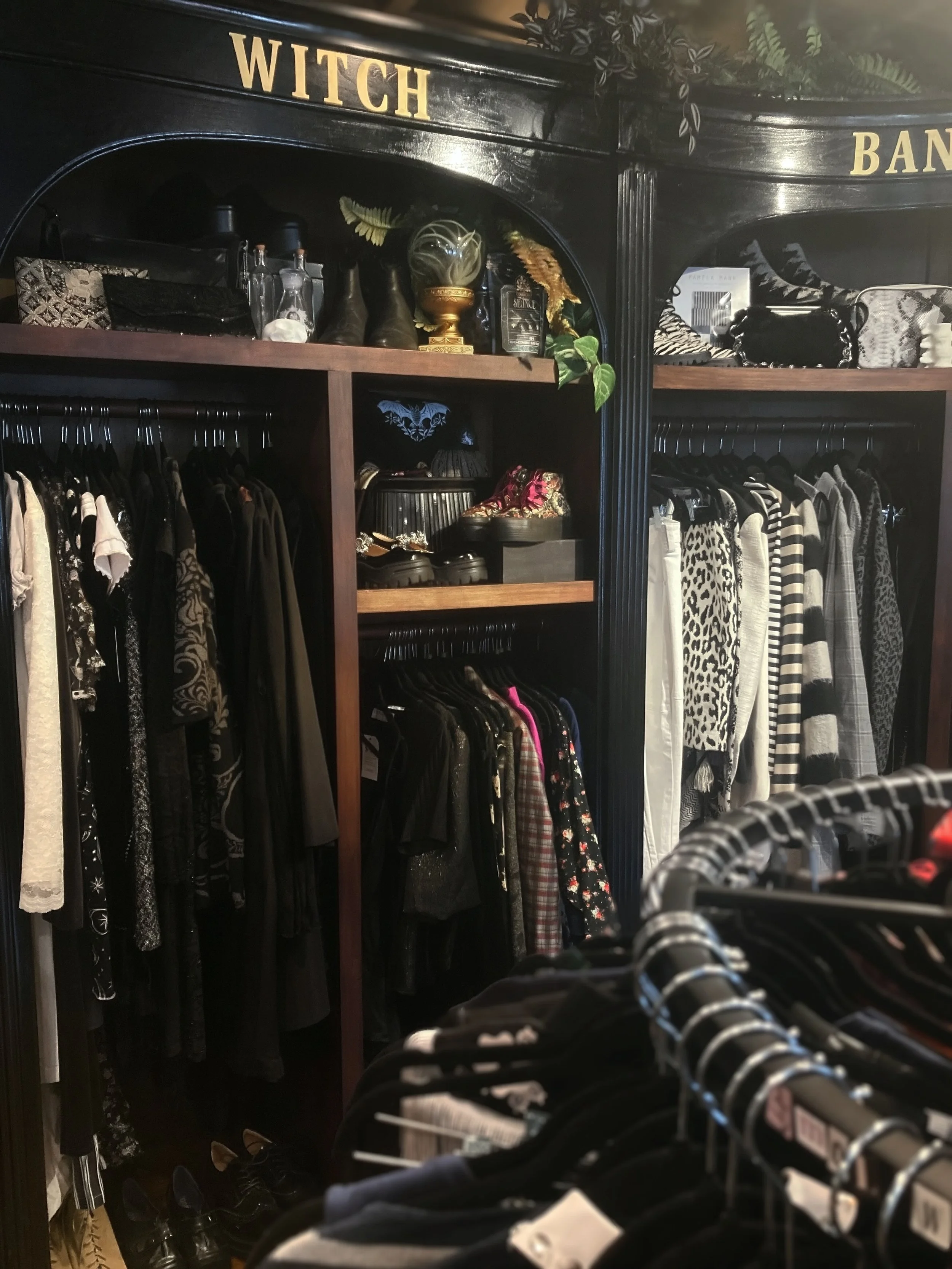
The shop carries an eclectic selection of goods for self-care and self-expression, including books and resources related to death, grief and disability; art and accessories; clothing and children’s items; and products sourced from secondhand materials and independently owned, diversely owned small businesses.
Sales from the shop help fund The Parlor, KALMA’s free community space for peer support, education and mutual-aid work around death, grief and disability. The Parlor hosts resources and gatherings that give people room to learn, share what they are carrying and build practical forms of care with one another.
“Through this ecosystem of commerce, community, and advocacy, we’re working toward a more empathetic, empowered, and equitable world for both the living and the dead,” she said.
Hawkins explained that the model is informed by necropolitics—the politics and power of who lives, who dies, and under what circumstances (and therefore, who grieves)— and reflects her belief that death, disability and grief belong in public life because they shape nearly everyone’s life. People will lose loved ones, face changes in their bodies, care for someone in crisis or carry losses that do not fit neatly into familiar rituals.
“While death, disability, and grief are natural parts of the human story, in an unjust world, they often come for us before they are natural or necessary, Hawkins revealed. “My work is very A necropolitical approach to griefwork recognizes that all grief deserves to be tended, and that some griefs deserve to be prevented.”
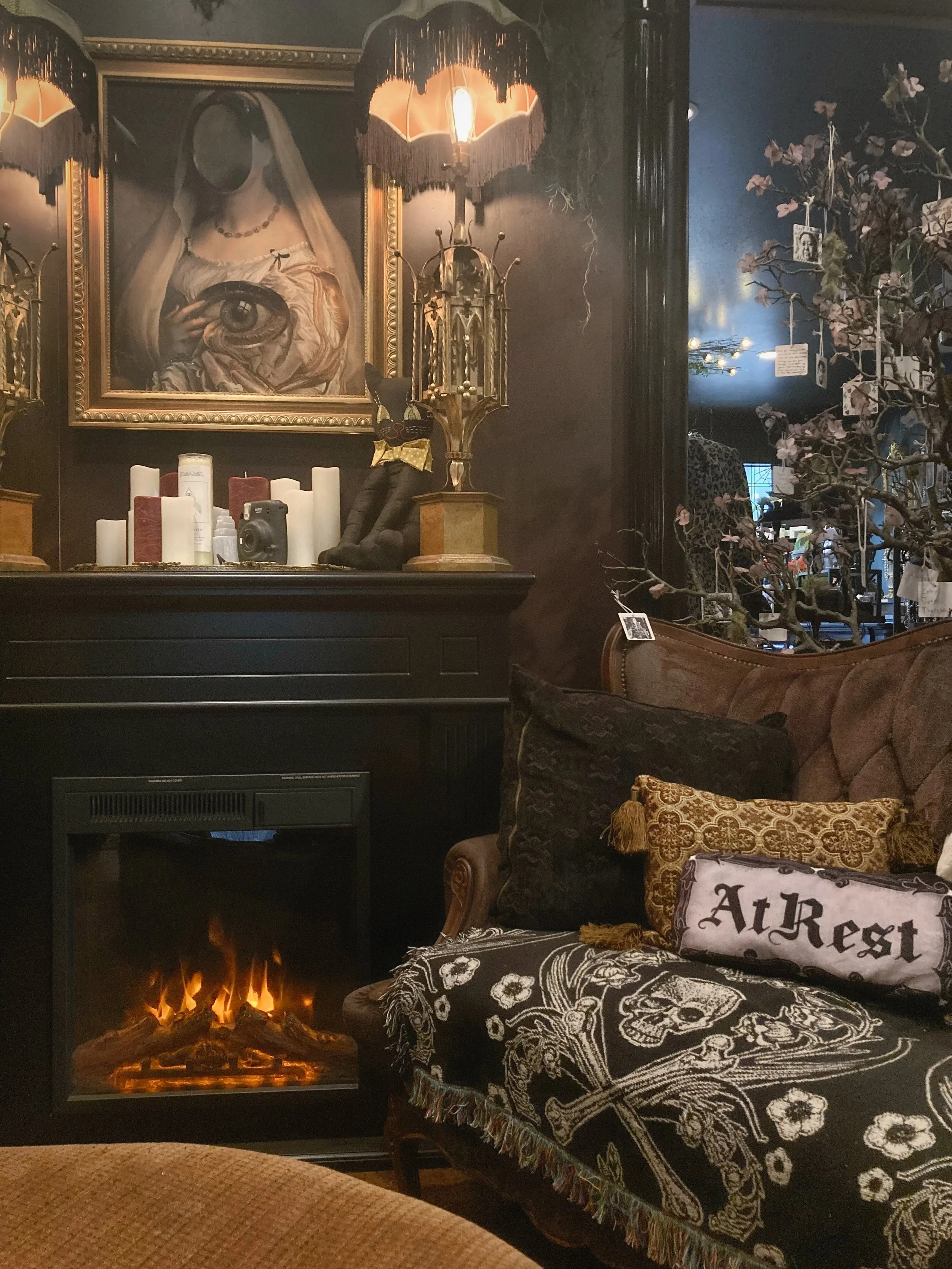
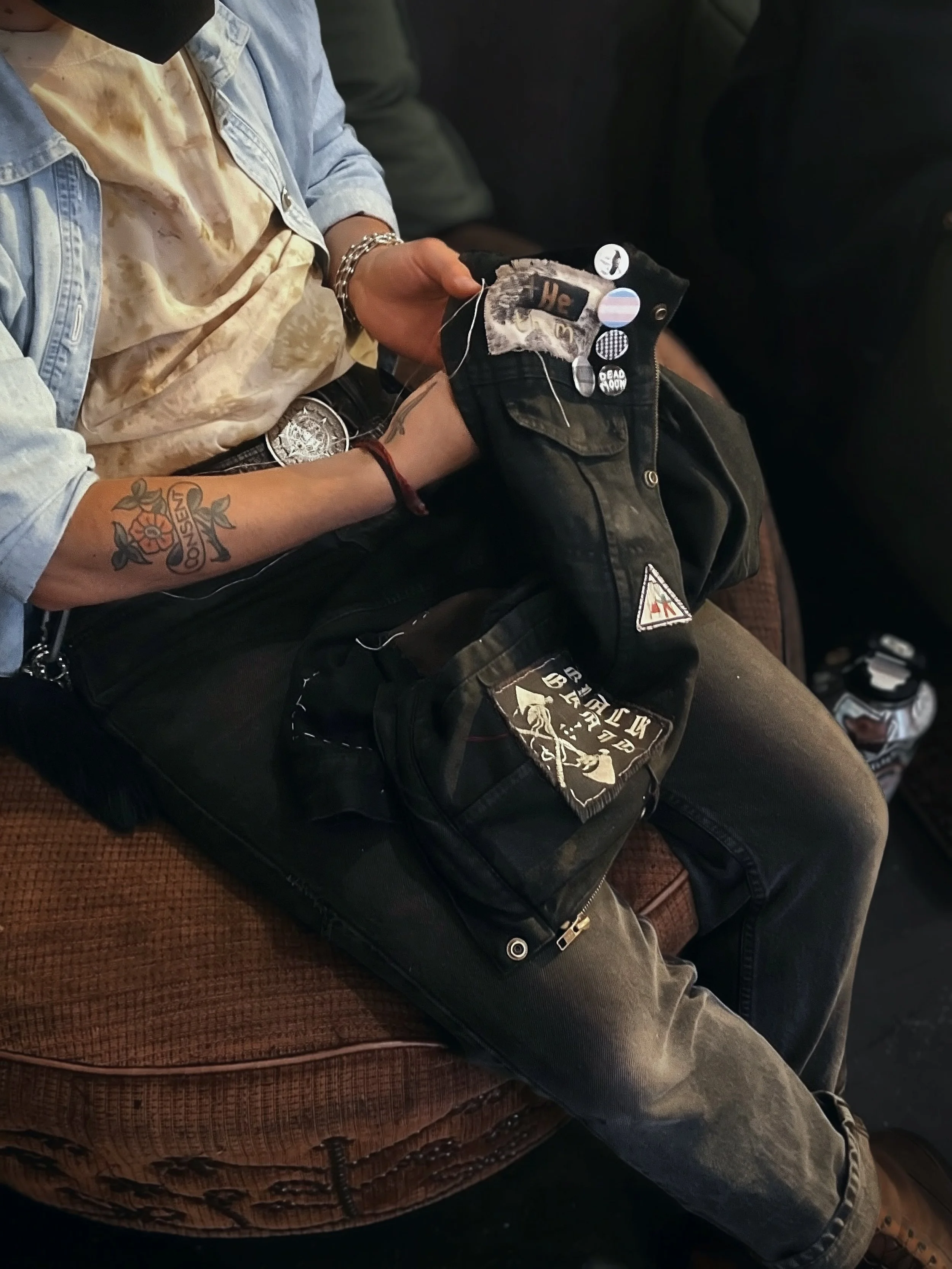
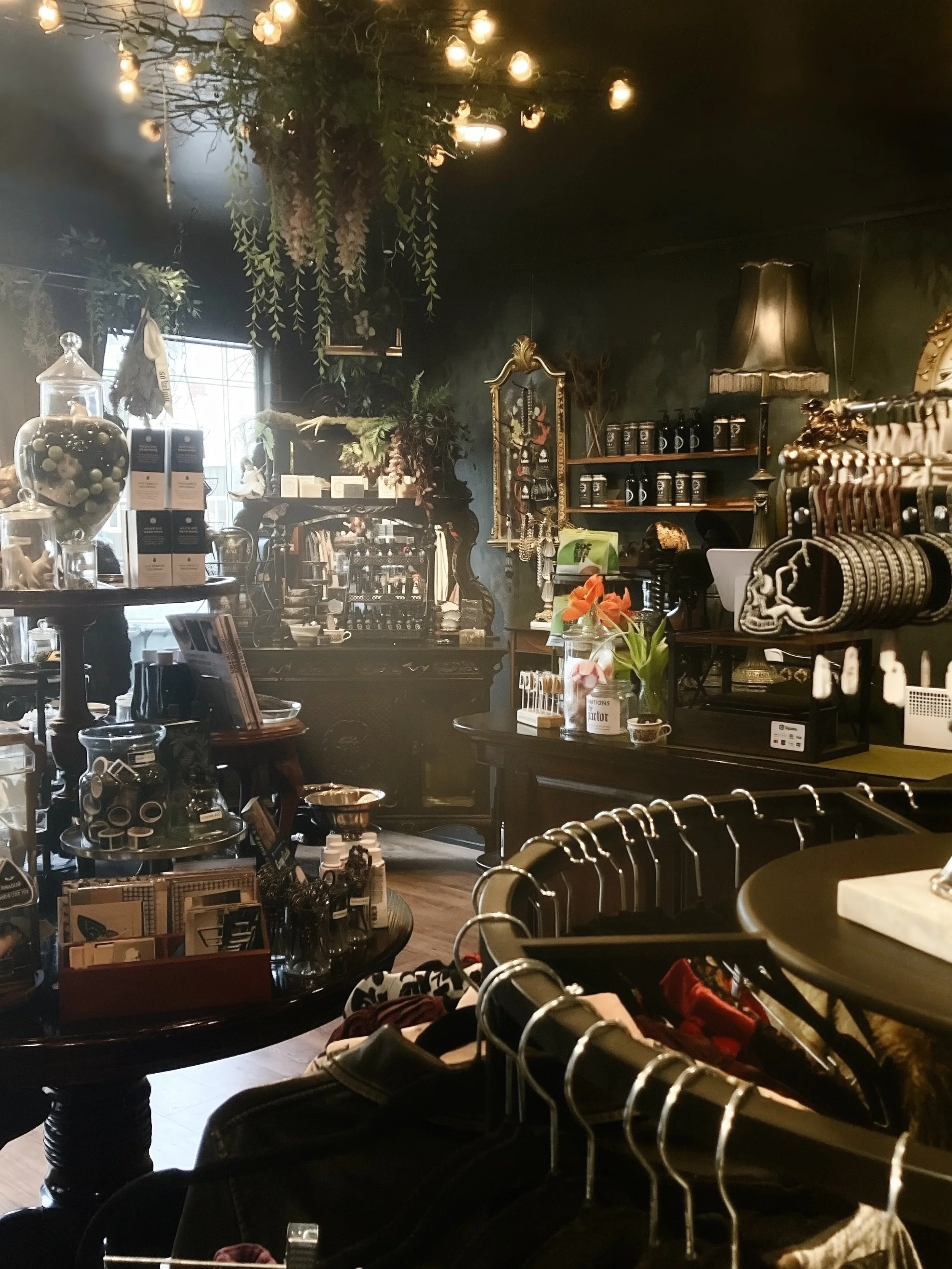
The people who find their way to KALMA range widely in age, background and life experience. Hawkins said the space’s youngest customer is 6 and its oldest visitors are in their 80s, creating what she described as an intergenerational, cross-cultural community.
“Some things that bond many of the people who love this space are queerness, neurodivergence, introversion, creativity, an inclination toward service and carework, and a compassionate discontentment with the status quo,” Hawkins revealed.
Hawkins’ approach to the space is also shaped by her own experience with disability. She had already been living with a degenerative illness when she launched KALMA online in 2019, after facing hiring discrimination while trying to move into work that would be more accessible to her body. Soon after the launch, she became severely ill and spent multiple years housebound and bedbound.
“When you live any time at the border of life—in that devastated place—it calls into clarity what matters, what nourishment is necessary for the survival of a person’s body and spirit, and how few people really have the care they need,” she said.
That period sharpened Hawkins’ understanding of how many people are left without the care, flexibility and support they need when their health changes. She said the experience helped shape KALMA’s emphasis on accessibility, mutual aid and the everyday practices of community care.
“If hope is a discipline, care is a choice; we choose it into existence, and we can choose it at any time,” Hawkins said. “Sometimes being a human is really hard, and at KALMA we choose to practice, model and teach the skills of community care so that we don’t have to do the hard parts of being human alone.”
KALMA’s impact is rooted in that commitment: creating a place where people can approach death, disability and grief with more support, language and connection than they may find elsewhere.
We share our full conversation with Hawkins below, where she reflects more on the personal experiences that shaped KALMA, the community it has cultivated and the broader vision behind its work.
With
AJ Hawkins
A conversation about KALMA, death work, disability, grief, mutual aid and creating room for the full realities of being alive.
Hi AJ! Tell us a bit about yourself, who you are, and what led you to opening KALMA?
I’m AJ Hawkins (she/they), and most people know me as the human behind KALMA. I’m a fine artist, friendly goth, disabled deathworker, child of the in-betweenness, and disciple of decay.
In 2016, I began in earnest a passion project called The Reclamation—a fine art research project about the necrobiome and what happens to our bodies after we die. In my research, I found and joined The Order of the Good Death, and in the death positive movement found a whole community of artists, academics, activists, and otherwise fascinating humans working to reacquaint the western world with its mortality.
I owe many things to the community I found in The Order, and just one is how they valued the role of artists like myself as communicators and conversation starters. Really wild ideas stop feeling so wild when you have the privilege of people who take you seriously, and so when I decided to make the world’s first death-positive lifestyle brand—it just seemed like the most obvious thing I could do.
How would you describe KALMA to someone who doesn’t know anything about it?
KALMA is a death positive store and community space—a place for curious, caring and creative people to explore what it means to live as mortal beings. In the shop, you’ll find goods for self-care and self-expression, thoughtfully curated from secondhand resources and diversely-owned small businesses.
The store in-turn funds The Parlor, our third space where we offer free peer support and education around disability, death, and grief; and the hub for our mutual aid projects. Through this ecosystem of commerce, community, and advocacy, we’re working toward a more empathetic, empowered, and equitable world for both the living and the dead.
How did you develop a relationship to death and grief and what did it change in you?
I build my relationship with mortality through a sort of self-imposed exposure therapy. I take note of what feels unknown, uncomfortable, or threatening, and then spend time learning about it, building practices, and running experiments.
What I’m focusing on is always shifting, but the goal is always: how do I make good use of the time I am given? The more I cultivated a relationship with and attunement to death, the more I became aware of my responsibility to work towards a life-well-lived for myself and all living beings.
My personal golden rule is “Pursue equal access to joy.” It reminds me that for us to have equal access to joy we have to create equal access to safety, community, play, opportunity, self-determination, and the natural world.
The responsibility to create the conditions for joy—my own, and that of others—weaves into a common purpose my actions big and small.
The vision for KALMA was rooted in the many ways that becoming death positive changed how I spent my time, care, and money. I wanted to build a context that allowed me to spend more time being authentically myself, and making space for others to do that, too.
Sometimes that looks like holding space for sorrow, and sometimes it looks like black lipstick and sparkly shoes. It looks like reminding each other of our inherent worth, practicing advocating for ourselves, and treating each other with the dignity and respect we all deserve.
And in this case, it also looks like starting a business as an economic ecosystem that allows me to put more resources into my community, and more dollars into the hands of small businesses, than I ever could otherwise.
How do you hold space for both grief and joy?
A common misconception about being a griefworker is that it must be sad; while griefwork absolutely can be snotty-nosed and swollen-eyed, it can also be many other things. The truth is that we don’t grieve things that we don’t care about. By making invitations for people to acknowledge their grief, you make space for them to share with you what matters most.
I receive so many stories about people’s loved ones, what they admire about them, and how they try to honor their legacy through how they live now. When we share the grief we feel in the face of injustice, cruelty, and the state of the world; what we’re actually talking about is moral injury, and ultimately, our core values.
By making room for people to tell me what they’ve lost, what they miss, what they’d hoped for, they end up telling me what a world that’s whole looks like to them. Snot or not, at the end of the conversation, I find that asking people about their grief can actually sound a lot like joy.
In our society, many people only encounter death and grief in moments of loss and crises. What does it mean to you to engage with it as an ongoing process and as the operator of a death-positive store and community space?
When people talk about or reflect on KALMA, they often fixate on the “death” part. We’re known colloquially as “The Death Store.” They’re not wrong, and I don’t mind—we are “death” positive. We are “death”workers. But when they focus on the death part, they’re missing half of the story.
My special interest is the necrobiome—the ecosystem where nature shows us how to take death and turn it back into life. In the realm of rot, life and death are constant companions, inextricably entwined. There is no before/after, just a both/and. It’s this liminal fluidity that I designed KALMA to conjure.
My understanding of myself as a deathworker came into clarity when I realized that decay informs not only the subject, but the mode of my deathwork, (and that as a disabled deathworker, decay is also my embodiment).
It’s easy for folks to imagine “The Death Store” as this severe, solemn, stodgy place. Instead, I designed the space to invite life and death, grief and joy, to exist alongside one another. A book called “A Parent’s Guide to Managing Childhood Grief” sits five feet from a carousel of ostentatious kids’ clothes and tiny combat boots.
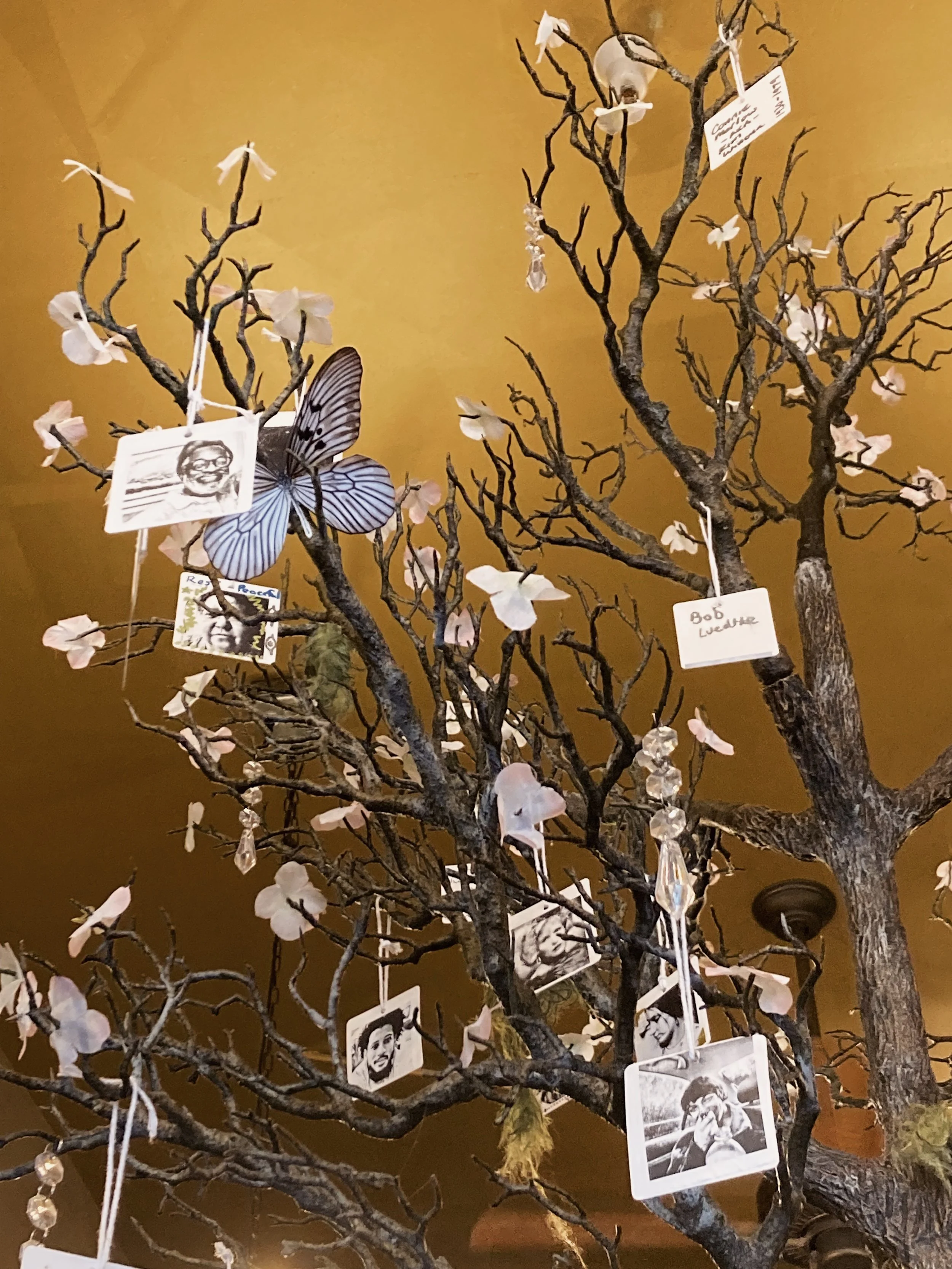
Conversations move fluidly from how to dye your hair green to the history of the funeral industry to suicide loss to gender euphoria. In The Parlor, I help a woman print out a picture of her late brother to add to our Memory Tree and a child in a Pokemon costume plays nearby. We laugh. We cry. We indulge in the absurd. It doesn’t feel burdensome or heavy. It’s my belief that by invoking Death, we’ve welcomed the fullness of Life to walk through the door.
Can you talk about your period of becoming ill after you launched your first storefront? What changed in your relationship to grief, body, limitation and what were some gifts or insights you gained from going through this?
I launched KALMA online in the beginning of 2019. I’d already been one kind of sick for several years, and had laid my first chosen career at the feet of a degenerative disease.
After facing hiring discrimination as a disabled person trying to switch into a less physical field, I said, “Fine. I’ll do it myself.” I decided to start my own business with a vision to provide myself accessible employment, knowing I would become more disabled over the course of my life—I just didn’t expect it to happen so swiftly.
Right after launching KALMA, I became a new, more violent kind of sick, and then housebound and bedbound for multiple years. As a person who’s, in many ways, made my living on words, I’ve still never found the ones to explain what happened to me in the cocoon—I only know that I’m not the person who entered it.
One change I can name is that I’m far less nice, and far more compassionate, than the person I was before. When you live any time at the border of life—in that devastated place—it calls into clarity what matters, what nourishment is necessary for the survival of a person’s body and spirit, and how few people really have the care they need.
I find myself a transformed and rebellious creature, with little patience for upholding the artifice and propriety of a society built on the denial of our bodies. I find myself a tender and radicalized creature, sourced by a wellspring of care for the beings I once again live alongside.
Whether in-store or online, a lot of what people feel as the magic of KALMA is the value of community care that was forged in the furnace of those early years. We live in a care-starved society, and yet care may be the most accessible and infinitely renewable resource we have.
If hope is a discipline, care is a choice; we choose it into existence, and we can choose it at any time. Sometimes being a human is really hard, and at KALMA we choose to practice, model and teach the skills of community care so that we don’t have to do the hard parts of being human alone.
Please tell us about the intersections of death, grief and disability justice. What knowledge is our broader culture missing out on that you have found from learning about this both experientially and as a community member?
Death, disability, and grief are not aberrations from nature, but the normal and natural checkpoints and conclusions of a mortal life. We all die. Everyone who has the privilege to live long enough will become disabled. Everyone who has ever dared to love another will grieve. It’s these handful of experiences that we all share, and yet it’s these parts of ourselves that we are most expected to sequester, supplement, and stifle away.
A society shaped by death denial, ageism, and ableism is, by consequence, cut off from its grief.
Breeshia Wade talks about untended grief as a “rotting which attempts to plug its own holes with the wholeness of others.”—it’s corrosive to both spirit and society. Really owning our grief, and asking others to hold it with us, can be uncomfortable and unwieldy. It makes sense that we would shy away from each other and treat it as something to suppress or to solve.
But grief doesn’t need to be fixed; it’s begging to be witnessed. When we release ourselves from the pressure to fix people’s grief, we cut through one of the biggest barriers to showing up. When we release ourselves from hiding all of our hurt and humanness, we allow ourselves to be seen and honored as our whole selves.
While death, disability, and grief are natural parts of the human story, in an unjust world, they often come for us before they are natural or necessary. My work is very informed by necropolitics—the politics and power of who lives, who dies, and under what circumstances (and therefore, who grieves). A necropolitical approach to griefwork recognizes that all grief deserves to be tended, and that some griefs deserve to be prevented. As a result, I see griefwork as far more than talking about feelings.
Any effort in the fight for housing access, food security, free healthcare, fair working conditions, demilitarization, abolition, (and all the other ways we work towards a world of opportunity, connection, and wellbeing for us all), is equally griefwork.
Can you talk about the community that KALMA has cultivated?
While aesthetics definitely are a core part of the KALMA brand, we tend to attract folks based on our values more than anything. There is no one, archetypal KALMA person, and I love that. Our youngest customer is 6 and our oldest, in their 80s.
We’re really a very intergenerational, cross-cultural, space. Some things that bond many of the people who love this space are queerness, neurodivergence, introversion, creativity, an inclination toward service and carework, and a compassionate discontentment with the status quo.
I made KALMA and The Parlor as a gift to our community, and like any gift—they didn’t have to accept it. It’s been wild watching people find this place, come to love it, and then contribute to growing it, and making it even more special for the next person.
There’s been a really cool shift lately where I am no longer the sole magic-maker here. I’m watching people holding each other’s grief, hyping each other up, helping each other with projects, and teaching each other new things.
People show up with craft supplies and books for the Library, food for the Snack Cauldron, and they wipe down the sink and help with dishes while they’re around. Humans are colliding and connecting here; it feels like this room gets a little more gentle, and a little more generous every day.
Community doesn’t happen just because you make a room and call it a community space. Community requires structure, boundaries, and tending. Before we even opened to the public we had written a Values Statement and Code of Culture, born of many long conversations.
These documents declare not only what we’re in pursuit of, but what we’re accountable to. They are posted in our space, and on our website. Every gathering has custom group agreements.
We practice affirming each other when we (so often) get it right, we challenge each other with care when we (sometimes) get it wrong, and we strive (always) to meet each other with the grace of being regular humans trying to find new ways of doing old things.
Please tell us all about the community grief altar you have at KALMA. How does the community interact with it?
Our community grief altar is a place where guests are invited to honor griefs of all kinds in whatever way feels best to them.
When we moved, we destroyed the old grief altar and I designed and built a new one. I imagined a mythical grief-bearer, and thought of a giant snail—a slow-moving, tender-bellied creature. Megan Devine talks about grief as something that “can’t be fixed,” but “can only be carried.”
I imagined that you could offer the snail your sorrow, and it would carry it, and protect it in its shell. I covered the shell in frames and vessels, inspired by Catholic reliquaries. About a dozen community members showed up to help carry the offerings in ceremony from our old space to the new one, and those items were placed on, within, or embedded into the shell of the new altar.
Offerings appear all the time—some of them I know the story of, some of them I can only imagine. The altar gathers stones, coins, pebbles and other spontaneous tokens, in addition to items people bring along when they visit. Letters, photographs, and art pieces are tucked between medical bracelets, cut hair, and a tiny green army man with a missing arm.
It took a little while for our grief snail to tell us his name, but we collaboratively settled on Walter Shelby. Walter both greets and guards at our doorway, and he receives a lot of head rubs from grownups and hugs from children.
What’s next for you & KALMA?
For KALMA, the vision is to continue to settle into our new space, cultivate stability, and gentle growth. I’m getting back into the swing of designing new products, and in-house production so we can bring back some of our fan-fave accessories. We’ve been collaborating with local makers lately, and I’m excited to do that more.
For The Parlor, the vision is to continue to support the resilience of our community, and find new ways to use and share our resources. My current interest is in how we can help foster and strengthen conflict resolution skills, and cultivate more radical imagination. I’m really proud of our two existing zines, (A Practical Guide To Grief Support, and Composting A Dying World: Revolution As An Ecosystem of Transformative Change), and I’m excited to write and produce more.
For myself, the vision is reconnecting to myself outside of “AJ, The Human Behind KALMA”. I’ve had the privilege of turning my creative and carework passions into my job, and it’s important for me to get to do creative and caring things simply for my own joy. I’ve reclaimed my home office back and turned it back into an art studio, and I’m excited to rekindle my fine art practice.
I’m looking forward to spending more quality and restful time with my intrepid spouse, who has so steadfastly risen to the occasions of both my medical crisis and small business ownership. whispers (Also, I’m starting to write a book.)
Where can people follow along on your journey?
Come visit us in Port Townsend, WA or shop online anytime at www.shopkalma.com . When you shop with us, or donate directly, you help us keep The Parlor fire stoked, grief group free, and the Snack Cauldron full.
Check out our free zine downloads and our ever-growing Resource Directory on our website, and you can follow along with us online on Instagram and Tiktok at the links below!
