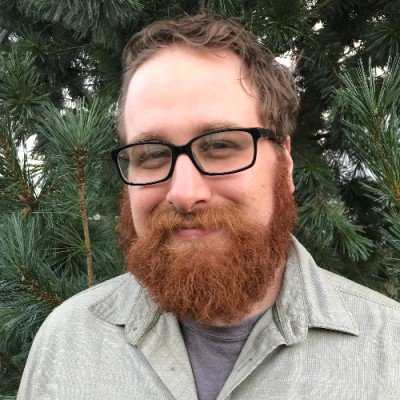
A Inside Look at American Resiliency, Dr. Emily Shoerning’s Mission to Prepare Us for a Climate We Aren’t Ready For
Dr. Emily Shoerning’s American Resiliency transforms anxieties about a rapidly changing climate into functional communities working to brace for what’s coming.
American Resiliency
Location
National (U.S.)
Founded
2021
Focus
Climate Advocacy & Education
When Dr. Emily Shoerning started American Resiliency (AR) in 2021, a donor-funded 501©(3) that works to “help individuals and communities understand their local climate outlook and cultivate resilience for the challenges we are likely to face,” she was working with “a short runway and a dream.”
Five years later, Dr. Shoerning has not only exceeded her vision but is growing to meet the demand from communities who understand the gravity of what’s ahead us all as the global climate enters a new and dangerous phase of rapid change.
“When people ask me what AR does, I ask them if they know how climate change is likely to impact their home area,” explained Dr. Shoerning in a recent conversation with Hyvemind. “Usually, they didn’t know this was a question where we have some answers.”
Quickly approaching its first million views on YouTube, AR speaks across generations to concerned Americans who recognize the science, who feel the changes in the air, but don’t know what they can do to prepare for an uncertain future.
It’s a critical education resource that comes at a time when it is both sorely needed and, in terms of the national conversation, greatly overdue.
Indeed, we today find ourselves in a wildly transformative landscape where our shared understandings of ‘the weather’ and the complex systems that form ocean currents, extreme climate events, and viable ecosystems have entered new territories; in last several years of climate research have seen us collectively cross new tipping points even as policymakers in Washinton continue to play deaf and dumb.
It’s a time where the climatological assumptions that helped to build civilization as we know it are increasingly unable to guide us toward a horizon informed citizens can believe in, toward a future we can collective find hope in.
“A lot of people in America report that they find their work meaningless, that they don't feel like they have a lot of agency in their lives. Many people seem to feel distant from themselves,” Dr. Shoerning observed, speaking to the malaise that girds so much of modern American life and helps to inform hopelessness when faced with massive, structural problems.
To combat this, Dr. Shoerning and her team of passionate environmentalists, science communicators, and volunteers provide extensive, in-depth analyses of how climate change is likely to impact each region state-by-state, leveraging the latest data and models in specific terms.
It’s the laser focus, the burrowing down into the data to provide detailed, region-specific roundups that so often makes AR stand out. It also addresses a frequent problem with science communication on climate change: the struggle to consolidate vast sets of information on global changes of immense scale into digestible local impact reports that communities can use to inform real changes.
A predictable challenge for any organization tackling such a duty, however, is how often that data changes as new studies, measurements, and events reshape our understanding of climatological phenomena that, ultimately, we don’t fully understand.
Yet, American Resiliency is particularly impressive in how well it keeps up. I recall clearly feeling overwhelmed by the news that a key oceanic current, the Atlantic Meridional Overturning Circulation (AMOC), was at risk of collapse. This collapse would carry potentially dire consequences for global climate trends and human life…including the end of mass agriculture in the U.K.
AR’s quick coverage helped me to grapple with what those ocean phase changes meant without indulging in manipulative alarmism or leveraging the algorithm to unnecessarily sensationalize her audience (think cheesy YouTube thumbnails like “this is bad” or “it’s too late”).
In other words, while Dr. Shoerning and AR do not, in any sense, shirk from how severe the changes to our climate are, the tone is continually one of rational reflection and pragmatic preparation.
AR’s mission seeks for viewers to collectively acknowledge the depth of what is before us as best as the current data allows while working to create more meaningful lives as individuals and communities faced with problems on unprecedented scales.
There are challenges, of course, particularly when it comes to reaching people with a message that can feel far from ‘sunny’ yet framed in a proactive, affirmative way. Dr. Shoerning describes the challenges in getting straightforward, non-sensationalized content out in front of thousands of eyes within platforms algorithmically designed to drive ad revenue rather than genuinely inform.
Moreover, from a science communication standpoint, Dr. Shoerning and co. have chosen perhaps one of the hardest jobs there is: climate change is not only a subject that continues to be deeply politicized, but it concerns the very fate of the species (and every other species on Earth) via changes so grand in scale and gradual in effects that humans often seem not particularly well adapted to think about.
“Female creators and climate creators are both "turned down" in visibility by the algorithm, so all my face content is working at a double ding,” she added.
Ultimately, when the going gets tough, Dr. Shoerning responds just as she recommends we all do: by going back to the land.
“The land stays with me, and all the living things in the land. When the work gets hard, when I need to process information that is very upsetting, I go outside…I look at all the living things that didn't use to be here when I came five years ago,” reflected Dr. Shoerning, speaking to the very real, rapid changes that can come to a landscape when properly cared for with native habitat restoration or ‘rewilding.’
“If I can help more people engage in change on the ground, work for life on the ground where they are, all these little live things, I know the impact is real to them. And then I do not worry so much about oh, what if everything is futile in the end, because for many of these species, a year is a generation, andwhatever time we can give them, that time matters,” Dr. Shoerning said.
We share our full conversation with Dr. Shoerning below, sharing the story of AR from her own perspective, her hopes for the future, and where you can learn (and do) more:
American Resiliency
In Conversation With Dr. Emily Shoerning
Read the full conversation on climate preparedness, public understanding and the work of helping communities prepare for what is ahead.
Can You Describe THe Work + Mission of American resiliencY?
Dr. Shoerning: AR's mission is to help individuals and communities understand their local climate outlook and cultivate resilience for the challenges we are likely to face. AR offers public-facing educational content through our YouTube channel. We are coming up on our first million views.
We also offer a volunteer program where individuals who are passionate about resilience can get training and support around community organizing and resilience projects. Additionally, we offer resilience planning services to communities, and are fully booked through summer of '27.
When people ask me what AR does, I ask them if they know how climate change is likely to impact their home area. Usually, they didn't know this was a question where we have some answers! I tell them, I want everyone to know these are questions we can answer, and that I want them to know those answers to help them make decisions about their lives.
If someone shadowed you for a day, what would they see?
Dr. Shoerning: They would be in for a pretty unconventional nonprofit leadership experience. I work from home and am often caring for my household while I work. Most days I would probably assign my shadow bean stirring duties.
On any given day I put in a couple hours on land & garden management as needed, so they would need a pair of good gloves because I'd need them to help me pull up a lot of spikey stuff. I also take about three meetings a day with team members or related to client work. I spend many hours a day in correspondence, writing scripts and reports, and doing research.
I work intermittently from about 7am to about 9pm. I only shoot video about once a week. Those days involve building the set, the lighting, and so on. If my shadow were here on a video day, they would definitely need to handle the beans.
Who tends to seek help from your org and what are the circumstances happening in their lives when they arrive?
Dr. Shoerning: AR has recently transitioned fully away from individual level services towards community level services. Usually individuals and community leaders approach us because they've spent some time doing research on the channel and from other resources.
They're ready for advice about next steps. Many of our individual clients represented special cases, such as individuals who were interested in relocating for climate, but whose households include people with complex needs where they required more information about special topics such as state legal structures, social conditions, or healthcare access.
Related to that, I've had individual clients who wanted deep dives into pollen projections, projections around sunny vs cloudy days, and temperature windows that were conducive to their health conditions. I've also done projects for people who were passionately interested in sticking with their favorite migratory birds, so they can continue to cultivate and preserve habitat for them. Those multi-species focus projects have been my absolute favorite, connecting with fellow bird nerds is a special treat.
I've met so many wonderful people through our work with individual clients, and I hope my past case library will be able to give some assistance to individuals who contact me in the future. Most of my clients offer to pool any research I do for them into community knowledge, to be freely shared in the future. That is because the AR community is very awesome, and we get stronger together as we grow.
Community level clients usually contact us because they want help getting many people in their community on the same page for coordinated action. Communication and education are AR's core skills, and we can help communities get ready for action in ways that meet their needs and respond to their values.
Is there a story or person that stays with you when the work gets hard?
Dr. Shoerning: The land stays with me, and all the living things in the land. When the work gets hard, when I need to process information that is very upsetting, I go outside at my place. I look at all the living things that didn't use to be here when I came five years ago.
If I can help more people engage in change on the ground, work for life on the ground where they are, all these little live things, I know the impact is real to them. And then I do not worry so much about oh, what if everything is futile in the end, because for many of these species, a year is a generation, and whatever time we can give them, that time matters.
How has your community shaped or changed your approach?
Dr. Shoerning: My community on the ground in agricultural Iowa has a big impact on me! I first came to Iowa as a postdoc; I was pregnant with my first child. The time I spent from 2011 engaging in rural communities very much changed my thinking about the American cultural landscape, what is possible, and why our culture invests in dominant cultural narratives.
I love it here. Of course there are problems; there are problems everywhere. But I feel so fortunate to live in a community where so many people are doing practical stuff to help each other, every day, and where so many people do work where they can see the physical impact of their work. I think it creates a different mindset, the more distant work we often do on computers, or as part of organizational operations. A lot of people in America report that they find their work meaningless, that they don't feel like they have a lot of agency in their lives.
Many people seem to feel distant from themselves. One of my best friends here, I met her at a gravel crossroads while walking around in the countryside. Within five minutes she was talking with me about tips and tricks to get your hand way up in a goat's vagina for a difficult birth. People talk about touching grass. In my community here, I'd say this anecdote illustrates how we are touching waaaay more than grass!
How do you sustain your work (funding, volunteers, partnerships?)
Dr. Shoerning: AR is a donor-funded 501c3. I am continually amazed by and so grateful for the generosity of the AR community. In the early days all the help I got was from volunteers. Volunteer contributions have been so important to our organizational growth.
Now AR is growing up and we are professionalizing, with more people getting paid to manage distinct program areas and responsibilities. I think it is good that people who are working should be paid whenever there's the capacity to pay them.
What systemic barriers do you run up against most often?
Dr. Shoerning: Platform algorithms and what they promote are a tricky and shifting systemic barrier. There is a lot of difficulty in getting positive content out there, in avoiding bots and finding humans, not to mention being female and working in the climate niche. Female creators and climate creators are both "turned down" in visibility by the algorithm, so all my face content is working at a double ding.
That's the big combined systemic barrier to getting the word out. When we're talking about action, I think there are systemic barriers around accessing our individual agency and on shifting our individual and collective thinking towards solutions rather than problem based planning and action.
I know those aren't the typical systemic barriers we think about, when we think about what's hindering the spread of knowledge and action. But those challenging barriers—the invisible hand of the internet, & the unexplored terrain inside ourselves—I see them as profoundly deserving of more attention.
What lessons have you learned from what didn't work?
Dr. Shoerning: As an organization, we've struggled at the distance between what many people say they want around community and human connection and how they actually engage with community and connection opportunities.
I think this is a larger social problem. Many people in our society feel disconnected; they want to connect, but also they do not have the energy to do community stuff and/or it feels too scary to actually do the thing.
AR has put a lot of staff time and resources into helping people connect with each other, but I'm not happy with the results at this point. Some good, but not where I want it to be. This is an area where we're still learning, and where I anticipate AR will have some radical shifts in the fall of '26 as we continue our experiments.
What do you dream this could grow into?
Dr. Shoerning: This is an interesting question at this time. When I founded AR in 2021, I had a short runway and a dream. Now, in 2026, my five-year vision for AR has been realized or exceeded. We are looking at a larger operating budget than I expected for our 26-27 fiscal year.
This summer, I am going to be doing some visioning and reflection sessions with the AR community as we decide what's next. My inclination is to bring more staff interested in public-facing communication on board to bring new faces and perspectives to climate communication. This would allow me to put more of my time into adaptation and resilience services.
In another five years, if we had a team of staff working on adaptation and resilience services and a team of staff working on information services, I see that as a wonderful dream. But we are in the beginning of this visioning process, not the end.
What do you hope future generations inherit from your work?
Dr. Shoerning: I hope AR's work will inspire many, many people to do what they can to participate in the work of repair. To cultivate habitat, local food systems, preserve and strengthen local water systems. We are well past the point where a focus on mitigation is sufficient. We need change on the ground to respond to the changes that are coming.
I hope more life will survive because of AR's work. I want future generations to live in the best world we can save for them. We are going to experience a lot of loss and a lot of change in the years to come. The time to act like ancestors is now.
Take Action
5 Ways to Support American Resiliency
Explore American Resiliency
Learn how American Resiliency helps people understand local risks, prepare for change and build stronger communities.
Make a Donation
Support public-facing research, education and practical resources that help communities prepare for an uncertain future.
Subscribe on YouTube
Follow American Resiliency’s video work for grounded conversations about climate, community preparedness and local resilience.
Share Your Professional Skills
American Resiliency welcomes volunteers with experience in data visualization, research and web development.
Spread the Word
Share American Resiliency’s work with people you care about, then make space to talk together about what resilience can look like where you live.
American Resiliency’s 2026 volunteer cohort is currently full. Watch for 2027 cohort enrollment information in January.
This feature was published as part of Hyvemind’s Working Models series: stories from the people and organizations reshaping care, community and system repair.
We’re always looking to highlight organizations, collectives, and community experiments that are changing how care, work and wellbeing are built. If your team is running a program or initiative that others could learn from, we’d love to hear from you.
To be featured in an upcoming story, submit your information to our form here.