
‘To Write Love on Her Arms’ Has Spent 20 Years Making Mental Health Support, Treatment and Recovery More Reachable
As suicide and self-harm remain urgent public health crises, TWLOHA has turned storytelling, peer support and treatment funding into a lifeline for people trying to find help.
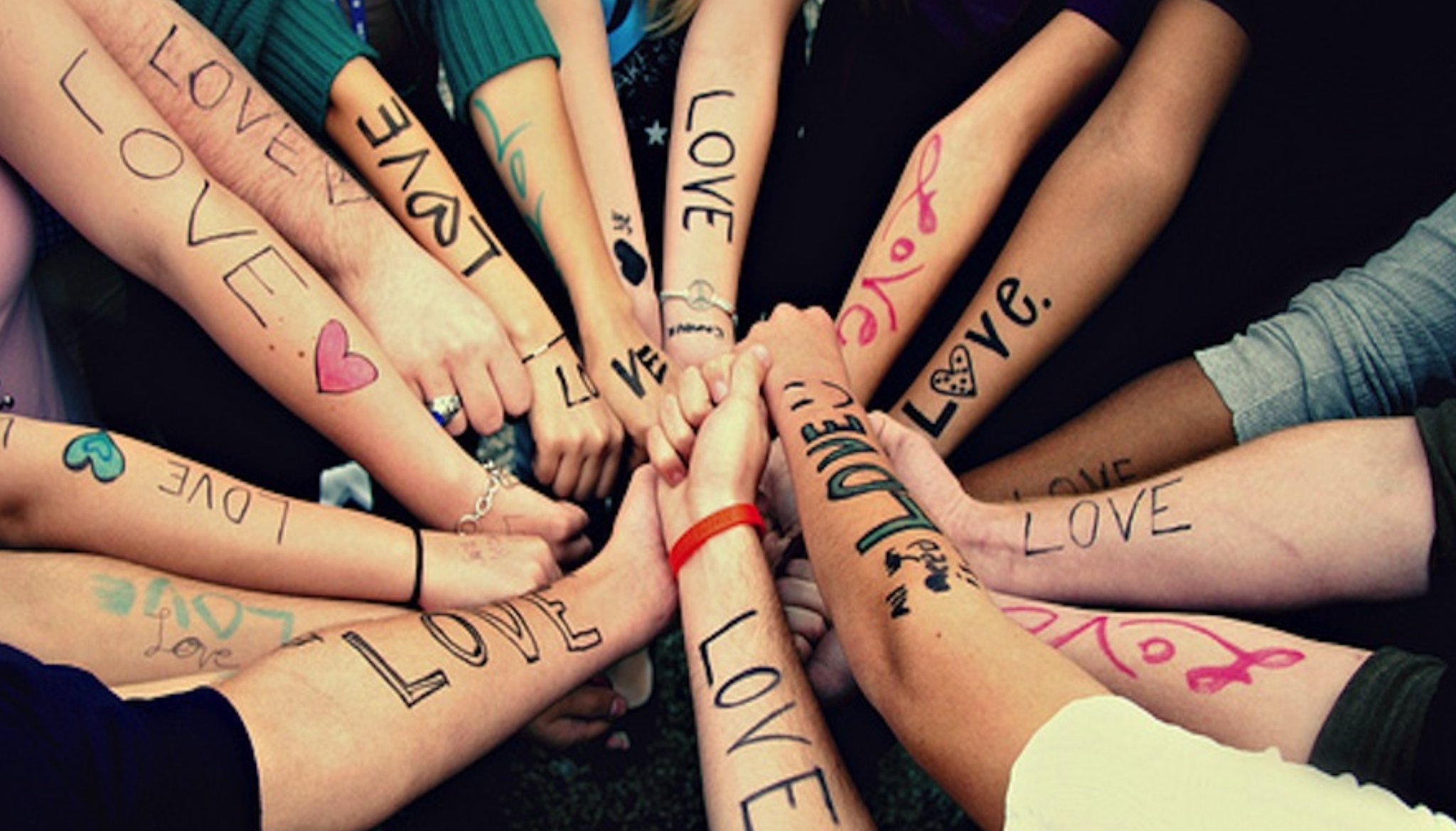
Photos Curtesy of TWLOHA
To Write Love On Her Arms
Location
Global
Founded
2006
Focus
Suicide Prevention & Mental Health Advocacy
Over the last two decades, America has become very good at talking about mental health. We have awareness months, workplace webinars, school assemblies, celebrity confessionals and pastel infographics urging people to “check in” on their friends.
We have a booming wellness industry and a crisis hotline number that appears, with dutiful regularity, at the bottom of stories like this one. And still, more people are dying by suicide than ever before.
Between 2000 and 2018, the national suicide rate rose by 37 percent, dipped briefly in the early years of the pandemic, and then returned to its peak in 2022.
By 2024, suicide was still the 10th leading cause of death in the United States, claiming 48,824 lives. Self-harm, too, has become more visible not only in public health reports but in emergency rooms, where triage doctors and nurses have become a front line for mental pain.
A national study found that visits for suicide attempts and intentional self-harm rose from 1.43 million in 2011–2012 to 5.37 million in 2019–2020. CDC data also show 616,000 emergency department visits for self-harm injury in 2022 alone.
Among young people, the pattern is especially stark. The CDC’s 2023 Youth Risk Behavior Survey found that over the last decade, high school students reported increases in signs of poor mental health and suicidal thoughts and behaviors, with female and LGBTQ+ students experiencing disproportionate harm.
This is the part of the mental health conversation America still prefers to soften. We are encouraged to speak up, but not always given somewhere to go. We are told help exists, though help is often expensive, geographically uneven, overbooked, underinsured or guarded behind a maze of intake forms and waitlists.
Our nation has embraced the language of vulnerability while leaving much of the infrastructure of care to charities, families, peers and the already exhausted.
This contradiction is where nonprofit To Write Love on Her Arms (TWLOHA) has built its work.
Founded in 2006, TWLOHA started with a story of one person struggling and finding help through a small community willing and wanting to sit with her through her heaviest and bleakest chapters, while selling T-shirts to help fund her stay at a recovery center.
From there, it became a blog where a story gets posted every single week from someone new who wants to share something from their own journey with mental health.
Now, nearly 20 years later, the organization has grown into a nonprofit movement dedicated to presenting hope and finding help for people struggling with depression, addiction, self-injury and suicidal ideation.
TWLOHA’s Approach to Hope & Help
TWLOHA’s work begins with an unfortunate and prevailing fact about the U.S. mental health system: care is often only available in theory before it is actually available in real life.
A person can be praised for speaking up and still run into the hard burden of cost, insurance, waitlists, stigma, family silence and the exhausting administrative hurdles often required to find a therapist while already in crisis.
Becky Ebert, Editor and Communications Specialist for To Write Love on Her Arms, told Hyvemind that the organization places its emphasis on mapping the distance between wanting help and being able to reach it.
Hope, she said, can be “the thing that keeps us going, keeps us trying, keeps us alive.” Help gives people “support, understanding, emotional awareness and the resources we might need but can’t access on our own.”

Hope, in the TWLOHA vocabulary, also does not float above material conditions.
According to the organization, TWLOHA has invested $4.3 million into treatment and recovery and funded 31,891 hours of therapy. Its Treatment & Recovery Scholarship Program, for example, provides financial support to cover the cost of individual therapy or counseling with a licensed mental health provider.
“We know that getting professional mental health support is often met by barriers like finances,” Ebert said, “So we want to make accessing care easier by offering financial support.”
Alongside that direct support, TWLOHA also builds spaces for people to be heard before their suffering has been converted into an emergency.
Its Good Company Gatherings, offered in partnership with Peer Support Space, are free, virtual meetings led by trained peer facilitators.
Ebert described them as places where people can “share and engage in safe community spaces,” adding that “there’s something truly powerful about being heard and seen.”
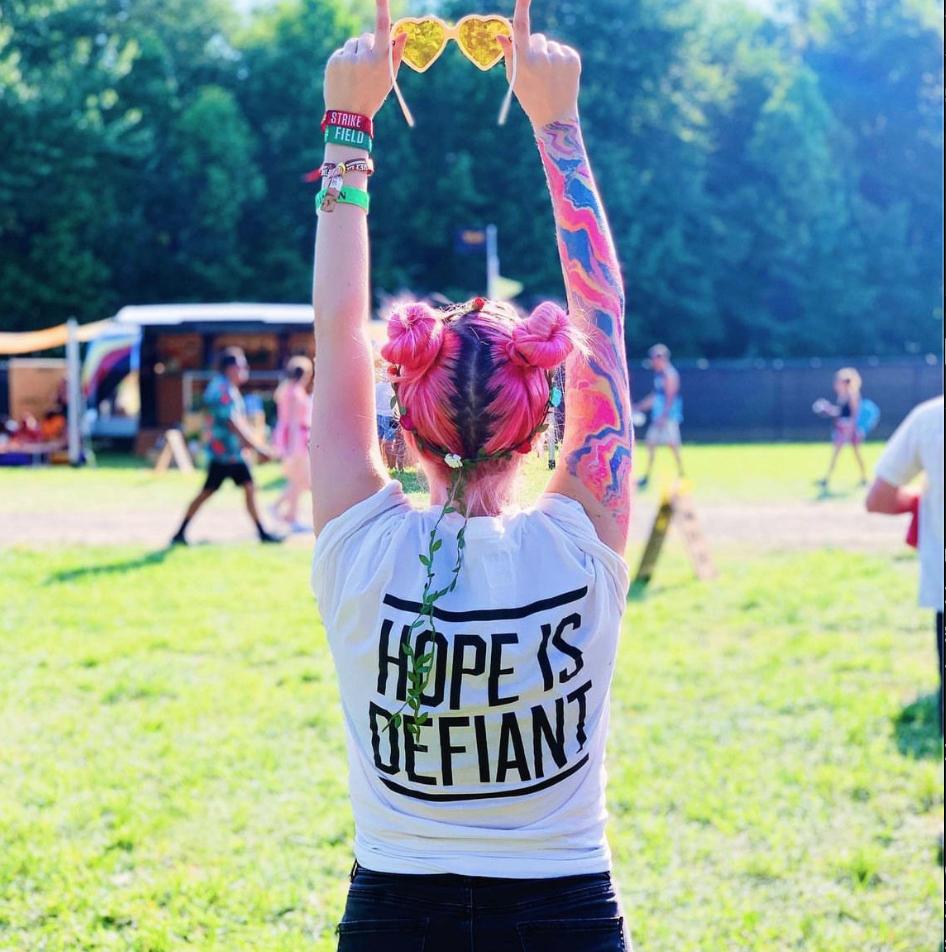
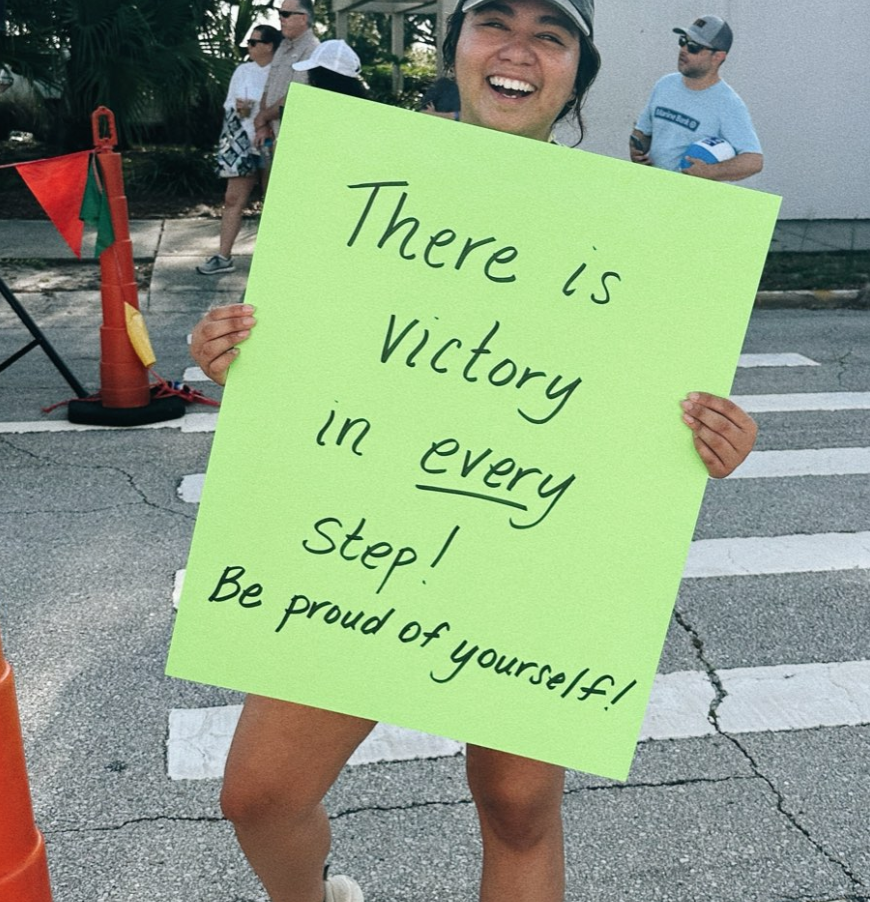
The organization’s Find Help Tool, which connects people to mental health resources, has been searched more than 217,000 times. The organization also reports reaching more than 103 million people online each year, with 4.5 million “moments of meaningful connection” and roughly 12,300 connections each day.
Those people, Ebert told Hyvemind, find TWLOHA while seeking help for a myriad of reasons. They may be looking for a safe space to share what they’re going through, financial assistance for therapy or someone to point them toward options for help in the midst of a crisis or exceptionally hard season. Some are not in immediate danger, but can feel themselves moving toward the edge of what they can manage on sheer endurance alone.
“The range of people who reach out to us varies greatly,” Ebert revealed. “They might be a mother experiencing postpartum depression, a teenager feeling overwhelmed and unheard and afraid to speak up, someone feeling the weight of questioning their sexuality and scared to open up elsewhere, or they might be feeling the weight of the world and wanting to find a therapist to help but they don’t know where to even look for one or how they might pay for it.”
What connects them is the brutal ordinariness of the barriers: shame, cost, fear, loneliness, exhaustion and the burden of trying to find care while already stretched thin.
“The entirety of TWLOHA is made up of stories,” she said. “It’s the honesty, the bravery, the rawness, the past or present pain that still gives room for hope—literally all of it stays with us and gives our small yet mighty team the continued passion to keep showing up and doing this work”
This year the organization will mark its 20th anniversary with a goal of funding 20,000 hours of care in one year. The number is ambitious, but also revealing in terms of both the scale of TWLOHA’s commitment and the scale of what remains broken.
“Our hope is for future generations to live in a world free from stigma and barriers when it comes to mental health, Ebert said.
“We want those struggling to be able to speak up about their experiences without shame or fear. We want healing to move from isolation and the shadows to safe connections and shared community. We want the burden of financial costs to dissolve, or at least lessen significantly, to the point that those who simply want to engage in things like therapy or recovery programs can do so without worrying how they will afford it.”
If you or someone you know is in crisis, please call or text 988 or chat at 988 Lifeline to reach the 988 Suicide & Crisis Lifeline.
This feature was published as part of Hyvemind’s Working Models series: stories from the people and organizations reshaping care, community and system repair.
We’re always looking to highlight organizations, collectives, and community experiments that are changing how care, work and wellbeing are built.
If your team is running a program or initiative that others could learn from, we’d love to hear from you.
To be featured in an upcoming story send us a note: hello@thehyvemind.com
