How Vote Dilution Became the New Fight for Black Political Power
As protections under the Voting Rights Act are stripped back, voter dilution has become one of the clearest threats to Black political power.
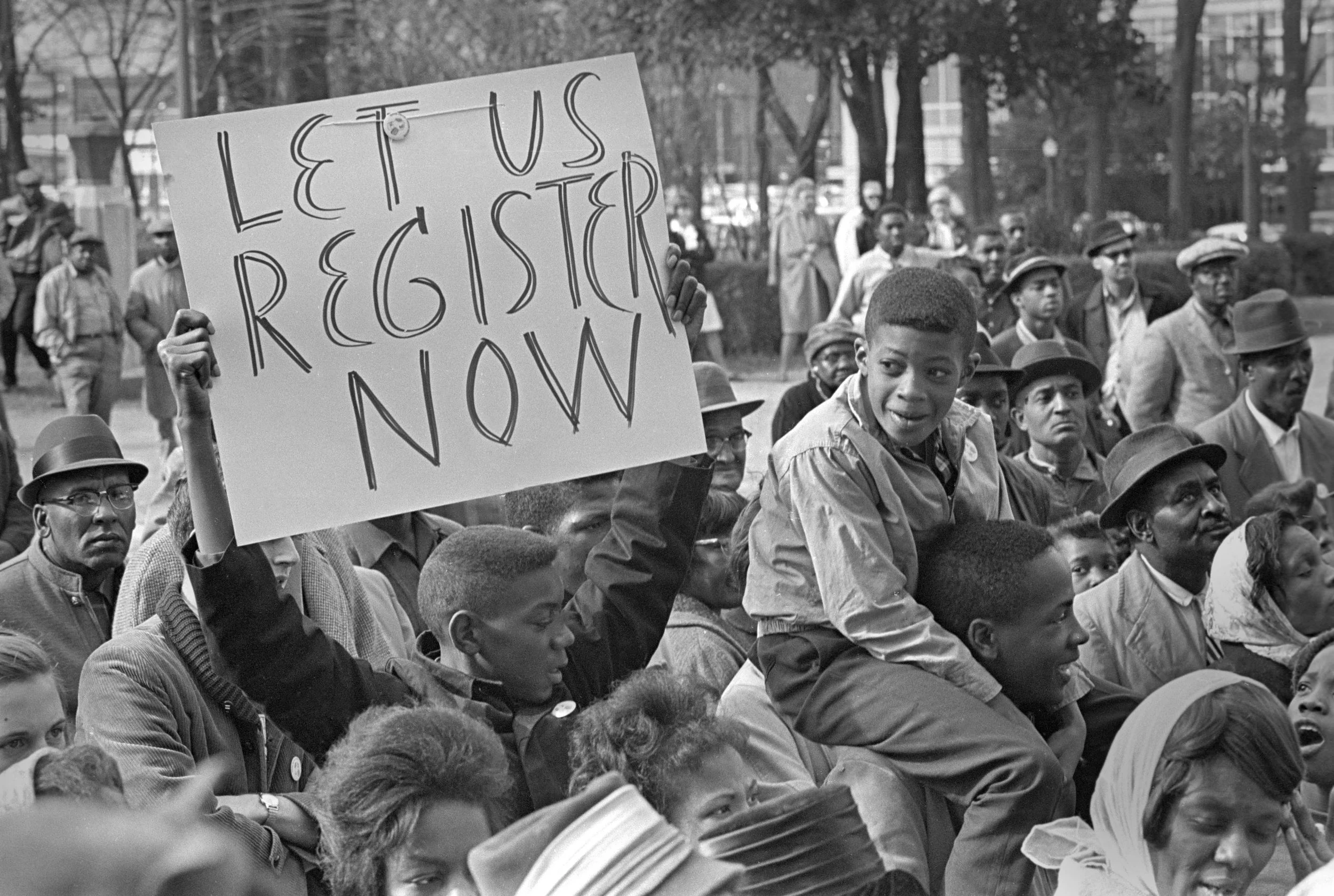
All ages crowd at voter registration rally (1965) | Bob Fitch photography archive -- SCLC Civil Rights Campaigns 1965-1966
Over the last few days, I've been hearing that we're returning back to the Jim Crow Era.
A lot of that conversation is happening because of what has been happening to the Voting Rights Act. The law still exists, but the Supreme Court has weakened some of its strongest protections over time, including pre-clearance and, more recently, protections against racial vote dilution.
I do not think that we're living in a new Jim Crow. I think we're living in something much worse.
What Black communities around the country are now experiencing is no longer just about voter suppression, where people are blocked from the ballot. It is about voter dilution, where communities can vote and still have their power systematically weakened.
Redistricting is not new, and neither is the political manipulation of congressional maps. But to understand why voter dilution matters now, we have to begin with Jim Crow: what it was, how it stripped Black Americans of political power and how that history helps explain the fight over representation today.
When the 14th and 15th Amendment was passed it gave Black men the right to vote and be “equal” citizens. I should also mention that this did not include Black women because, at the time, women did not have the right to vote.
Fast forward to the Reconstruction Era, and now you have Black men earning office and making real changes to the landscape of the country. Some were appointed, some were voted in, but nonetheless, the country was diversifying in a way that the majority did not like.
In other words, just because slavery was over doesn't mean that racism left with it. And that brings us to Jim Crow voter suppression.
Hear more from Joshua
After Reconstruction ended, Southern states began building a legal and social system designed to strip Black citizens of the political power they had just begun to exercise. By the 1870s, and especially in the decades that followed, Jim Crow laws and practices took hold across the South.
The tactics were wide-ranging: literacy tests, poll taxes, grandfather clauses, economic retaliation, physical violence, intimidation and outright terror. They did everything in their power to make sure Black men could not safely, freely or effectively show up to the polls and vote.
And they did it because they knew Black voters had the numbers to actually assign representation that aligned with their interests.
Representation was a direct problem to total control. So instead, disenfranchisement became the greatest tool used for people who did not want to see the South or the country change at all.
That long campaign to deny Black citizens the vote helped fuel the modern civil rights movement, eventually leading to the passage of the Voting Rights Act of 1965. The law banned discriminatory voting practices, strengthened enforcement of the 15th Amendment and created new federal protections for voters.
One of the most important protections was preclearance. This required certain states and local jurisdictions with histories of racial discrimination to get federal approval before changing their voting laws or election procedures.
The Voting Rights Act was a landmark law, and for many people, it seemed like the legal death of Jim Crow.
But it didn't die. It adapted and evolved. After 1965, officials could no longer openly deny Black voters the right to vote in the same ways they had before. So the tactics changed. Voter suppression increasingly became voter dilution, and it worked its way up through the decades.
The goal was no longer only to stop Black people from casting ballots. It was also to weaken the power of those ballots once they were cast.
And this strategy had been operating quietly for decades in places like Mobile, Alabama.
Beginning in 1911, Mobile used a three-person city commission system. The commissioners were elected at large, meaning the entire city voted for each seat rather than voters choosing representatives from smaller districts.
On paper, that may sound neutral. In practice, it meant the city’s white majority could control every seat, even in a city with a substantial Black population. Black voters could participate in elections, but their votes were submerged inside the larger citywide electorate, making it nearly impossible for them to elect candidates of their choice.
In a city that was already racially polarizing, this system constantly left Black voters with people who weren't interested in their interests and would not work towards them either.
Black voters challenged this system in City of Mobile v. Bolden, arguing that Mobile’s at-large election structure diluted their voting strength.
But the Supreme Court ruled against them. The Court said that discriminatory results were not enough, and to prove a constitutional violation, Black voters had to prove discriminatory intent.
That ruling created a dangerous standard. It meant that an election system could weaken Black political power for decades, but unless voters could prove that officials had designed it with racist intent, the courts could allow it to stand.
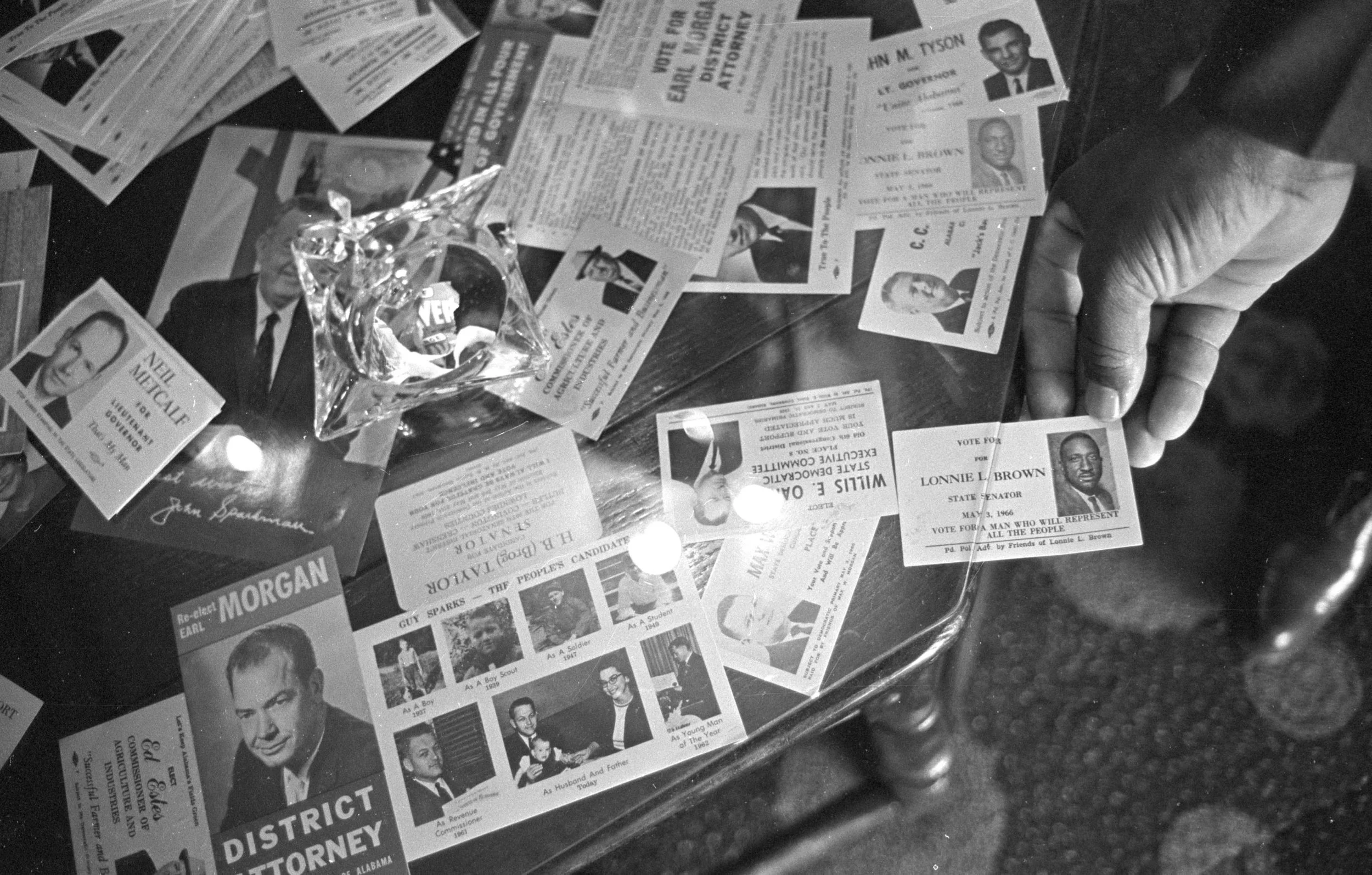
Alabama State Senator candidate Lonnie Brown joins Alabama electoral competition by sliding personal card under hotel glass table top | Bob Fitch photography archive -- Civil Rights Movement: Black Candidates in Alabama, 1965-1966
Mobile’s Black voters had no federal protections to help them against systems and structures that they knew were working against them.
The city could always say that we gave Black residents the right to vote. We didn't stop them from coming to the polls and their voices mattered equally. Their system was designed to look neutral and you could argue that.
What it did, though, was water down the Black vote because they knew that they did not have the majority across the city.
Congress understood that danger, and in 1982, lawmakers amended Section 2 of the Voting Rights Act.
This allowed voters to challenge election systems that propped up discriminatory results as opposed to discriminatory action because intent could not be proven.
And Mobile v. Bolden was vital to that shift. The case exposed a system operating in plain sight. It also exposed the evolution of Jim Crow.
But then Jim Crow went from 'they cannot vote' to 'I can allow them to vote’, but I refuse to let their vote have power. We see the evidence of this through two terms, one called district cracking, and one called district packing.
District cracking is a gerrymandering tactic where a community, voting bloc or demographic group is split apart across multiple districts so they cannot form a majority in any one district.
District packing is a gerrymandering tactic where mapmakers concentrate as many voters from one group as possible into a small number of districts.
An example of packing is putting all the Black voters into one district so that you reduce their power elsewhere.
Now, does that sound familiar when it comes to the new maps and districts that are being drawn in real time across the country?
The Voting Rights Act still exists in 2026, but it does not have the same power it once had. That weakening happened over time.
In 2013, Shelby County v. Holder gutted preclearance by striking down the Section 4(b) formula that determined which places needed federal approval before changing voting laws.
And remember why preclearance mattered: it was the safeguard meant to stop discriminatory voting changes before they could take effect.
More recently, the Supreme Court has also narrowed how Section 2 can be used to fight racial vote dilution in redistricting cases.
So I’ll go back to the original question: are we living in Jim Crow? My answer remains unchanged.
No, we are not living in Jim Crow. We're living in something much worse. And you can see that happening in Tennessee. You can see it happening in Virginia. You can see it happening through the last two decades and, most likely, it will happen in the rest of the states to come.
So my question to you and me is, why would they do this and what are we going to do about it?
Voter dilution is much more dangerous than voter suppression. Not only does it strip you of your voting power, but it wastes your time.
And I say this as objectively as I can. History has the opportunity to repeat itself. But it also has the opportunity to be changed right now.