
From Assimilation to Ownership: How Dani Tan Rewrote the Rules of Success
Dani Tan built her name inside corporate America and now teaches women how to navigate systems with clarity and intention.

Dani Tan learned how to read a room long before she had language for why she needed to. Growing up in the suburbs of Chicago as a first-generation, mixed Asian Latina, she was often one of the only people of color in her classrooms.
Questions about where she was “really from” surfaced early and often. Adaptation became second nature. The message she absorbed was straightforward: work hard, be responsible, and make full use of the opportunity in front of you.
She carried that mandate into corporate America, where her ascent was swift. Over the course of 11 years, she earned 11 promotions and became a vice president in her early thirties. The pace of her rise suggested a clear formula: deliver results and advancement will follow.
Yet as she moved higher, Tan found herself studying something less visible than performance metrics. She watched how influence circulated within organizations, how certain employees were marked as high potential, and how decisions were shaped by conversations that rarely appeared on org charts.
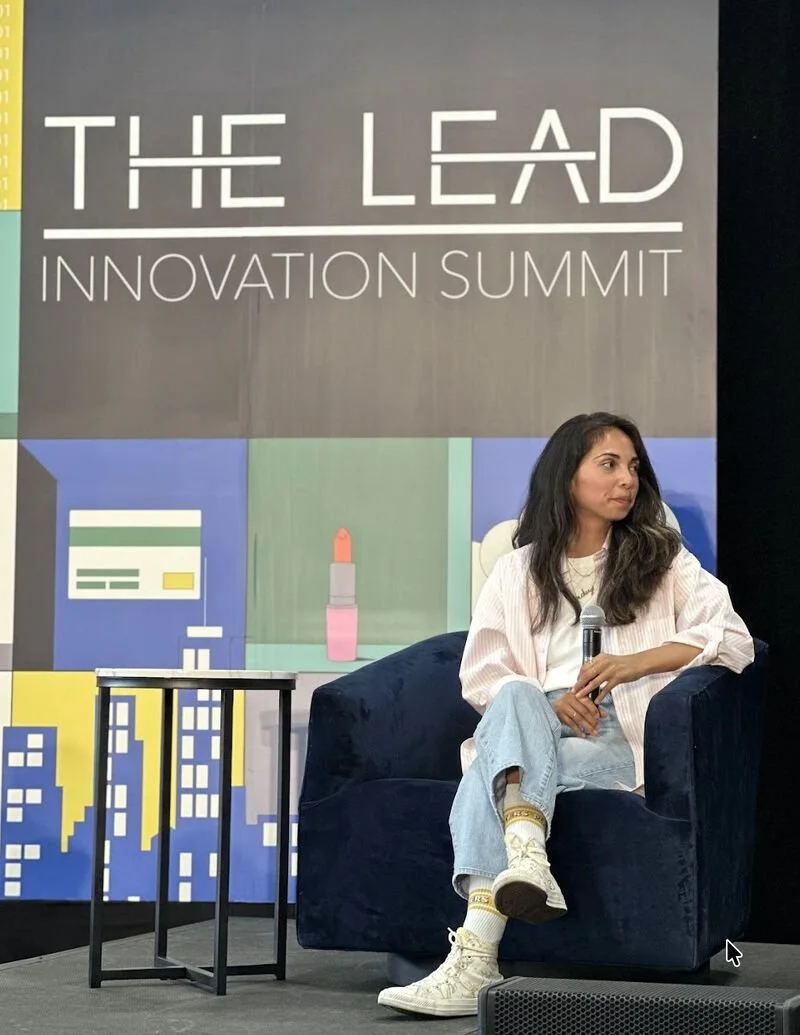
Dani Tan speaking at The Lead Innovation Summit 2023
A defining moment came after she was recruited into a new role with a clearly articulated path to promotion. She met every expectation laid out in those early conversations, working late nights and weekends and missing a close friend’s wedding to oversee a site launch.
When the promised timeline arrived, the title did not. The explanation involved budgets, approvals, and internal dynamics. Tan understood the structural reasoning, but the experience clarified a deeper truth about power. As she describes it, she realized she was not the keeper of the keys.
Although the promotion eventually materialized, her understanding of achievement had shifted. If she was going to invest that level of effort, she wanted her work tied directly to something she could shape and steward herself.
Within a few years, she stepped away from corporate leadership and began building a coaching practice focused on women of color navigating similar terrain.
Her approach reflects the analytical lens she developed in boardrooms and acquisition meetings, where she once assessed underperforming companies and redesigned them for profitability.
In her coaching, she applies that same systems thinking to careers. She helps clients understand how organizational culture, identity, and power intersect, and how to position themselves with clarity rather than instinctive adaptation.
Many of the women she works with arrive seeking advancement within their companies. Over time, some begin to imagine a broader horizon that includes entrepreneurship or designing work that reflects their own values and leadership philosophy.
Tan’s personal evolution runs parallel to that professional mission. She speaks openly about rethinking productivity and ambition, describing rest as a source of strategic clarity and worth as something anchored in integrity rather than title.
Visibility, even when uncomfortable, has become part of her practice of leadership. Through her work, she is building a framework that invites women to move through institutions with intention and, when they choose, to build something that carries their own name.
In the conversation that follows, Tan reflects on the moments that shaped her thinking, the cultural intersections that informed her leadership, and what she has learned about power, ambition and ownership along the way.
Hyvemind: Hi Dani! Introduce yourself. Who are you and what makes you you?
Dani Tan: Hi, I’m Dani Tan. I’m a first-generation, mixed Asian Latina woman who grew up with a clear message: work hard, be responsible and make the most of the opportunity in front of you.
I went into corporate and stayed for over a decade, earning 11 promotions in 11 years. I became a VP in my early 30s. I led teams, built strategy and managed a lot of moving pieces.
From the outside, it looked like I had checked all the boxes. On the inside, I was studying how power actually worked. Who gets seen. Who gets heard. Who gets labeled high potential. Who does not.
I’ve never been shy about introducing myself, asking someone to mentor me, or asking better questions. That trait became my biggest education in understanding how systems work, how organizations function and how people operate inside corporate America.

Dani Tan
I love systems from an organizational and process perspective. I also understand that there are systems we are born into, systems we work in, and systems that shape us without us realizing it.
I care deeply about helping people understand the system they’re in and how to move within it in a way that benefits them, especially when it was not built with them centered.
That’s why I became a leadership coach. I help women of color excel inside corporate environments, understand the unwritten rules, and position themselves strategically so they can get what they want, whether that’s a promotion, more influence, or more money.
Something interesting happens once they reach a certain level. Some realize they don’t only want to succeed inside the system. They want ownership, they want authorship and they want more say.
So I also support women who are ready to build something of their own, whether that’s entrepreneurship, consulting, or designing a different kind of career entirely.
Outside of work, I’m usually planning a trip or on one. I’ve been to all seven continents and over 40 countries. I’m happiest when I’m discovering and learning something new.
I love running, especially near water or in a green park. I love discovering coffee shops and cafés. My Google Maps is filled with bookmarks. If there’s a café, hike or museum worth seeing, I’ve flagged it.
My life carries a lot of intersections. Culture. Interests. The kinds of rooms I’ve been in. The kinds of people I work with. I’ve always been told I’m a mixture of facts and feelings. I don’t separate strategy from the emotional reality of being human. That’s probably the simplest way to explain who I am.
HM: What inspired you to do what you currently do as a career?
DT: This work grew out of how I navigated corporate and what I learned along the way.
In my family, no one had built the kind of corporate trajectory I was building. I looked for mentors. I introduced myself to people. I asked questions. I built relationships with people further along and learned from them.
I quickly realized that hard work alone does not move you up, and one moment made that clear.
I had been recruited into a company with explicit conversations about title, timeline and responsibilities, and what it would take to get there. I delivered. I worked late nights, weekends and holidays. I missed a friend’s wedding for a site launch because I believed I was working toward something we had aligned on.
When the time came, the promotion was delayed by six months. There were budgets, politics and approvals. I began to understand how organizations work and that experience showed me that I could deliver on everything and still not hold the final decision.
I eventually received the promotion but something in me had shifted. If I was going to work that hard, I wanted the upside connected to me. I wanted to build something where my effort translated directly into results I cared about.
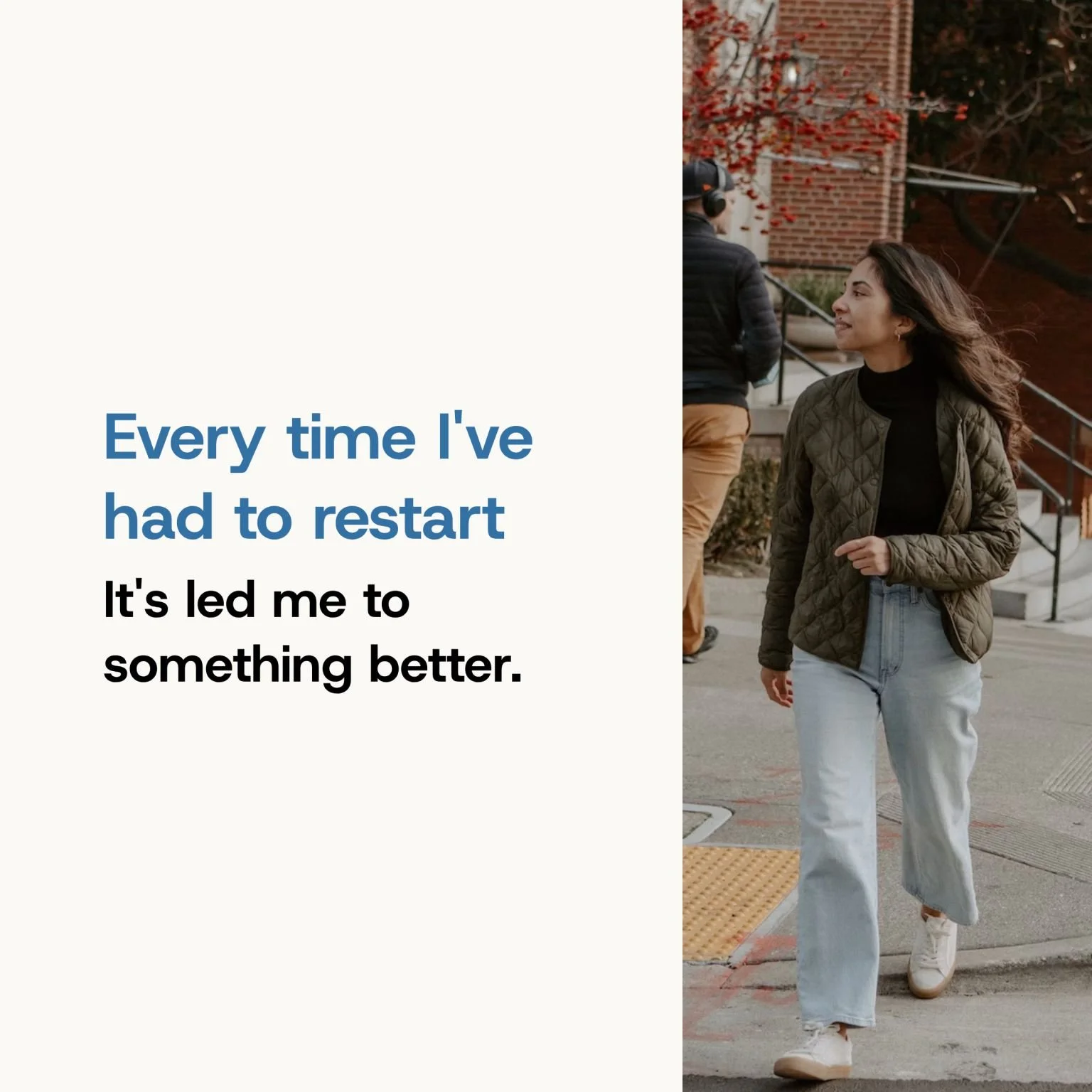
If that moment had not happened, I might still be there. That realization changed me.
I’ve always questioned why things are built the way they are. Why do we do it this way? Could it be better? Whether it was how teams were structured or how decisions were made, I was always thinking about evolution.
At the same time, I volunteered with America Needs You, helping first-generation college students with resumes, interviews and networking. I loved it.
In corporate, I was building teams and developing talent. Every person on my team was promoted across the companies I worked at. I was often asked to sit on interview panels because of how I assessed and coached candidates.
Over time, managers told me I was a strong teacher and mentor. I loved that part of the job.
In my corporate strategy roles, I helped buy companies that were not profitable but had strong brand or intellectual property. We analyzed what was not working and redesigned the system to make it profitable.
Looking back, I see that I’ve always been someone who assesses a system and rebuilds it so it functions better.
All the skills you learn in corporate leadership, strategy, financial thinking, team development, can help you move up. They also create stability and optionality. Those same skills can help you build something for yourself.
As a first-generation, mixed Asian Latina woman, I navigated multiple cultural contexts. Family culture. Corporate culture. Communication norms that do not always align. Corporate America was built around a particular lens, and many of us are operating inside it.
So what happens when you’re working in a system that was not designed with you centered?
For years, I adapted without fully realizing it. I adjusted how I showed up. I aligned with what was rewarded.
This work became personal. I focus on women of color because we are often under-resourced. We may have mentors, but we do not always have access to tactical strategy or clear explanations of the unwritten rules.
There is a difference between inspiration and infrastructure. I wanted to build infrastructure.
My work helps women understand their identity and the system they’re in. Where do those intersect? Where are they in tension? How can you move strategically without abandoning yourself? How can you create what you want, whether that’s influence, financial freedom, or ownership?
Once you start questioning structure, you often want more than success inside it. You want authorship. you want ownership and you want to build. I know that feeling intimately.
HM: What parts of you did you have to hide or suppress in corporate?
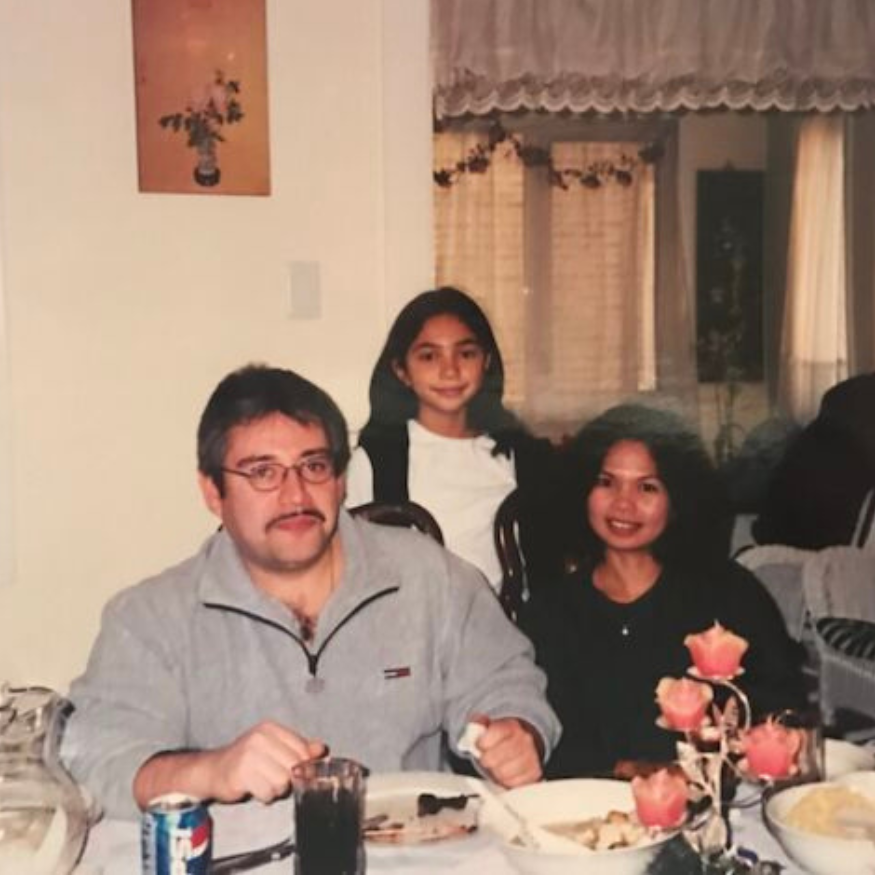
Little Dani Tan and her family
DT: I don’t think I consciously hid who I was. It was subtler. I grew up being one of the few people of color in many spaces. Being asked where I was from felt normal. Having a mixed identity was less common then. Adaptation started early.
I was fluent in Spanish growing up. There was concern about pronunciation and fitting in. My parents’ generation equated assimilation with opportunity. That mindset shaped us.
At home, we ate Filipino, Chinese, and Puerto Rican food. Traditions were present, though we did not always discuss the deeper history behind them. I did not begin unpacking identity, colonization, and assimilation until my thirties.
In corporate, I navigated well. What changed later was my understanding.
I developed language for what it means to hold onto your cultural lens inside environments built around another one.
I’m still learning. I’m still unpacking how assimilation shapes leadership and communication.
The shift for me was about awareness and ownership of identity.
HM: Over the past three years as a full-time career coach, how has coaching impacted you personally?
DT: Coaching has expanded my capacity. I have always been someone who could hold space. In middle school, I was elected as a peer mediator. I was quiet, yet people trusted me.
Now I hold space for women across different industries and life stages. Sitting with their fear, ambition, doubt, and brilliance has stretched me.
One lesson stands out: most people know what they want. Underneath uncertainty is often fear. Fear of judgment. Fear of loss. Fear of being wrong. The brain creates convincing narratives to stay safe.
Coaching has also required me to do my own work. I have worked with coaches and invested in therapy to understand my nervous system, patterns, and beliefs. That shapes how I show up for clients.
Clients often tell me I can take something complex and make it clear and actionable. I value clarity over jargon.
The biggest lesson has been about belief. When someone does not believe something is possible, they hesitate and shrink. Part of my role is to hold belief for them until they can hold it for themselves.
Holding that belief for others has strengthened my own.
HM: What have you learned about productivity, success, or worth?
DT: I’ve learned that rest strengthens success. For a long time, I measured productivity by output and intensity. I still know how to activate that drive. I also understand it does not need to be constant.
When I rest, I think more clearly. I see patterns. I make stronger decisions. Space sharpens strategy. Worth has been a deeper lesson. Your worth cannot depend on title, revenue or recognition.
For me, worth is about alignment. Am I kind? Am I honest? Am I living in a way that reflects my values? We are conditioned to equate success with prestige and salary. At some point, you decide which definitions to keep.
HM: You’ve become more vulnerable on LinkedIn. What has that experience been like?
DT: Visibility has always been uncomfortable for me. I have posted consistently for three years and was named a LinkedIn Top Voice from 2023 through 2025. The recognition does not remove the discomfort.
Running a business requires visibility. If you want to reach people, you have to show up.
What shifted was understanding that if my visibility makes it easier for someone else to step forward, it is worth it.
Leadership involves going first. It involves being willing to be seen. I’ve started sharing more about identity shifts and uncertainty. It stretches me. I’m learning that strategy and vulnerability can coexist.
Visibility may never feel effortless. I am more willing to move toward it.
HM: What parts of yourself have you needed to befriend to keep evolving?
DT: I’ve had to accept that mindset work is ongoing. Each level of growth requires a new version of you.
For me, that has shown up around comfort with financial security and fully receiving the life I’ve built. Growth surfaces new layers.
Entrepreneurship magnifies whatever you avoid. Insecurity and scarcity surface quickly. You face them or you plateau. That awareness has shaped my evolution.
HM: Many of your clients move toward entrepreneurship. What excites you about that shift?
DT: Many clients begin focusing on growing inside corporate. They deliver and reach a threshold where additional effort no longer creates the return they expected. Then the question arises: What if I built something of my own?
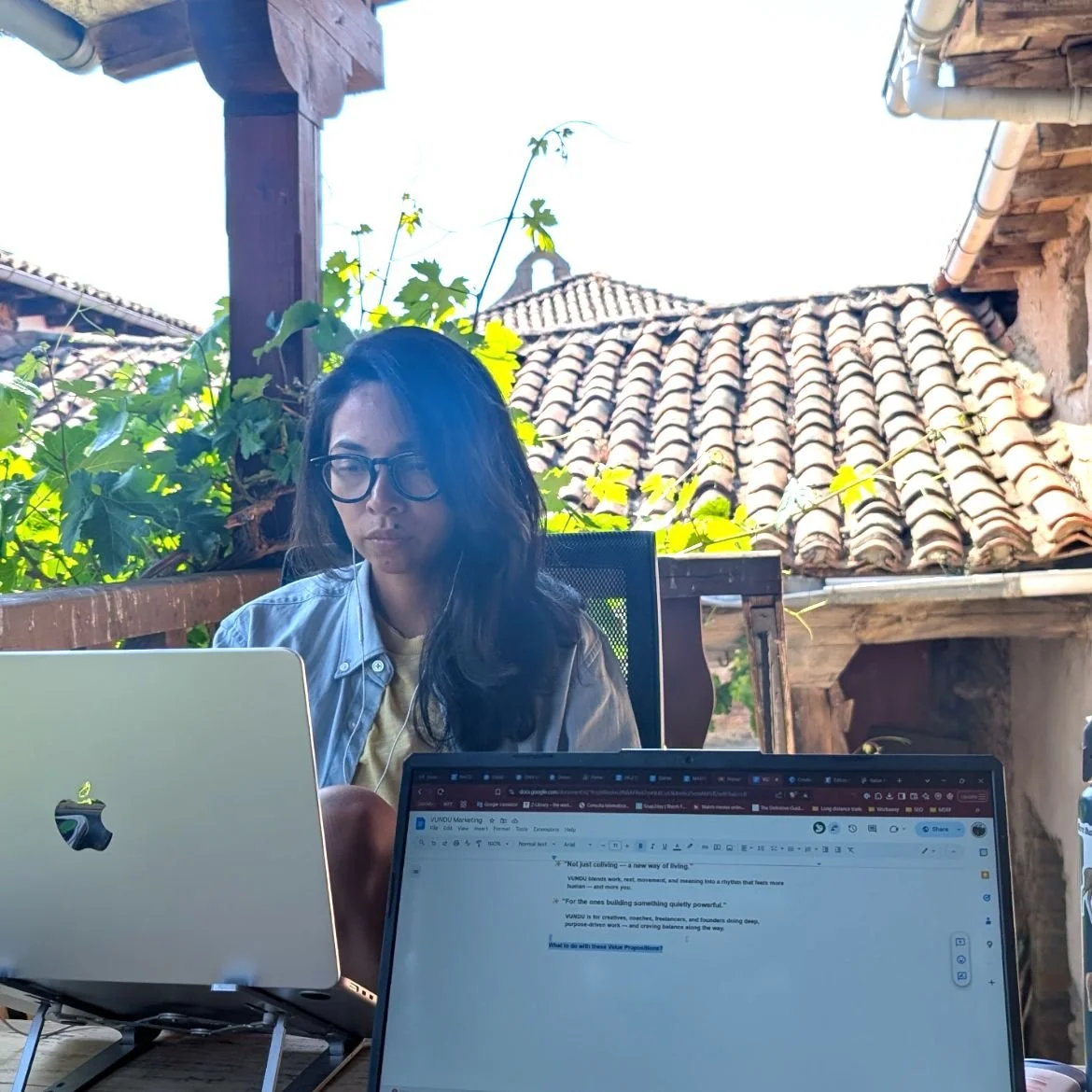
I love watching them realize their expertise is transferable. Leadership, strategy, and financial thinking can build a business.
Even experimenting with entrepreneurship changes how they see themselves. You learn to market, sell, and define your value. That builds confidence.
There is power in knowing you can generate income independently. Corporate can be a strong training ground. Ownership offers a different kind of fulfillment.
When women build thoughtfully, they influence culture. They decide who they hire, how they lead, and what values they prioritize. That impact extends beyond one company. That excites me deeply.
HM: What are you looking forward to next?
DT: Professionally, I want to continue working with aligned clients and organizations that care about building stronger workplaces. I want to help people see themselves clearly and lead with intention.
Personally, I look forward to peace. I have worked hard to build a grounded and intentional life. Continuing to nurture that feels meaningful.