
Strange Fruit In 2026: Two Black Deaths and the Questions Mississippi Has Yet to Answer
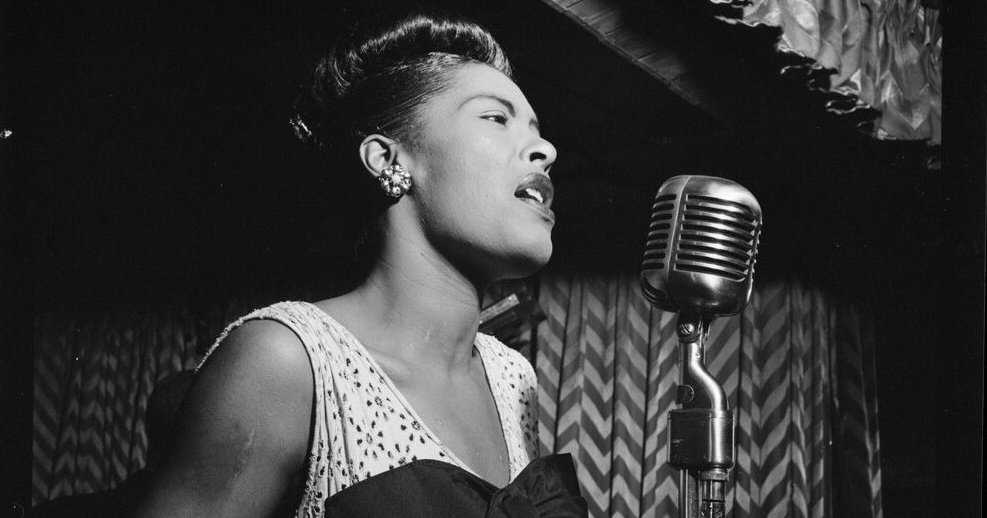
In 1939, Billie Holiday began performing “Strange Fruit,” Abel Meeropol’s poem about the lynching of Black Americans. For a few minutes at the end of her set, audiences were forced to confront what much of the country had learned to treat as spectacle, rumor or somebody else’s problem.
Nearly a century later, that history remains relevant to the way Black deaths are investigated and documented, and the recent deaths of Trey Reed and Nolan Wells expose that problem with unusual clarity.
In both cases, an official explanation entered the public record early. In both cases, the families sought independent scrutiny. And in both cases, information that could help the public understand how those conclusions were reached remains unavailable.
Two cases, one reflex
On the morning of Sept. 15, 2025, a faculty member walking across the Delta State University campus in Cleveland, Mississippi, found 21-year-old Demartravion “Trey” Reed hanging from a tree near the pickleball courts.
Reed was a freshman. His body was discovered around 7 a.m. during the university’s centennial week. Within days, the Bolivar County coroner and Mississippi State Medical Examiner’s Office determined that Reed died by hanging and ruled the manner of death a suicide.
His family retained civil rights attorney Ben Crump and Colin Kaepernick’s Know Your Rights Camp Autopsy Initiative agreed to fund an independent examination. Local authorities turned investigative material over to the FBI and U.S. Attorney’s Office, and U.S. Rep. Bennie Thompson called for federal scrutiny of the case.
Nearly eleven months later, there is no public result from that federal review, and Reed's independent autopsy has never been publicly released.
On July 4, 2026, 18-year-old Nolan Xavier Wells took a boat to Horn Island off the Mississippi Gulf Coast with a mostly white group of friends. Hundreds of people were on the barrier island. Video from that day shows a mostly white crowd on the sand.
His friends returned to Ocean Springs. He did not. He was reported missing that night. On the morning of July 6 a US park ranger found his body in the water off the northwestern tip of the island.
Jackson County Sheriff John Ledbetter told ABC News he suspected Wells drowned. He said it while his own investigation was still open. Wells’ family also retained Crump. Kaepernick’s initiative again funded an independent autopsy.
The two deaths occurred under different circumstances, and the available evidence in each case is different. Their institutional trajectories share an important feature: the families began seeking outside scrutiny after government officials had already placed an explanation of the death into the public record.
Two Cases, One Reflex
In both cases, an official explanation entered the public record before the families sought independent scrutiny.
Trey Reed
No public federal finding. Independent autopsy has not been publicly released.
Nolan Wells
Could not determine cause or manner of death and could not rule out nonaccidental factors.
Both families sought a second look after an official explanation had already entered the public conversation.
What the state did, and didn’t, examine
Dr. Roger A. Mitchell Jr. examined Wells’ body in Washington on July 10, 2026. Mitchell, who is the 126th President of the National Medical Association and served as chief medical examiner of Washington, D.C., from 2014 to 2021, has performed more than 1,300 autopsies.
His report, dated July 19 and released three days later at the NAACP national convention in Chicago, reached no definitive cause or manner of death. Crucially, Mitchell also could not rule out foul play. He concluded that he could not exclude the possibility that “intervening, nonaccidental factors” contributed to or caused Wells’ death.
The condition of Wells’ body limited what Mitchell could determine. His remains had spent approximately two days in Gulf water, and decomposition made bruises and abrasions difficult to identify.
Mitchell was also unable to examine several structures that could have helped clarify how Wells died. Portions of the airway and lungs had already been removed during the state autopsy, limiting his ability to evaluate evidence associated with drowning. He did not receive parts of Wells’ throat that could have helped assess possible neck injuries.
Some of those limitations are routine in a second autopsy. Mitchell acknowledged that tissue removal during an initial examination is common forensic practice, and state disclosure rules can restrict what material is available to a second pathologist. The state’s own autopsy, completed July 7, also remains sealed.
Jackson County District Attorney Angel Myers McIlrath addressed those restrictions in a July 23 video statement. Deaths in the county other than natural deaths and noncriminal vehicle crashes are presented to a grand jury, she said, and Mississippi’s professional conduct rules limit what prosecutors can disclose during an active investigation.
“Our restraint in communicating facts and evidence is not an effort to keep the truth from the public,” McIlrath said. “It is an effort to protect the integrity of this investigation and the grand jury proceeding.”
But it was the limitations of the external examination that led Mitchell to look deeper for possible signs of trauma. He dissected tissue at the back of Wells’ neck and skull, and there, he found an area of red discoloration measuring approximately 12 inches by 8 inches.
His report identified two possibilities: the discoloration could have resulted from decomposition in the muscle, or it could have reflected blunt-force injury to the back of Wells’ head and neck. Bu there was no available evidence that allowed him to determine which explanation was correct.
The finding carries additional significance because the state medical examiner had not dissected that area during the original autopsy. The public record does not explain why that region was not dissected. The state examiner may have had a forensic reason for determining that further examination was unnecessary, and the sealed autopsy report may contain additional information.
For now, those records are not available for independent review, resulting in a clear gap in what is publicly known about Wells’ death. A second pathologist found a physical abnormality in an area the first autopsy had not examined, could not determine whether it resulted from decomposition or trauma, and could not rule out nonaccidental involvement in Wells’ death.
Investigators are therefore left without knowing what caused the discoloration, and if the possibility of trauma was adequately examined before drowning emerged as the public explanation for Wells’ death.
The finding also raises a broader question about access to independent scrutiny: would it have been discovered if Wells’ family had not secured a privately funded second autopsy?
What the Second Autopsy Found
Dr. Roger A. Mitchell Jr. could not determine how Wells died and could not rule out nonaccidental factors.
Portions had already been removed, limiting Mitchell’s ability to evaluate evidence associated with drowning.
Could have helped assess possible neck injuries.
Mitchell could not determine whether it resulted from decomposition or blunt-force injury.
Who Gets a Second Look
Trey Reed's family has been waiting for answers since September. The FBI and the US Attorney's Office have had the Delta State file for nearly eleven months. There is no public finding and the independent autopsy Kaepernick's initiative paid for has never been released publicly. A family asked for a second opinion, got one, and still cannot show it to you.
The suicide ruling therefore remains the primary official account available to the public, without a publicly available federal review or second autopsy through which that determination can be independently assessed.
That absence points to a larger problem of recordkeeping around Black deaths and racial violence in the United States. Much of what the country now knows about its history of lynching exists because researchers and civil rights organizations built the record that public institutions did not.
According to the Equal Justice Initiative, there have been nearly 6,500 documented racial terror lynchings in the United States between 1865 and 1950, including more than 4,000 across 12 Southern states between 1877 and 1950.
Those numbers, which had to be reconstructed from historical records of names, dates, locations and circumstances that governments, had never comprehensively recorded while the violence was occurring because Congress did not make lynching a specific federal hate crime until 2022, when the Emmett Till Anti-Lynching Act became law after more than 200 failed legislative attempts spanning more than a century.
It is also worth noting that the law only established a federal criminal framework. It did not, however, establish a comprehensive federal system for tracking contemporary cases of suspected racial violence and what ultimately becomes of them.
The absence of a central record makes patterns difficult to evaluate. Families, journalists and researchers attempting to understand similar deaths across the country are left to piece together information scattered among police departments, medical examiners, prosecutors, courts and federal agencies.
That fragmentation matters at the level of an individual case, too. Families seeking to challenge or independently assess an official finding may need access to forensic experts, attorneys and investigative records that are difficult or expensive to obtain.
Families with money, legal representation or national attention have more options. They can hire experts, secure independent autopsies and continue pressing agencies for information.
But many, if not most, families have none of those advantages. For them, the first official explanation may be the only one they have the resources to test.
You cannot count what you refuse to investigate, and you cannot investigate what you have already decided. A country that wanted the truth would build the ledger. The absence of the ledger is a decision, made once and renewed by every year that no one corrects it.
At Center Pointe Church in Ocean Springs on July 20, Rev. Al Sharpton stood over Nolan Wells’ casket and criticized public statements about the case before the investigation had been completed.
“We cannot have someone in law enforcement saying there was no foul play before there was an investigation,” he said.
Sharpton invoked Mississippi’s history, naming Emmett Till and Medgar Evers as he called for a full accounting of Wells’ death. The response surrounding the case soon extended far beyond local government.
The National Action Network announced a $50,000 reward. Within a day, the total had reached $125,000, with contributions that included Tyler Perry, who also paid for Wells’ funeral, and Terrell Owens.
Kaepernick’s foundation funded the independent autopsy. Private organizations and individuals have therefore helped finance the burial, the reward for information and the forensic second opinion surrounding a death already under government investigation.
The independent autopsy produced the most significant unresolved physical finding currently visible in the public record. That should sharpen the question facing Mississippi officials. It should also raise one for the institutions responsible for investigating suspicious deaths across the country.
A family’s access to a thorough second examination should not depend on whether a nationally known attorney takes the case, a nonprofit can pay for an autopsy or public figures can generate enough money and attention to keep questions alive.
The old mechanism was violence followed by silence. The community was terrorized and the record was allowed to scatter until the killing became a rumor and the rumor became nothing. What changed is not the silence. What changed is that the silence now comes with a rationale, a statute and a filing schedule, none of which requires anyone in Jackson County to be acting in bad faith.
That is the part people miss. A system can be staffed entirely by people following the rules and still produce a Black family in Mississippi who cannot find out how their child died. Procedure does not need malice to arrive at the same address.
The refusal to let a body dissolve into abstraction is the whole tradition, running from Ida B. Wells counting what no one would count, to Holiday holding the room still for three minutes, to two mothers in Mississippi asking for a document. Gather the record. Grow the investigation before the case is closed. Give back the one thing these families are actually asking for, which is not vengeance and not a predetermined verdict, but a real look before the door shuts.
Don’t demand a predetermined verdict. Demand the standard: every reasonable possibility examined before a conclusion becomes the record.
That means a thorough forensic examination, serious consideration of racial motive, a record the family can eventually access and accountability wherever the evidence leads.
Share original Horn Island footage. If you were there July 4, or know someone who was, give investigators the original unedited files with metadata intact. The reward for information leading to an arrest and conviction stands at $125,000.
Follow the Jackson County grand jury. Watch for developments and for the point when records currently protected by the investigation can be released.
Ask Congress who is keeping the count. The Emmett Till Antilynching Act made lynching a federal crime in 2022, but created no comprehensive national system for tracking these cases and how they are investigated.
Support the journalists keeping the record. Follow and fund Mississippi Today, Mississippi Free Press, Capital B and local Gulf Coast newsrooms doing the primary reporting.
Was every reasonable possibility ruled out before the finding was announced?