
Missouri Is Cutting Dolly Parton’s Library at a Time When Children's Literacy Is in Crisis
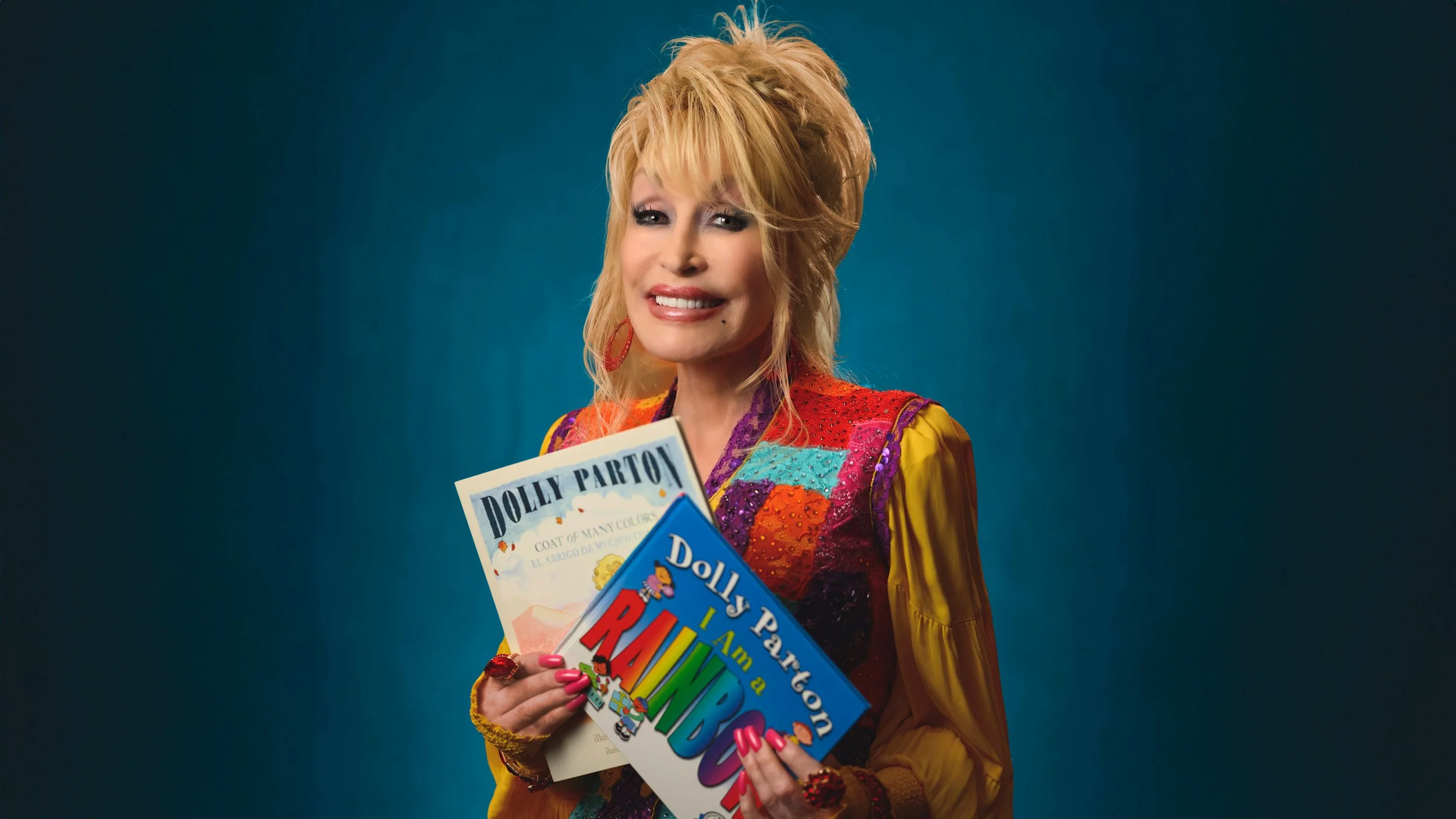
Image courtesy of the Dolly Parton Imagination Library
Long before a child enters a classroom, literacy is already taking shape through the words they hear, the books they handle and the reading routines adults are able to build at home.
For families with time, money, transportation and access to well-stocked shelves, establishing a regular reading practice may be easy.
For families under financial strain, or for parents working long hours without easy access to libraries or bookstores, the simple act of keeping new books in the home can be much harder than public policy tends to admit.
That gap between what early literacy requires and what many families can reliably access is what Dolly Parton set out to address when she founded the Dolly Parton Imagination Library.
Launched in 1995 as a tribute to Dolly Parton’s father, who never learned to read or write, the Imagination Library began as an effort to help young children build a relationship with books before they entered school.
It has since grown into one of the largest early-childhood book-gifting programs in the world, sending one free, age-appropriate book every month to registered children from birth until age five and putting books directly into homes during the years when language development is moving fastest.
But in Missouri, the program’s reach is now being weakened statewide.
A budget passed by lawmakers on May 6 would reduce program funding from about $6 million to about $2 million for the coming fiscal year, and the state says it will halt new enrollments beginning July 1.
As of late March, roughly 169,000 Missouri children were enrolled, after more than 4.3 million books had been sent statewide since the program launched there. Future deliveries will depend on how long existing funds last and whether state, local or private partners can replace the $4 million loss.
The cost of that access is relatively small. Nationally, the program’s average local cost is about $2.60 per child per month, or a little over $31 per year. Missouri’s $4 million reduction represents roughly 1.5 million child-months of book delivery if replacement funding is not found.
The cut also comes during a national literacy slump. In 2024, reading scores fell for both fourth and eighth graders on the National Assessment of Educational Progress, often called the Nation’s Report Card.
Roughly 40% of fourth graders scored below the Basic level in reading, the largest share since 2002, while about one-third of eighth graders fell below Basic, the largest share in the assessment’s history.
For educators and literacy and library workers who work closest to early readers, the pending cuts are already raising concern about what families stand to lose.
Connor Bock, a Kansas City native and Tulsa City-County Library worker, has seen the impact of the program up close through his work producing informational videos for the Tulsa chapter of Dolly Parton’s Imagination Library and photographing events like the Dolly Day Birthday Bash and the program’s graduation celebrations.
“Getting to watch the children and their parents smiling with pride as they accept their graduation certificate upon their completion is an absolute honor,” Bock said.
For Bock, who grew up in Jackson County, Missouri, the state’s decision is personal.
“Hearing of the significant cuts being made to the DPIL by the state and that no new children will be accepted into the program on July 1st is just absolutely devastating,” he said. “During these scary times of uncertainty, our children’s accessibility to books and the education they provide is more important than ever.”
He said the consequences will be especially serious for lower-income families and children under five, because the program is designed to put books directly into homes during a critical period of language and brain development.
“The program was specifically created to support early literacy,” Bock said. “By removing access to that, enthusiasm to read in their own home and their sense of book ownership could be severely impacted.”
That concern is consistent with the strongest research on the Imagination Library.
A Syracuse study of 2,731 incoming kindergartners found that children who had participated consistently in the program for three or more years were more likely to be kindergarten-ready on a letter-naming measure, even after demographic controls and propensity-score matching.
Other studies have found higher letter knowledge and phonological-awareness scores among participants, and qualitative research has also found that families describe the program as helping build reading routines, pride in home libraries and stronger associations between reading and school success.
For children under five, those small routines can become part of how they understand books and learning.
For the state, the cost is modest. For families who lose access, the effects may be harder to measure immediately, especially if they appear as fewer shared reading moments, fewer books in the home and less familiarity with stories before kindergarten.
Bock, watching from Oklahoma but still deeply rooted in Missouri, put it plainly: “The state should immediately reconsider what they are doing and stop this.”
He is right. Gov. Mike Kehoe has not yet signed the budget bill, leaving a narrow window for Missouri families, educators, librarians and early-childhood advocates to speak up before the cut becomes final.
“A state that says it cares about literacy should not begin by cutting books from the homes of preschoolers.”
